Language Centre celebrates 50 years of teaching courageous communication

The world keeps changing but the core mission of the Tampere University Language Centre remains the same.
“The Language Centre teaches language and communication skills, but above all it teaches students how to interact with others,” say Taina Juurakko-Paavola, Director of the Language Centre, and Riikka Järvelä, University Teacher in Speech Communication.
Students cannot develop their interaction skills through artificial intelligence (AI). Juurakko-Paavola emphasises that the Language Centre is committed to ensuring that all students feel seen and heard.
“Our most important role is to interact with students,” says Juurakko-Paavola.
“Students notice when teaching staff genuinely make time for them,” adds Järvelä.
Students consistently provide positive feedback on the benefits of small-group teaching at the Language Centre. They appreciate approachable teachers who are readily available to offer feedback, guidance and support. In the previous academic year, many students rated a Language Centre course as the best course at Tampere University.
“Students also brought up the psychologically safe learning environment in their feedback, noting that it gives them the confidence to develop and practise their language and communication skills,” says Juurakko-Paavola.
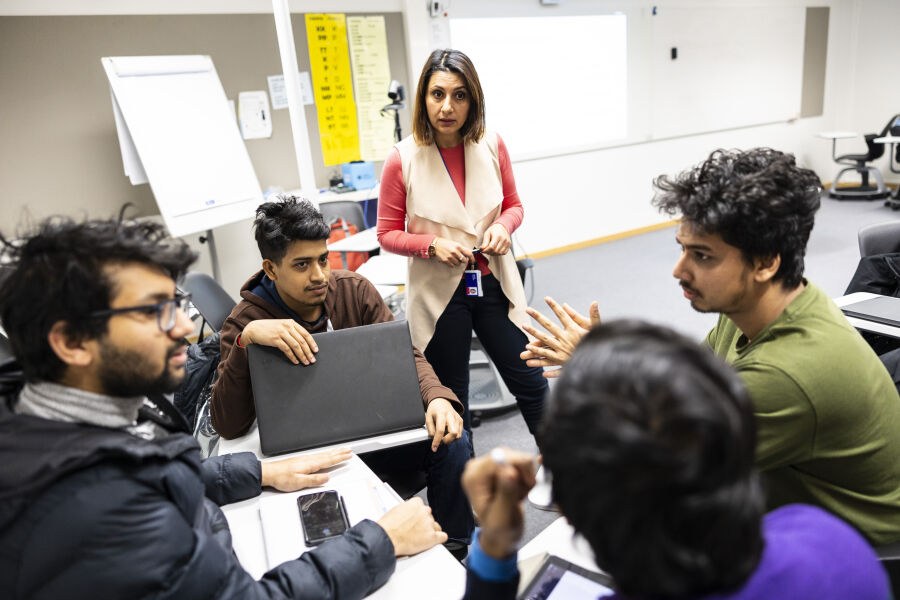
The ability to tolerate uncertainty is a key future skill – the Language Centre is quick to adapt to change
When students graduate, they enter a world characterised by globalisation, diversity and uncertainty. What interaction skills do they need to thrive in such an environment?
“At least empathy, the ability to listen and ask questions, strong collaboration skills and technological competence,” lists Järvelä.
The ability to tolerate uncertainty is also important.
“It is a skill that we are actively fostering among Language Centre staff as well, and we are striving to respond swiftly to change,” says Juurakko-Paavola.
The Language Centre teaches students to use technology and AI in meaningful ways. This autumn, the Language Centre will offer a speech communication course delivered entirely without digital tools.
“We are not afraid to experiment and explore different approaches,” says Järvelä, who teaches the Unplugged course.
Järvelä emphasises that the Language Centre places students at the centre of its pedagogical approach.
“The Language Centre is a pedagogical unit, and we always start by asking how students learn,” she says.
Vision: the courageous communicator
The Language Centre’s new vision focuses on the concept of the courageous communicator.
“A courageous communicator can take many forms. It does not mean being an extrovert or fearless. It means having the confidence to be yourself,” says Järvelä.
She highlights the importance of academic courage, the willingness to admit when you do not know something and the commitment to finding out – in other words, being open to learning.
Juurakko-Paavola encourages learners to make use of whatever language skills they have, however limited.
“There is no need to wait until you have mastered a foreign language before you start using it,” she says.
Järvelä hopes that we will all be emboldened to create safe spaces for interaction and language use, while also remembering the importance of listening.
Both Järvelä and Juurakko-Paavola point out that being courageous also means using technology thoughtfully and embracing the diversity of the world around us.
“Having faith in the future is important too,” adds Juurakko-Paavola.
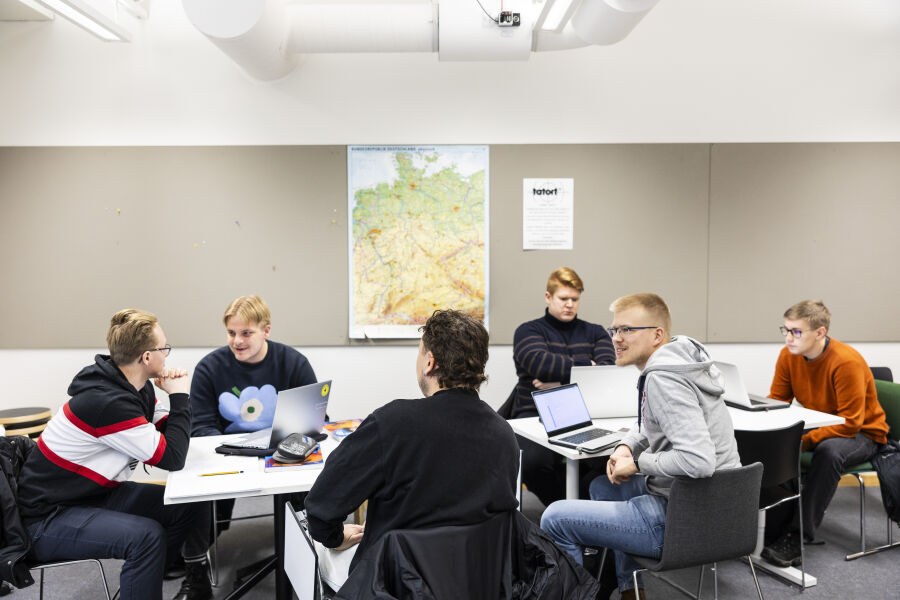
Anniversary seminar offers a unique glimpse into the Language Centre through workshops, discussions and inspiring presentations
To mark its 50th anniversary, the Language Centre will host a seminar alongside a day-long open house.
The seminar will feature interactive discussions, and a range of workshops will give participants a first-hand experience of the Language Centre’s teaching.
Järvelä, who is involved in organising the event, says the workshops will explore topics such as the challenges of academic writing, the demands of listening and multilingual awareness. Participants will also have the opportunity to attend a cyanotype workshop and learn more about the use of artistic methods to support language learning.
What message would Juurakko-Paavola and Järvelä like to share with the Language Centre on its 50th anniversary?
“We have built a positive culture of collaboration. We will keep up this good work while taking care of our students and colleagues. With our sights set firmly on the future, we will respond swiftly to emerging changes and remain open to trying new things,” says Juurakko-Paavola.
“Let’s all be courageous together,” sums up Järvelä.
Read more about the Tampere University Language Centre on its website.


