Building a sustainable future through community participation

Launched in September 2026, the EU-funded research project titled Participatory Green Futures: Co-creating inclusive and resilient neighbourhoods through cultural participation (PULSE) investigates how the social fabric of communities can be harnessed and sustained during the green transition.
“The green transition goes beyond the development of technology and environmental policy as it represents a social and cultural transformation that means different things to different people. We will examine this transition through the lens of cultural participation. We are interested in how culture, or creative activities more broadly, can help people contribute to the sustainability transformation,” says Eeva Puumala, Associate Professor at Tampere University.
Puumala leads the research consortium, which also includes partners from Lithuania, Poland, Spain and the UK.
The PULSE project places cultural participation at the centre of efforts to promote climate action in an inclusive and community-driven way.
By exploring both community relations and cultural participation, the project seeks to identify ways of enhancing residents’ engagement and supporting local cultural activity. The term “culture” is understood in a broad sense and may include, for example, everyday community activities in urban environments.
“No sustainability transformation can take place if people do not feel included or if the transition lacks public acceptance,” notes University Lecturer Antti Wallin, one of the researchers participating in the project.
Harnessing the power of the arts
In the PULSE project, researchers and cultural practitioners will work together to test how arts-based methods can increase participation within communities.
The pilot studies will be divided into two phases. First, the researchers will work with residents to identify places, experiences and everyday practices connected to environmental change and a sustainable future. Based on these findings, the researchers will develop arts- and culture-based interventions that enable residents to reflect on their experiences of environmental change and imagine alternative futures.
“Who would be better than an artist to imagine what a sustainable future could look like? Community-based arts and culture help us to envision people’s role in this major transformation. It is important that no neighbourhoods or groups of people feel excluded from the transition to sustainable development,” says Wallin.
The project will examine the everyday realities of three neighbourhoods across Europe: Poble-sec in Barcelona, Spain, Bridges in Gateshead, UK, and Nekala-Viinikka in Tampere, Finland. These sites offer different perspectives on what the green transition means in people’s everyday lives.
In Poble-sec, the project will examine issues such as heat, tourism and gentrification, a process that reshapes the social and economic fabric of urban neighbourhoods. In Gateshead, the focus will be on post-industrial urban regeneration and related inequalities. In Nekala-Viinikka, the project will explore urban development, local natural environments and changes in local culture.
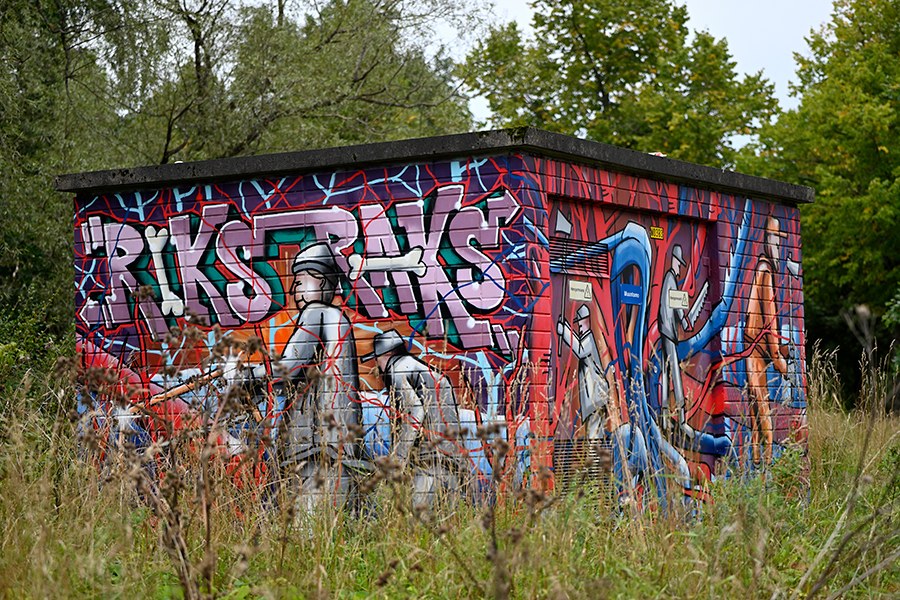
Local experiences will provide the foundation for developing knowledge and tools that can be applied more broadly to advance sustainable futures.
Research with people and for people
The co-creative processes included in the PULSE project will involve young people, older adults and groups living on the margins of society. The aim is to envision futures that support the green transition while remaining equitable and socially sustainable from the perspective of local residents.
“We will immerse ourselves in the communities we study in order to understand residents on their own terms. We will be conducting research with people and for people,” says Wallin.
“I hope the project will create a space for radical listening, where we are ready to hear residents’ stories. We will explore different perspectives and seek to understand why people experience things the way they do. The insights gained into strengthening the social fabric can then be translated into practical action,” says Puumala.
Shaping futures through dialogue – without ignoring history
The PULSE research consortium includes universities, research institutes and industry partners. The researchers will work with residents in the pilot neighbourhoods using participatory mapping methods and arts-based workshops.
Alongside the local pilots, the researchers will conduct a large-scale survey in five countries to examine which forms of cultural participation are most effective in strengthening civic engagement. The survey findings will enable them to compare the results of the local pilots with broader European data and assess their wider applicability.
Instead of attempting to predict a single trajectory towards a sustainable future, the researchers will cooperate with residents and other stakeholders to develop alternative scenarios exploring how different choices could lead to inclusive and socially just green futures.
“These scenarios will be based on our findings from the pilot studies and the survey. We will also take into account emerging trends and potential unforeseen developments,” says Puumala.
As the scenarios are developed, the participants will also consider how these preferred futures can be achieved.
The project will also result in roadmaps that outline concrete actions, responsible actors and ways of monitoring progress, helping to ensure that the experiences of local communities inform the work of municipalities, cultural organisations and policymakers.
“When young and older people are brought together, people often assume there will be a clash between generations. We do not make such assumptions. Instead, we seek to understand residents’ views,” says Wallin.
“We want to bring different generations together to reflect on the future and discuss the present. Older residents may have valuable knowledge of local history, offering insights into why their neighbourhood has developed as it has. We should avoid talking about change as though it occurs without a historical context and instead encourage dialogue about the future,” emphasises Puumala.
Photos: Eeva Puumala.
Participatory Green Futures
Co-creating inclusive and resilient neighbourhoods through cultural participation (PULSE)
- The PULSE project is funded under the EU’s Horizon Europe Programme (HORIZON-RIA – HORIZON Research and Innovation Actions).
- The Tampere University researchers involved in the project include Associate Professor Eeva Puumala (Principal Investigator), Senior Research Fellow Johanna Hokka, University Lecturer Antti Wallin and Doctoral Researcher Ebru Sevik, all from the Faculty of Social Sciences (SOC).
- In addition to Tampere University (coordinator), the consortium includes Tampere University of Applied Sciences, Northumbria University (UK), the University of Strathclyde (UK), FUNITEC (Fundacio privada universitat i tecnologia; Spain), Fundacja partnerstwa technologicznego / Technology Partners (Poland), Livelaboratorio Tampere oy, Lidia live + Digital audiences oy, Associació coordinadora d'entitats pel Teatre Arnau (Spain) and the Lithuanian Innovation Centre (Lithuania).
- The project will generate a validated Commons of Participation Framework, participatory tools and policy recommendations.
- The project outputs will be made available to municipalities, cultural organisations and civil society actors to enable the integration of participatory methods into local strategies that promote climate action and sustainable development.


