Towards Open Education: Removing Barriers to the Adoption of Open Educational Resources

Open Educational Resources
Open Educational Resources (OER) are digital educational materials that are either licensed under Creative Commons licenses or are in the public domain. OERs are built around five principles: retain; reuse; revise; remix; and redistribute. This is known as the 5R framework, proposed by David Wiley. OER's purpose is to improve global access to education and reduce costs for learners.
The Dubai Declaration on Open Educational Resources, published by UNESCO in 2024, underlines the need to ensure that open education is accessible to all, removing geographical, economic, and technological barriers. The declaration also emphasizes environmentally sustainable practices. For example, it recommends considering situations in which the use of artificial intelligence should be limited due to its high energy consumption.
OER are alternatives to expensive traditional educational materials. Although their benefits have been widely recognized and efforts to promote openness have continued for many years, several challenges continue to hinder the wider use of OER. Recognizing barriers is an essential first step in the search for solutions.
Current Challenges
The challenges associated with OER can be categorized as social, economic, and technical (Figure 1).
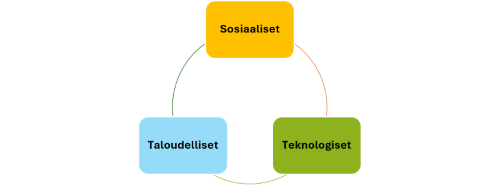
Figure 1. Challenges in the Use of Open Educational Resources
First, the social dimensions of OER adoption can emerge at both the individual and organizational levels. Sharing and reusing high-quality OER can save teachers time, enhance collaboration, increase the visibility of teaching, and improve access to knowledge for all learners. Involving students in co-creating an OER may also strengthen their motivation and engagement in learning. However, both educators and students may have limited awareness of OER and the opportunities they offer, which can restrict their use. At the organizational level, the challenge may lie in how OER are identified and recognized. Creating OER requires time and competence, and it may constitute an important part of the teacher's work. It is recommended that organizations have clear criteria and guidelines on how the creation and sharing of OER should be considered as a part of the evaluation of the teacher's work as a whole. The creation and sharing of high-quality OER should be acknowledged and rewarded with academic merit and promotion systems.
Economic issues constitute a second challenge. Although OER are free of charge for users and can reduce costs, their production, evaluation, development, and maintenance require financial resources. Organizational support and project funding play an important role in ensuring that high-quality OER can be created and sustained. OER also require technical platforms for storage and dissemination, together with ongoing maintenance. These infrastructures should be developed and maintained through both national and international collaboration to ensure interoperability and facilitate the discoverability of OER. In Finland, OER can be shared through the Library of Open Educational Resources, a service owned by the Finnish National Agency for Education, which develops the service in collaboration with its partners.
The adoption of OER also involves technological challenges. While openly available digital educational resources can promote equitable access to learning, inequalities may arise from differences in access to devices, software, and digital infrastructure. Teachers may find it difficult to find high-quality and relevant OER. In addition, adapting and customizing materials to meet the needs of a specific course can be time-consuming and require technical expertise. Other challenges include the creation and management of metadata, interoperability between systems, and issues related to copyright and licensing.
Advancing open education requires a shift in the culture of teaching and learning, which can be promoted e.g. through the reciprocal sharing and reuse of open educational resources. The creation, use, and sharing of OER require shared policies and practices that encourage and guide both teachers and students. At Tampere University, open education is promoted in a variety of ways. For example, it is included in Tampere University's Open Science Policy, published in 2024.
Further Reading
Tampere University’s Open Science Policy, 2024 (available through Trepo)
The Library of Open Educational Resources, where users can discover and share OER from all educational levels.
Tampere University Library's guide Open Education and Open Educational Resources
Guidance and support for selecting course materials are available on the Teacher Guide by Tampere University Library: Why choose an open access book as course material? Where to find open access books? How to evaluate the reliability of an open access book?
Text: Kati Syvälahti, Information Specialist
References:
Dias Valle, P. H., Capilla, R., Vinicius, d. S., Feitosa, D., & Elisa, Y. N. (2026). Open educational resources: Barriers and open issues. https://doi.org/10.48550/arXiv.2603.10013
Jackson, K., Kimmons, R., Leary, H., & West, R. (2026). Case study on a shift to open educational resources in an academic department. Open Praxis, 18(1), 13–26. https://doi.org/10.55982/openpraxis.18.1.1017
Jauhiainen, I. (2025) Tekoälyn ja avoimuuden ristipölytystä uudessa Dubain julistuksessa. Avoimen tieteen ja tutkimuksen kansallisen koordinaation verkkosivut.
LeMire, S. (2025). Faculty barriers to using open educational resources. Open Learning, 1–19. https://doi.org/10.1080/02680513.2025.2573338
Mullens, A. M., & Hoffman, B. (2023). The Affordability Solution: a Systematic Review of Open Educational Resources. Educational Psychology Review, 35(3), Article 72. https://doi.org/10.1007/s10648-023-09793-7
Torres-Castillo, C. S., Tariq, R., Hernández-Montoya, D., Martínez-Arboleda, A., & Pacheco-Velazquez, E. (2026). Sustainability Models for Open Educational Resources: A Pioneer Study Based on Interactive Media in Alignment with the 2024 Dubai Declaration. Journal of Interactive Media in Education, 2026(1), 13–13. https://doi.org/10.5334/jime.1028
Wiley, D., & Hilton III, J. L. (2018). Defining OER-Enabled Pedagogy. The International Review of Research in Open and Distributed Learning, 19(4). https://doi.org/10.19173/irrodl.v19i4.3601
Unesco. (2019). Draft Recommendation on Open Educational Resources. 40th General Conference, Paris. https://unesdoc.unesco.org/ark:/48223/pf0000370936
Unesco. (2024). Dubai Declaration on Open Educational Resources (OER): digital public goods and emerging technologies for equitable and inclusive access to knowledge. 3rd World Open Educational Resources Congress, Dubai. https://unesdoc.unesco.org/ark:/48223/pf0000392271.locale=en


