Professor Tomi Roinila develops solutions for more reliable electrical systems

What are your main research interests?
I study power electronics, with a special focus on the interoperability of power electronic systems and the system-level interactions between them. The ongoing electrification of society is driving the integration of power electronics into power grids, renewable energy generation, energy storage systems and transport. In the future, power electronics will be almost everywhere.
My primary research interests include the stability of electrical systems, system-level diagnostics and condition monitoring, as well as batteries, including battery state-of-health estimation.
What makes your research significant?
Our society is undergoing rapid electrification. At the same time, electrical systems are experiencing a profound transformation: conventional forms of electricity generation are increasingly being replaced by solar and wind power, energy storage solutions are becoming more and more important, and a growing share of electrical energy is processed through power electronic converters.
While these developments support the widespread adoption of renewable energy, they also create new challenges. When large numbers of power electronic devices are connected to the same system, complex interactions can arise that are difficult to predict. An individual device may still perform as intended, but the behaviour of the overall system may deteriorate as the number of interconnected devices increases.
The same applies to batteries. As batteries become more widely used in transport and power grids, we need to be able to reliably assess their state of health, safety and remaining useful life – preferably before the battery itself lets us know that something is wrong by leaving us stranded.
Our research aims to develop methods for detecting these types of issues as early as possible to enhance the reliability of electrical systems.
What would you want to study next and why?
I would like to investigate whether the built-in measurement capabilities of interacting power electronic devices could be used to enable autonomous system condition assessment and the early detection of stability issues before faults occur.
I am also interested in exploring how electrical measurements can be used to assess the internal state and ageing of batteries without interrupting their normal operation. The ultimate goal would be to ask a battery “How are you doing?” and receive a more detailed answer than “I’m fine.”
How would you like to develop your field of research?
I would like to see the field move towards more effective real-time monitoring of the state of electrical systems. Ideally, these systems should be able to continuously indicate, for example, how close they are to their stability limits, instead of problems being detected only after something has gone wrong.
Another important area of development is the integration of measurement data and intelligent analytics. Power electronic systems and batteries generate vast amounts of data, even during normal operation. I am interested in enabling these devices, in a sense, to tell us how they are doing and what is happening within the system. There is still some way to go before this vision becomes a reality, but I imagine a world with all the answers would be rather dull for a researcher.
Where do you draw inspiration for your work as a professor?
There is always something new to learn. Research often raises questions that nobody has answered before, and I get to explore these questions together with students and my fellow researchers.
I also enjoy the fact that the role of a professor combines research, teaching and supervision. For example, it is great to see doctoral researchers grow from students into independent experts over the course of a few years. By then, they often know far more about their research topic than their professor, which is exactly how it should be.
I also get to collaborate with companies and international research groups. No two days are ever quite the same.
What do you do in your free time?
I spend time with my family. I also enjoy practical activities that provide a welcome change from my work at the University. I enjoy sports and cooking, and I especially like baking.
In fact, cooking is surprisingly similar to research: it begins with a hypothesis, followed by an experiment, and finally an analysis of why the outcome is nowhere near what you originally intended. But the upside is that you can usually eat even the failed results.
Cooking provides an excellent counterbalance to research – the results come much faster than they do in a research project.
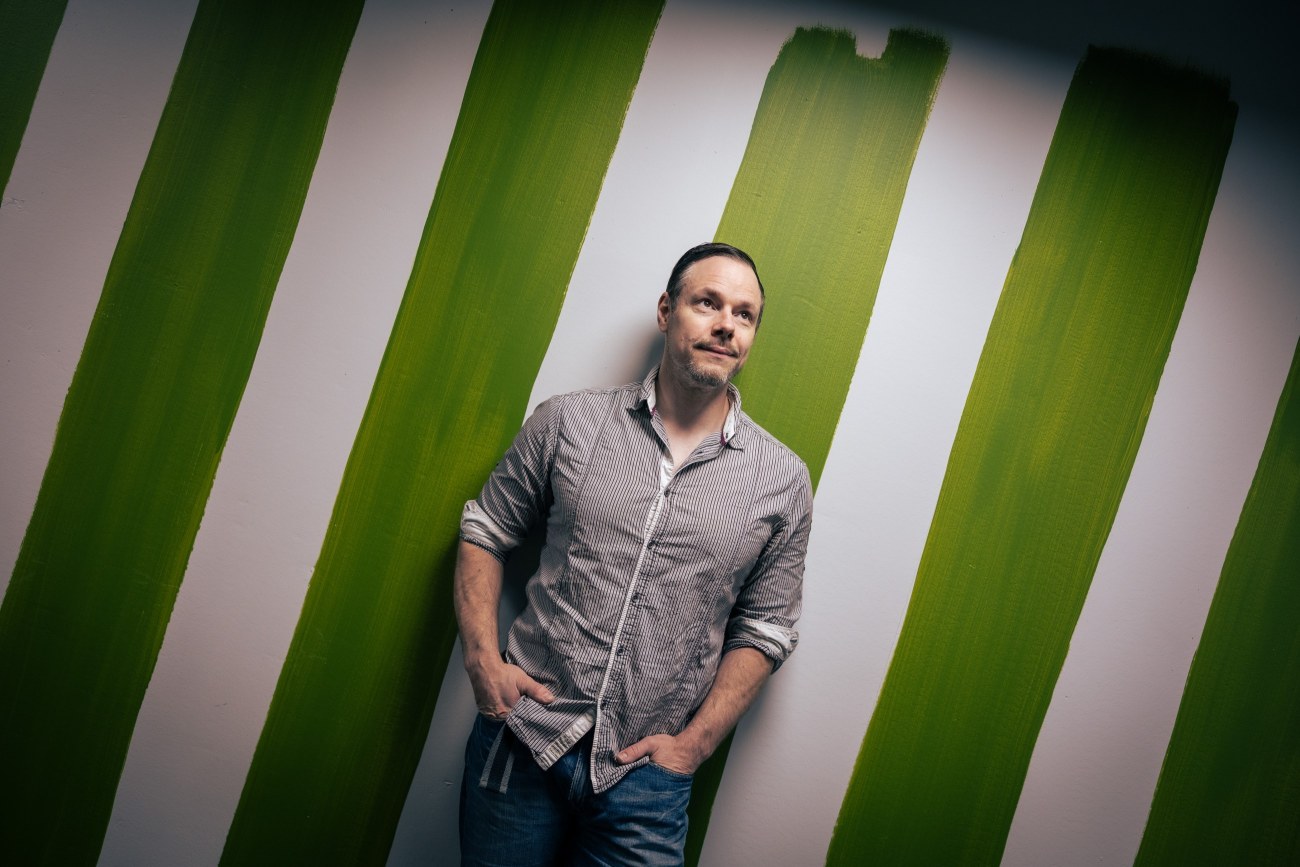
Tomi Roinila
- Professor of Power Electronics, Electrical Engineering Unit, Faculty of Information Technology and Communication Sciences, Tampere University, since 1 July 2026.
- Head of the Power Electronic Systems research group.
- Associate Professor, Electrical Engineering Unit, Faculty of Information Technology and Communication Sciences, Tampere University, 2020–2026.
- Academy Research Fellow, Tampere University, 2011–2019.
- Doctor of Science in Technology (Automation Engineering), Tampere University of Technology.
- Extensive international collaboration network comprising industrial and academic partners, including GE, VTT Technical Research Centre of Finland, Danfoss, the University of South Carolina and Aalborg University. Collaborative projects focus on the development of grid-connected systems, power electronics and mobile machinery.
- Research interests include the modelling and control of power electronic systems and system-level interactions, especially in grid-connected applications and battery energy storage systems.


