Nordic-East Asia symposium brings international higher education researchers together in Tampere

The symposium was organised jointly by Tampere University, the University of Stavanger, and the Graduate School and School of Transdisciplinary Studies at The Hang Seng University of Hong Kong.
Altogether, 64 participants attended the event, with 34 joining on-site in Tampere and 30 participating online. The programme featured 34 presentations across three parallel tracks. The first track addressed governance, policy, internationalisation, and institutional resilience. The second focused on teaching, learning, curriculum, and digital transformation, while the third examined equity, well-being, academic work, and graduate futures.
The presentations explored a broad range of current issues, including institutional resilience, artificial intelligence, internationalisation, academic integrity, student well-being, graduate employability, academic precarity, crisis response, and international collaboration.
Comments during the event and the initial responses to the participant feedback survey indicate that the symposium was a success. Participants gave particularly high ratings to the organisation on the day of the event and the academic quality of the presentations. The range of perspectives represented in the programme also generated valuable conversations across different national, institutional, and disciplinary contexts.
Opening and keynote address
The symposium opened with inspiring remarks by Professor Jussi Kivistö of Tampere University. He placed the day’s discussions within the wider theme of turbulence and invited participants to consider how higher education institutions can respond to disruption through learning, adaptation, and critical reflection.
Professor Kivistö played a central role in shaping the symposium’s academic framework from the beginning of its development. His contribution helped to establish a shared intellectual foundation for the day.
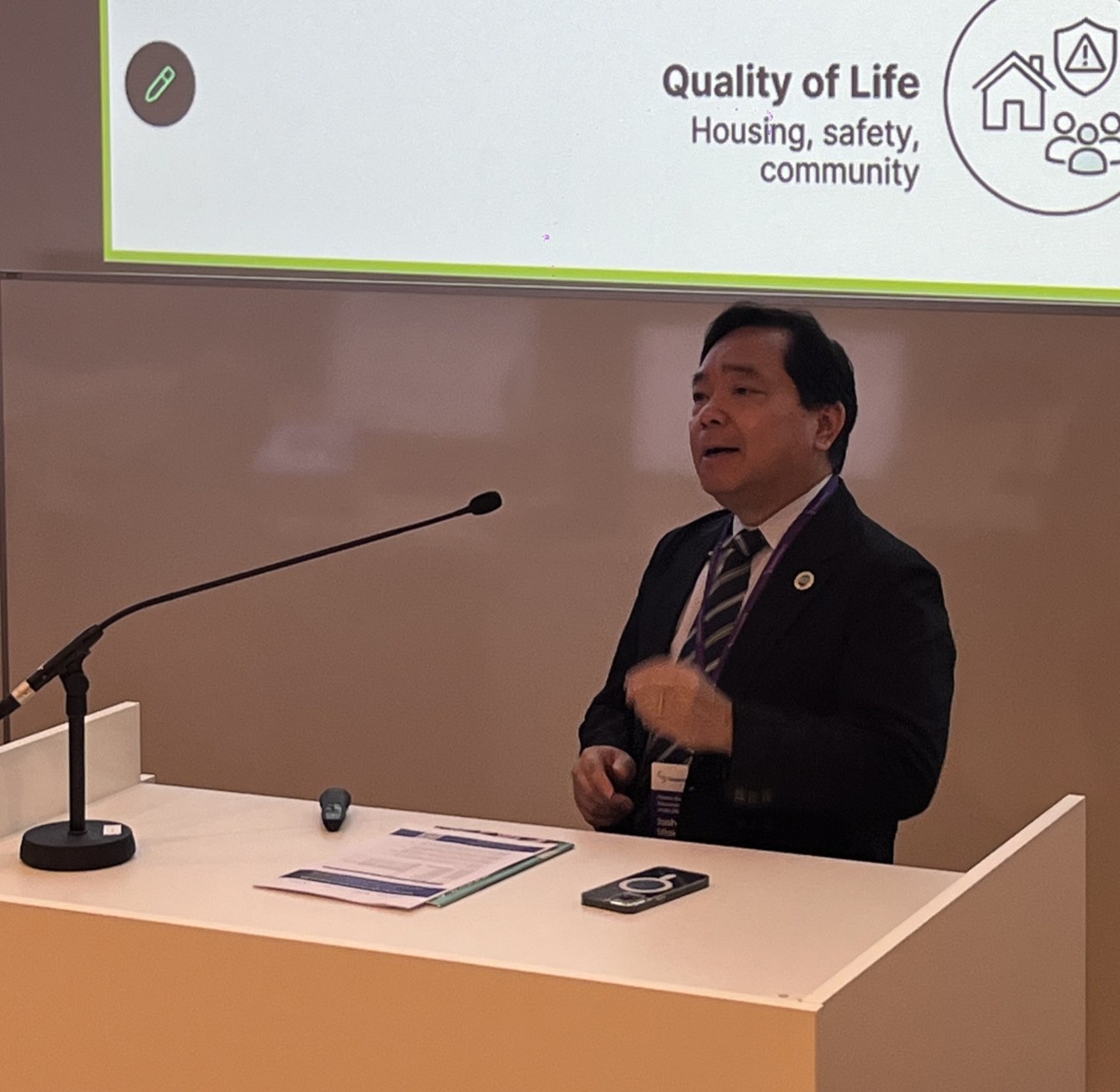
The keynote address was delivered by Professor Joshua Mok of The Hang Seng University of Hong Kong. In his presentation, “The Quest for International Higher Education in Hong Kong: Comparative Perspectives and Public Policy Issues,” Professor Mok discussed Hong Kong’s ambition to become a leading international higher education hub. He also drew comparative insights from the United Kingdom, Singapore, and Malaysia.
Connecting participants through a hybrid format
The hybrid format enabled researchers who could not travel to Tampere to present their work and participate in the discussions. Organising three simultaneous hybrid tracks was technically and logistically demanding, but the programme proceeded successfully.
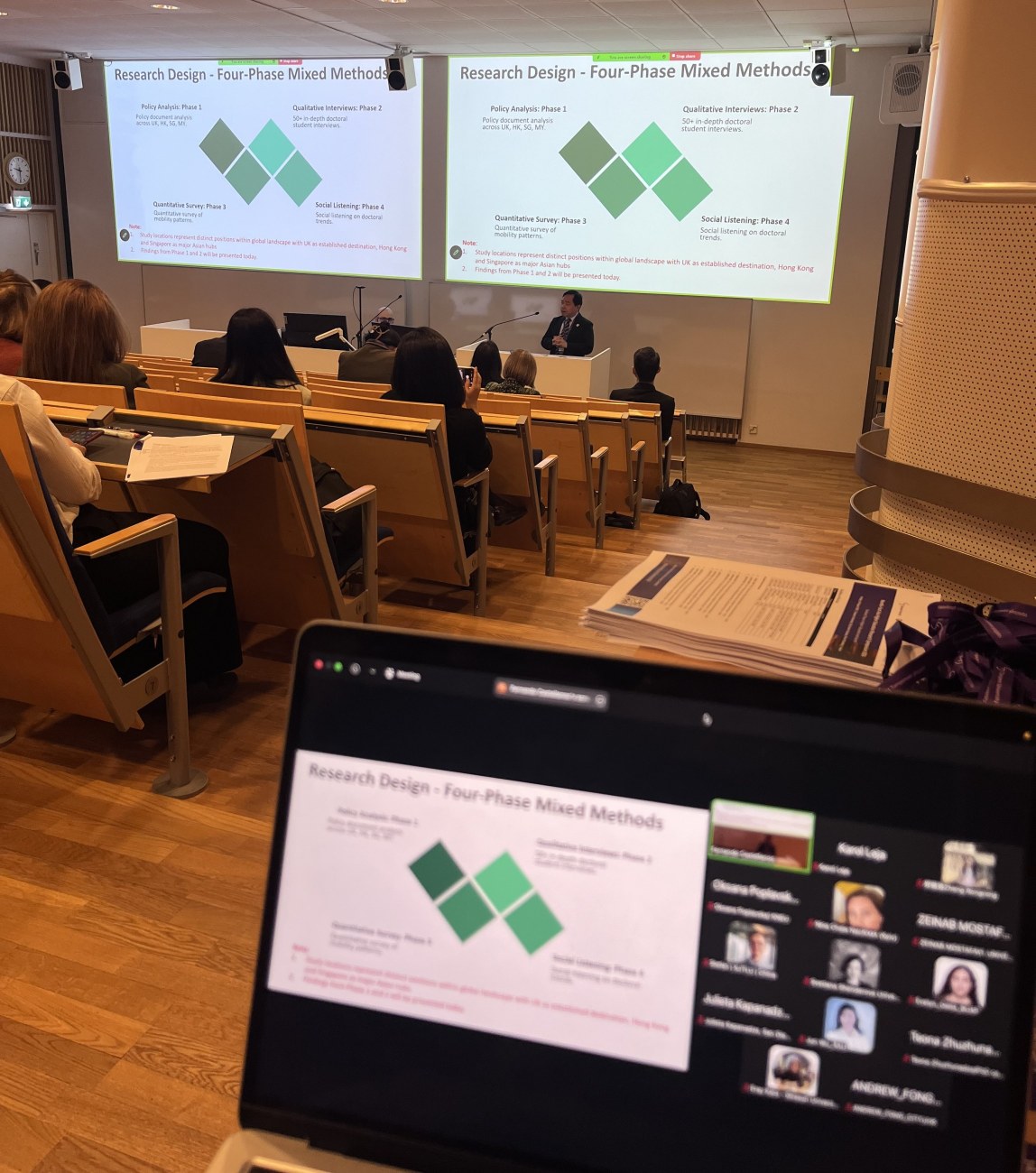
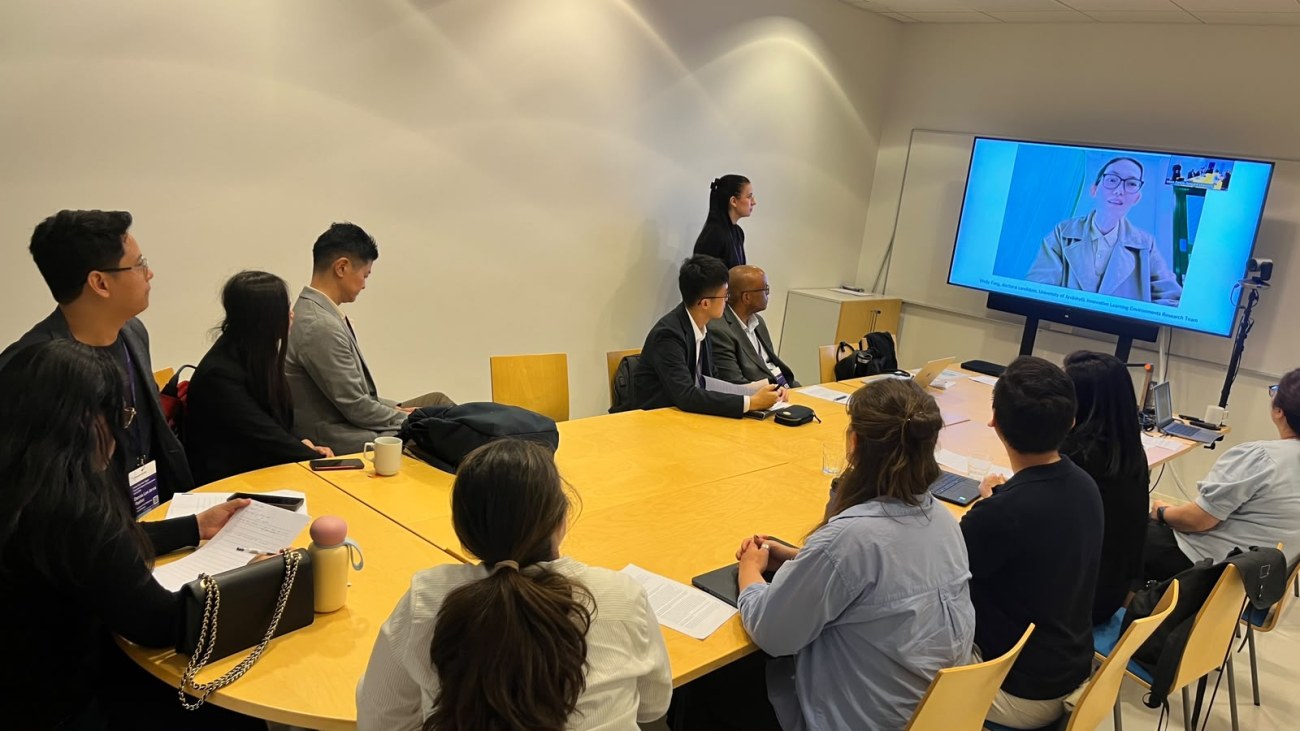
Online participants were especially appreciative of the opportunity to join remotely. Their active contribution demonstrated how carefully planned hybrid events can widen participation and strengthen international academic exchange. Technical support was provided by Uswa Zainab and Fernando Castellanos. Their flexibility and responsiveness were essential to connecting presenters, participants, and chairpersons across the on-site and online environments. Several chairpersons facilitated the sessions, supporting presenters, managing the hybrid discussions, and creating space for questions and exchange.
A collaborative achievement
The symposium was developed by Tampere University, the University of Stavanger, and The Hang Seng University of Hong Kong. The organising committee included Professor Joshua Mok, Associate Professor Dian Liu, Professor Jussi Kivistö, and Professor Yuzhuo Cai, with the planning and delivery coordinated by Karol Leja.
Partner representatives, chairpersons, technical facilitators, and other colleagues supported the programme and hybrid implementation. Presentations and discussions created new connections between Nordic, East Asian, and wider international research communities, providing a foundation for future academic exchange and collaboration.


