From humble beginnings to the forefront of social robotics in Finland – the Robostudio teaches a new civic skill

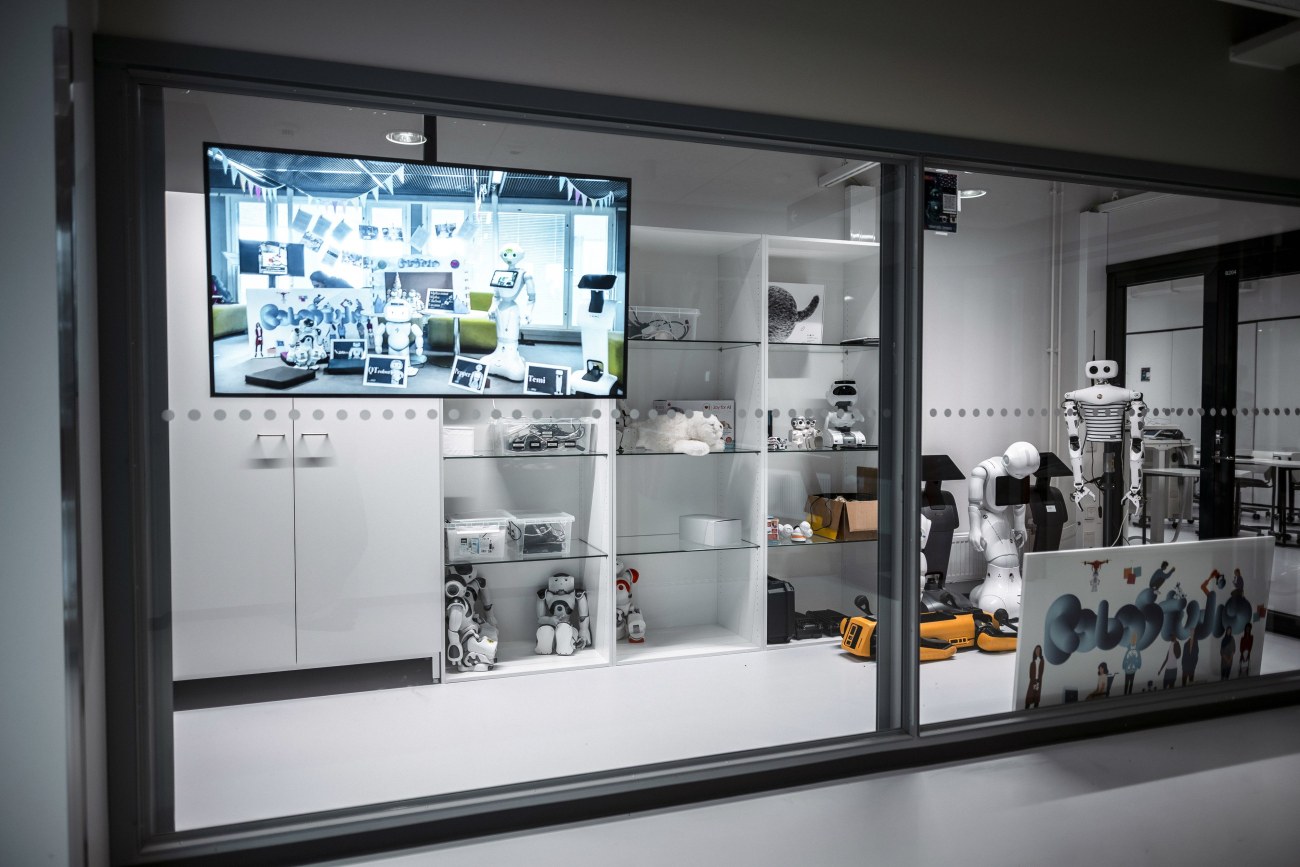
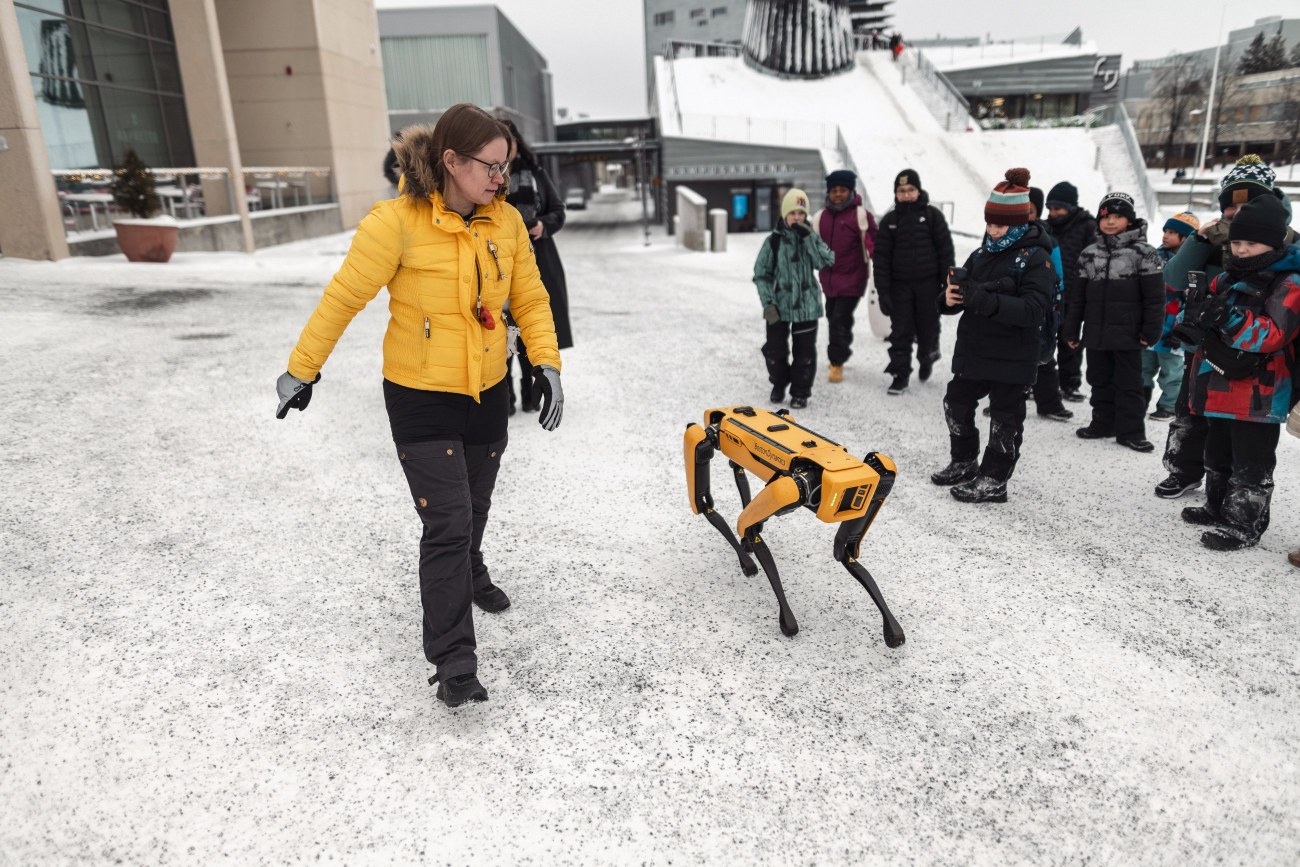
If you have encountered a yellow robot dog performing tricks, been greeted by a friendly humanoid robot or petted a soft robotic seal, chances are you have met Spot, Pepper or Paro, residents of the Robostudio at Tampere University.
These robots have been a popular attraction at a wide range of events since 2018. Over the years, the Robostudio has evolved into an interactive space for teaching and research. Each year, it welcomes hundreds of visitors, from schoolchildren and upper secondary students to senior citizens, to learn more about robotics.
“Robots are increasingly finding their way into our everyday lives. Here in Tampere, we already encounter robot buses, grocery delivery robots, language-teaching robots, cleaning robots and robotic lawn mowers. Robot and AI literacy could become a new civic skill, helping people to understand what robots are, how they operate and whether there is any reason to fear them,” says Aino Ahtinen, University Lecturer and active member of the Robostudio team.
While the Robostudio has remained firmly focused on teaching and research in social robotics over the past eight years, its operations have expanded significantly. Its collection of robots has increased tenfold. The current facilities in the Sähkötalo building on the Hervanta campus house 20 robots and can accommodate dozens of visitors at a time, but things began on a much more modest scale.
“When we started out, the robots were stored in a cupboard that was originally intended for waste bins. The door was labelled ‘rubbish’ or something similar, which we found hilarious,” recalls Ahtinen.
A co-learning model for social robotics
The Robostudio has been a pioneer in social robotics education in Finland. Since 2019, Tampere University has offered the course Social Robots: Design, Research and Interaction, taught by University Lecturer Aino Ahtinen. More than 200 students complete courses at the Robostudio each year.
Students have been actively involved in the activities from the outset, with 10–15 thesis projects on social robotics completed annually.
The Robostudio has developed a unique co-learning model for social robotics, whereby students first develop their own knowledge and programming skills in robotics before going on to facilitate workshops for visitors interested in learning about social robotics.
According to Ahtinen, this approach offers significant benefits for both students and visitors.
“To facilitate the learning of others, our students must first develop an in-depth understanding of the subject matter. They must carefully consider how best to engage upper secondary students through interactive and experiential learning activities. It is important for university students to develop facilitation skills, which often requires them to step outside their comfort zone.”
“We have received positive feedback that our students are enthusiastic and often seen more as peers than us ‘old’ teachers. They help to create a very energetic atmosphere in our workshops and events,” Ahtinen says.
Social robotics is taught within the Master’s Degree Programme in Human-Technology Interaction in the Computing Sciences Unit at Tampere University. The programme attracts students from a wide range of educational backgrounds. Ahtinen has observed that social robotics is a field with broad appeal.
“There is no single profile of someone who is interested in social robotics. One does not have to be fascinated by programming or sensor technology to become interested in robots. In fact, people are drawn to social robotics from a variety of perspectives, including industrial design, interaction, well-being, pedagogy and languages.”
From individual visits to long-term collaboration
One of the Robostudio’s longest-standing partnerships is with Tampere High School of Technology. Over the years, students from the school have regularly visited the Robostudio, especially in connection with their psychology studies.
Psychology teacher Heidi Meltovuo from Tampere High School of Technology finds the Robostudio’s co-learning model to be highly effective. She appreciates the real-world relevance and international dimension that the collaboration with Tampere University offers.
“Our collaboration with the Robostudio brings topics such as human-robot interaction, robotics, artificial intelligence and robot literacy to life through practical, hands-on learning. By facilitating workshops, the international degree students at Tampere University provide our students with inspiring learning experiences that would be impossible to replicate in a typical upper secondary school classroom. They also help our students enhance their English communication skills and develop their ability to examine technology from multiple perspectives through the lens of psychology,” says Meltovuo.
The Robostudio’s atmosphere has also received positive feedback from upper secondary students. Ahtinen believes that their positive experiences may influence the choices these students make when considering their future fields of study.
The Robostudio also collaborates with a range of external partners in social robotics research, including assisted living facilities, the ATK Seniorit Mukanetti association, schools and the Varala Sports Institute.
“I hope we can continue our field-based activities and conduct research in authentic environments. For example, we are keen to study how robots operate in outdoor environments. Promoting well-being is another area that I would be interested in exploring further,” says Ahtinen.
About the Robostudio
- Established in 2018.
- Currently houses 20 social robots.
- More than 300 visitors in 2026, and the number is growing.
- More than 200 students complete courses at the Robostudio each year.
- Supported by a team of five researchers and doctoral researchers.
- Has published 47 research articles to date, including 27 articles with a Robostudio team member as first author and 20 with a team member as co-author.
- Ongoing projects: Mixed Fleet (until December 2026) and MediaRoboLit65+ (until August 2027).
- Has received five awards, including awards for best article, best thesis, outstanding teaching and the development of teaching.


