Finnish Cardiovascular Research Center wants to stay one step ahead of heart attack

Let’s begin by listing five factors: smoking, hypertension, elevated cholesterol levels, diabetes and genetic makeup.
This famous five is dangerous because they predispose people to early-onset cardiovascular diseases. Early-onset means clear milestones. We are talking about premature illnesses if a man under the age of 50 or a woman under the age of 60 has a heart attack.
Of the predisposing five factors, smoking has recently clearly decreased. It is also relatively easy to diagnose high blood pressure and cholesterol levels by measuring them, and there are effective medications to combat these diseases. Diabetes, however, is more elusive.
“Diabetes is particularly insidious because it works beneath the surface, a lot like a mole digging tunnels underground. It damages various organs, but it also affects arterial walls. Fortunately, there are now highly effective medications for diabetes as well. However, in diabetes if you look at the coronary arteries – the blood vessels of the heart itself – the effects of diabetes can be seen throughout the arterial system. The effects of the other risk factors tend to be concentrated at the bends or branching points of blood vessels,” says Professor of Physiology Katriina Aalto-Setälä.
According to Aalto-Setälä, genetic predisposition is the most challenging factor because many questions still remain unanswered. “In some families, premature cardiovascular events are very common, but we are yet to establish why that is,” she explains.
Tracing the causes through multiple pathways
Together with Research Director Reijo Laaksonen, Aalto-Setälä leads the Cardiovascular Research Center at Tampere University. One of the Center’s aims is to gain a better understanding of the factors causing some people to develop cardiovascular disease at an unusually early age. Finding answers requires multiple approaches.
“Our research groups focusing on genetics investigate how genetic variation influences susceptibility to heart disease, in other words, why cardiovascular diseases are more common in certain families. Meanwhile, researchers working on epigenetics explore how environmental factors affect disease risk and how, for example, the dietary habits of previous generations –including grandparents – may influence whether a disease eventually develops,” Aalto-Setälä explains.
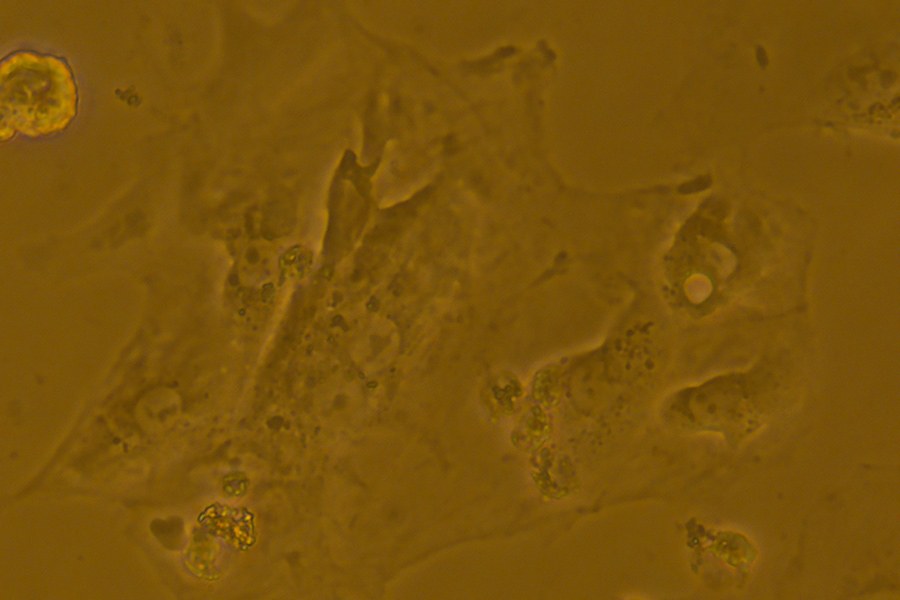
One of the Center’s strengths is stem cell research in which stem cells are differentiated into heart cells. This enables studying diseases in laboratory conditions without exposing patients to new drugs or experimental treatments.
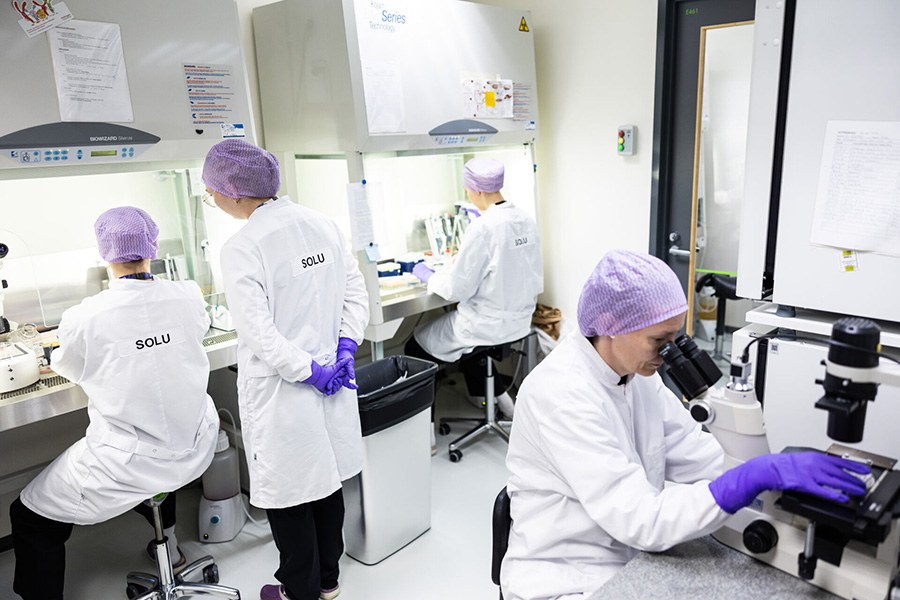
Engineering sciences also play a role in determining why, for example, one carrier of a particular genetic mutation develops a disease while another does not. These sciences provide access to digital twins, which is a globally significant and highly topical area of research.
“A digital twin means creating a kind of an avatar of an individual that incorporates all available data on that person’s physiology and health. That kind of modelling can be used to observe and predict disease progression, identify suitable medication and tailor personalised treatments," Aalto-Setälä explains.
Alongside the opportunities afforded by artificial intelligence and new technologies, a strong foundation remains the most important factor. In the search for environmental and lifestyle risk factors and the development of digital twins, that foundation incorporates data from both clinical and basic research.
Towards more advanced diagnostics
If asked to name a diagnostic method for detecting cardiovascular disease or its complications, many people might say angiography.
Today, however, angiography is used less frequently in the initial search for potential causes. Imaging technologies have advanced to the point where accurate diagnoses can be made using CT (computed tomography) or MRI scans.
Improving diagnostics and the detection of complications is in fact another key objective of the Cardiovascular Research Center.
In addition to imaging, biomarkers provide a wealth of information. In the context of cardiovascular diseases, troponins are of particular interest.
“Troponin is a protein specific to heart muscle cells which is released into the bloodstream when the heart is damaged. Such damage may be caused, for example, by a myocardial infarction or an infection affecting the heart," says Aalto-Setälä.
The heart also produces hormones. Heart failure can be detected by measuring BNP, a hormone produced by the ventricles. BNP levels rise in heart failure.
“If both BNP (B-type natriuretic peptide) levels and the ECG are normal, the heart is likely to be healthy. BNP is a highly sensitive marker and rises whenever the heart is subjected to stress of some kind. An elevated BNP level does not necessarily indicate a serious problem, but it is a sign whose underlying cause should be investigated," Aalto-Setälä notes.
From rare diseases to more common conditions
At the Finnish Cardiovascular Research Center, the focus is also on the study of rare diseases. For example, the large-scale SMASH-HCM project, led by Professor Jari Hyttinen, combines dynamic biophysical models with data-driven analyses using digital twins.
Hypertrophic cardiomyopathy (HCM) is not among the most common cardiovascular diseases. Affecting around two people in every thousand, it is nevertheless the leading cause of sudden cardiac death among young people.
The SMASH-HCM project aims to improve personalised risk stratification for patients with HCM, as well as the prevention and management of the disease.
“We are developing tools across Europe that will hopefully also end up being used for more common heart diseases, such as heart failure, atherosclerosis and valvular insufficiency. When we can identify signs that indicate something is about to happen, we can stay one step ahead of the disease,” Aalto-Setälä explains.
The same principle of scaling up from a narrower focus to broader applications also applies to the research center’s operations more generally.
A common challenge in large organisations is the tendency to maintain silos where people are often unaware of what is happening in the other teams close by. At the Finnish Cardiovascular Research Center, research groups do not work in isolation on their own projects. Staff gather a few times each year, both formally and informally, and researchers from different groups take turns presenting their ongoing work.
“We have been really successful in ensuring that we do not always have to look elsewhere in Finland or abroad for collaboration partners. We stay informed about the expertise and capabilities available within our Center and across Tampere University. This collaboration between research groups is also enormously valuable when applying for project funding from organisations such as the Research Council of Finland and the EU,” says Aalto-Setälä.
As an excellent example of collaboration within the university, Aalto-Setälä mentions the teamwork between Professor of Cardiology Jussi Hernesniemi and Professor of Computational Physics Esa Räsänen. Hernesniemi leads the Clinical Cardiology Research Group at the FCRCT research centre, while Räsänen heads the Quantum Control and Dynamics Group at the Faculty of Engineering and Natural Sciences. This collaboration has also led to setting up the MoniCardi startup with support from Business Finland.
“It is great to see that Jussi and Esa have found each other as collaborators! Esa is incredibly innovative. His research group can analyse various conduction abnormalities and ECG variations with great precision. They predict an increased risk of sudden cardiac death,” Aalto-Setälä enthuses.
The role of the Center's leaders in managing the smooth running of daily operations should not be overlooked either.
“Reijo is exceptionally good at networking in Finland and internationally. I, on the other hand, enjoy organising activities and bringing people together. We make a pretty good team,” Aalto-Setälä says.
Finnish Cardiovascular Research Center (FCRCT)
- Aims to increase understanding of the factors that contribute to the development of cardiovascular diseases.
- Researchers at the Center also develop diagnostic methods for detecting cardiovascular diseases and their complications. These methods draw on, for example, biomarkers, imaging and ECG data.
- One of the seven research centres within the Faculty of Medicine and Health Technology.
- Began a new five-year term in January 2026. The Center has already completed one previous five-year term.

Finnish Cardiovascular Research Center introduction video
Professor Katriina Aalto-Setälä introduces the Finnish Cardiovascular Research Centre and discusses its mission and research goals.
Author: Sari Laapotti


