Beyond recycling: Tampere University’s research on the circular economy attracts international attention

Many people associate the term ‘circular economy’ with recycling: recovering used materials and turning them into new products.
However, Professor of Industrial Engineering and Management Leena Aarikka-Stenroos emphasises that the circular economy involves far more than recycling. It includes, for example, reusing entire products or components, extending their lifespan and promoting shared use. The circular economy is a key driver of the green transition in both industry and the consumer market, and it takes many different forms.
“It also entails the optimal use of materials and the replacement of conventional materials with biodegradable alternatives,” Aarikka-Stenroos says.
Consumers can spot circular economy solutions, for example, when they notice that plastic packaging is thinner than before, a garment contains recycled fibres, or food packaging makes a different rustling sound because conventional plastic has been replaced with a bio-based material.
However, most of the circular economy practices implemented in industry are not directly visible to consumers.
“When we turn on a tap, circular practices may be operating behind the scenes, from the treatment of water to the production of the required chemicals. The products we purchase may be manufactured in factories where machinery has been refurbished instead of being replaced.”
Circular economy solutions can be found in unexpected places, such as within the walls of a new home.
Aarikka-Stenroos leads a research group that participated in the recently concluded EU-funded ReCreate project, which investigated the reuse of precast concrete elements in new buildings. As the production of cement and concrete consumes natural resources and generates a significant amount of emissions, reusing these elements would represent a major step forward in addressing climate change.
Circular economy helps to ensure continued access to natural resources
In simple terms, the circular economy is about using scarce resources more wisely. It aims to reduce the consumption of virgin materials, mitigate climate change and slow biodiversity loss.
Alongside environmental benefits, the circular economy offers a wide range of other advantages that Aarikka-Stenroos’s research group has explored.
“For one thing, the circular economy saves money. When a material or product can be reused, we can preserve its existing value.”
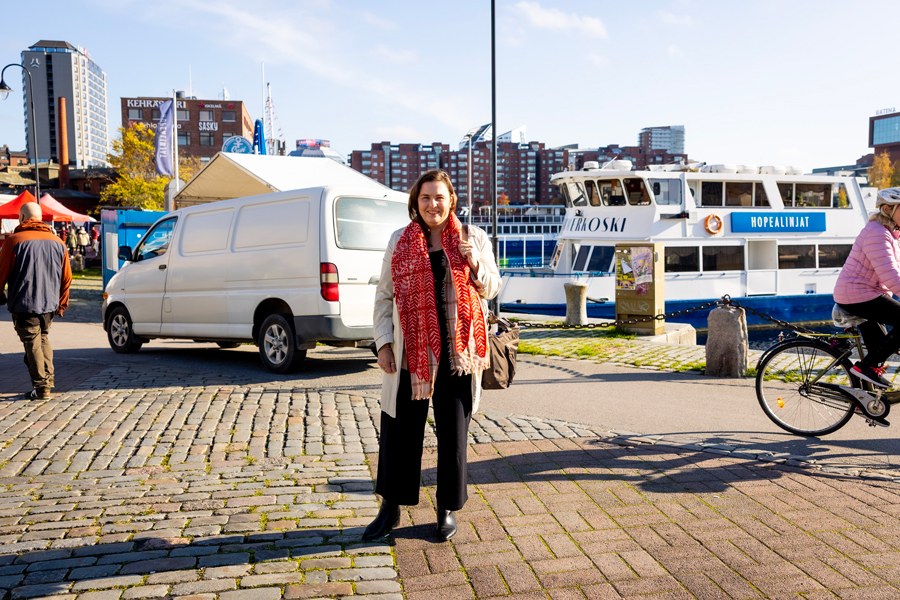
The circular economy also provides functional benefits through increased convenience. When an item is refurbished and its lifespan extended, it remains readily available and does not need to be sourced again. When products are provided as a service, there is no need to set aside storage space for them.
According to Aarikka-Stenroos, the circular economy also generates emotional benefits that are rarely talked about. For both consumers and industry professionals, witnessing the vast quantities of resources consumed and waste generated can be deeply discouraging.
“People working in the construction industry come face to face with enormous volumes of construction waste, while those in the food industry witness the scale of food loss and waste. The adoption of circular solutions that reduce waste can help to ease this emotional burden and increase job satisfaction.”
One of the benefits of the circular economy is that it encourages companies to practise new ways of working. As expectations for the adoption of circular economy principles continue to grow, companies will be able to apply the operating models they have already developed to new areas of activity.
High-impact research receives international recognition
Aarikka-Stenroos leads the Center for Innovation and Technology Research (CITER) at Tampere University, where researchers explore innovation- and technology-driven business and how it can be advanced. A substantial share of the centre’s research focuses on circular, low-carbon, industrial-scale business as well as the green transition in an industrial context.
“What new materials, technologies and products should companies develop to create genuine value across industrial value chains? How should these products be brought to market in ways that appeal to customers? How can this type of business be made profitable? How are digitalisation and artificial intelligence advancing circular business models? These are some of the questions we have sought to answer.”
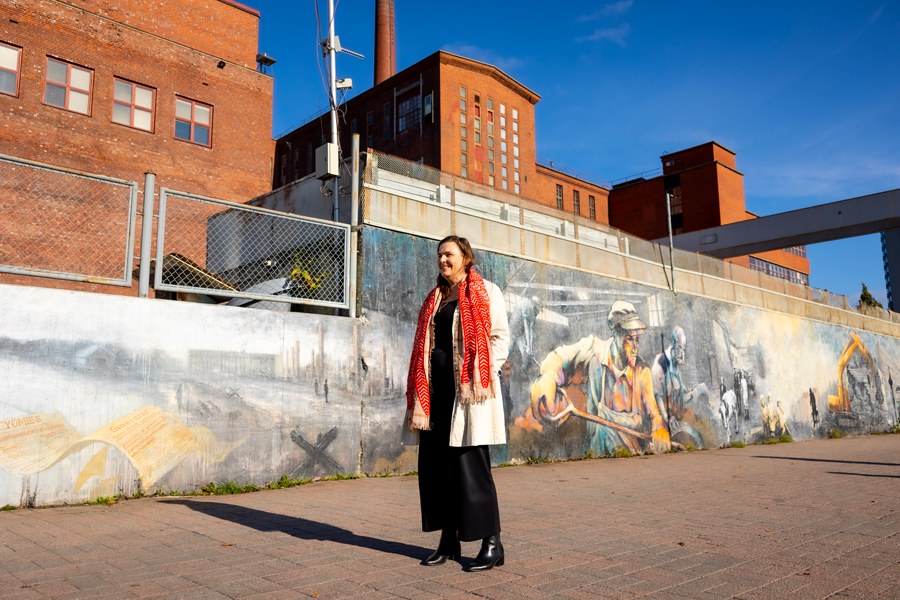
Aarikka-Stenroos is a prolific author of research papers, and her work has gained extensive international recognition. For several years, she has been featured in the Stanford-Elsevier list of the world’s top 2% of scientists, which identifies the most cited researchers globally.
“Research on the circular economy attracts widespread interest and delivers a tangible impact. There is a clear demand for this type of research in Finland, across Europe and all over the world. Tampere University is home to a wealth of expertise that responds to this demand, including the Research Centre for Managing Circular Economy (ManCE), which brings together researchers from multiple disciplines,” she says.
Small and superficial improvements are not enough
Not all solutions marketed under the banner of the circular economy genuinely conserve natural resources or benefit the environment.
For example, in some cases the negative effects of collecting and transporting materials outweigh the benefits of recycling.
“The focus may be on minor improvements while measures that would have a much greater impact on the environment are overlooked.”
Although the circular economy promotes sustainable development, it may also have unintended negative consequences: recycling can be used to justify excessive consumption and the unnecessary use of natural resources.
We may unthinkingly buy new clothes if we believe that selling them later at a flea market offsets their environmental impact, or assume that a product labelled “contains recycled plastic” is environmentally friendly, even when it contains only a minuscule amount of recycled material.
“The risk is that we fail to make meaningful improvements and instead tinker with superficial changes. We must not be lulled into believing that recycling is enough when we ought to be challenging our entire consumer culture,” says Aarikka-Stenroos.
How can consumers support the transition to a circular economy?
Ask yourself: do I really need this product? Buy only what you need and what works for you.
Be aware that your choices matter. For example, opt for clothing made from recycled fibres and products that contain less plastic.
For maximum impact, extend the lifespan of your possessions by taking good care of them and repairing them when needed. You do not always have to buy new if you can repair what you already have.
Minimise waste! Recycle according to the instructions. If an item is still usable, do not throw it away. Instead, sell or donate it so that it can continue to be used.
Author: Virpi Ekholm


