Autism-related repetitive behaviour may support child’s self-regulation

The study followed 3- to 6-year-old autistic children and a comparison group of children with developmental delay without autism, as well as typically developing children. The researchers measured respiratory sinus arrhythmia (RSA), the natural variation in heart rate that occurs in synchrony with breathing and has been linked to self-regulation and social engagement, and followed the children over two years. The findings showed that autistic children had lower RSA than both comparison groups in early childhood, even when compared with children who had similar developmental delays but no autism.
While autistic children initially had lower RSA than the comparison groups, their RSA levels increased over the two-year follow-up and approached those of the other children, suggesting a possible delay rather than a fundamentally different pattern in the development of physiological regulation.
The study is among the first longitudinal studies to compare autistic children not only with typically developing peers but also with children who had similar cognitive developmental levels without autism. The findings provide new insight into the biological processes that may underlie early autistic development.
An especially interesting finding was related to restricted and repetitive behaviour. In the study, their association with the function of the autonomous nervous system was different than in children with intellectual disability without autism.
“The findings indicate that the same behaviour can serve different purposes in different groups of children. Restricted and repetitive behaviour patterns in some children with autism may be linked to supporting self-regulation and managing environmental demands,” says Docent Anneli Kylliäinen, principal investigator of the study.
The finding supports the neuroaffirmative approach which emphasises that behaviour typical of children with autism should be examined relative to its purpose and meaning, not just as an external symptom of their condition.
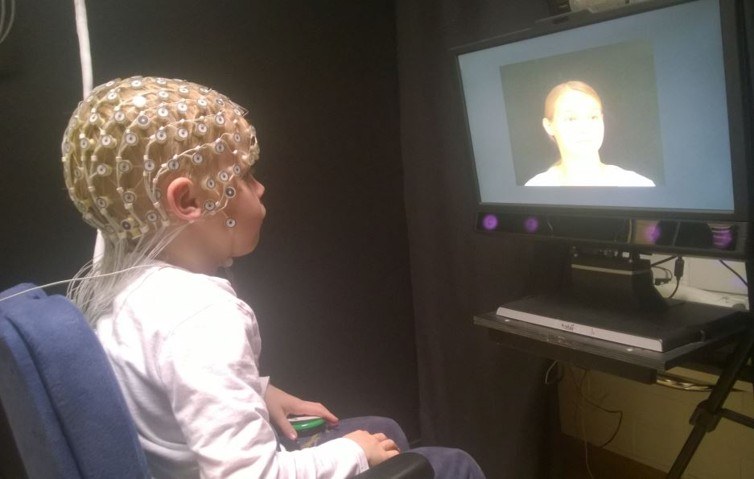
The research is one of the longitudinal studies conducted by the Autism and Neurodevelopment Research Group led by Docent Anneli Kylliäinen at Tampere University. The research group investigates the development of social perception, interaction and self-regulation in autism and children’s neurological development and produces research-based neuroaffirmative support methods for children and their families.
“The key question is not necessarily how much restricted and repetitive behaviour the child exhibits but the function the behaviour serves in the development of that specific child in that particular situation,” Kylliäinen notes.
The research was published in American Journal on Intellectual and Developmental Disabilities.
The research article
Lauttia, J., Helminen, T. M., Kauppinen, P., Eriksson, K., Hietanen, J. K., & Kylliäinen, A. (2026). Longitudinal Resting State Heart Rate Variability in Young Children With Autism. American Journal on Intellectual and Developmental Disabilities, 1–13.
Contact person
Anneli Kylliäinen
University Lecturer, psykologia Anneli Kylliäinen
What is neuroaffirming?
Neuroaffirming is based on neurological diversity being regarded as a natural part of humanity. It emphasises acknowledging individual strengths, support needs and the significance of the environment. In neuroaffirmative thinking, behaviour associated with autism is examined from the perspective of its possible meanings and benefits, not just from the perspective of abnormality and challenges.
In neuroaffirming research, the child’s behaviour is not automatically regarded as a problem, which is not the same as no support would be needed. Many autistic children benefit from intervention, for example, in language development and learning everyday skills. We want to understand what happens in the child’s body and behaviour so that we can tailor support to the child's individual needs.
Anneli Kylliäinen.


