Coffee waste turned into ink: Finnish collaboration pioneers sustainable packaging innovation

This innovation will be showcased in the New Wood exhibition by the Uusi puu project at the European Commission in Brussels during May–June 2025, as well as in the Finlandia exhibition opening in early June at Finlandia Hall, featuring new bio-based materials and solutions developed by Finnish companies.
Natural Indigo Finland, in partnership with Tampere University of Applied Sciences (TAMK), has developed a water-based ink using biocolorant extracted from coffee waste supplied by Finnish coffee roastery and spice producer Meira Oy. The resulting ink offers a renewable, natural alternative to synthetic pigments traditionally used in packaging printing.
The project has progressed from laboratory research to industrial proof-of-concept, with Cabassi Oy successfully printing the ink on the Paptic® material, which is a durable, recyclable at scale, fibre-based solution designed to replace plastic. The result: a high-quality, sustainably printed paper bag colored with pigment sourced from coffee waste.
“This is a true circular economy solution. We’ve taken what was once waste and upcycled it into value, replacing synthetic colorants with a fully bio-based pigment made from coffee,” says Pasi Ainasoja, CEO of Natural Indigo Finland.
“As a coffee roastery committed to sustainability, we’re proud that there is a new, alternative way to use this valuable raw material. On top of producing biogas from the side streams we can also utilize it for more sustainable packaging. This collaboration between a start-up, academia, and industry is an inspiring example of cross-sector innovation that creates new concrete sustainable solutions,” says Heidi Päiväniemi, Sustainability, Development & Communication Director at Meira Oy.
“This is a significant green innovation in the global packaging print sector, which is worth hundreds of billions of euros annually,” adds Dr. Kai Lankinen, who teaches and researches sustainable packaging at Tampere University of Applied Sciences.
“We are now forming an international consortium of ten companies and higher education institutions to raise €9.5 million in funding. Our goal is to scale this 100% bio-based colorant globally, replacing synthetic pigments with solutions derived entirely from industrial waste and natural sources.”
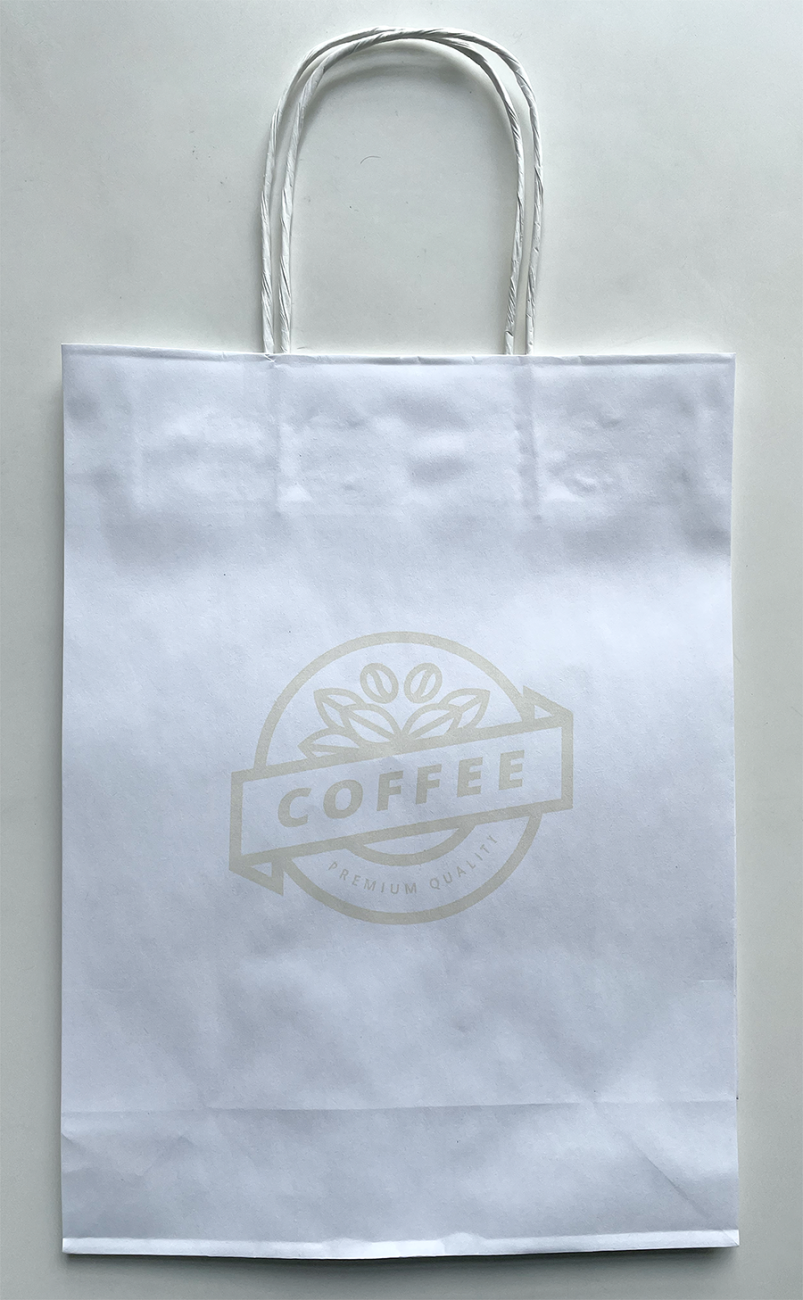
A model for the future of sustainable packaging
This proof-of-concept is the result of 12 months of collaborative research and development, responding to the rising demand for eco-friendly alternatives in packaging and print. As regulations tighten and the shift away from fossil-based resources accelerates, this innovation provides a scalable, low-impact color solution suitable for a wide range of applications.
The partners are now seeking to expand the collaboration and invite additional industry players to help scale the innovation globally and speed up the transition to bio-based coloring solutions.
Key highlights of the project
- Cross-industry collaboration: Pigment extracted by Natural Indigo Finland; ink developed in collaboration with Dr. Kai Lankinen at Tampere University of Applied Sciences; roasted coffee side streams supplied by Meira Oy.
- Industry-scale validation: Successful transition from laboratory research to industrial flexographic printing, in collaboration with Cabassi Oy, using Paptic® as the fiber-based substrate.
- Environmental benefits: A renewable, biodegradable alternative to fossil-based and synthetic printing inks.
- Circular economy in action: Transforms industry waste streams into high-value, functional materials with new applications.
This water-based biocolorant ink made from coffee waste is more than a scientific breakthrough, it is a commercially viable solution aligned with circular economy principles, evolving consumer expectations, and the growing demand for sustainable brand practices
About the partners
Natural Indigo Finland
Pasi Ainasoja (info [at] naturalindigo.fi (info[at]naturalindigo[dot]fi)), tel. +358 40 028 2370
Natural Indigo Finland develops plant- and bio-based colorants for industrial use, focusing on circular economy innovations. The company transforms organic side streams and renewable materials into environmentally friendly pigments and dyes.
Tampere University of Applied Sciences (TAMK)
Kai Lankinen (kai.lankinen [at] tuni.fi (kai[dot]lankinen[at]tuni[dot]fi)), tel. +358 50 427 7616
TAMK is one of Finland’s leading universities of applied sciences, recognized for its strong industry collaboration and applied research in sustainable materials and technologies.
Meira Oy
Heidi Päiväniemi (heidi.paivaniemi [at] meira.fi (heidi[dot]paivaniemi[at]meira[dot]fi)), tel. +358 40 743 7850
Meira Oy is one of Finland’s most established coffee roasteries and spice producers, known for its commitment to quality, sustainability, and continuous development. Meira Oy is part of global Italian-led Massimo Zanetti Beverage Group. Meira actively works to reduce waste and minimize environmental impact across its operations. Science based climate targets form the backbone for the company’s sustainability activities.
Paptic Ltd.
Paptic® is an innovative, fibre-based, and recyclable-at-scale material for flexible packaging. It offers a sustainable and functional alternative to plastic and other conventional materials, while supporting the circular economy.
Cabassi Oy
Cabassi Oy is a Finnish paper bag manufacturer that uses flexographic printing on fiber‑based substrates and focuses on innovative, environmentally responsible packaging solutions.


