When people think of Mario Kart, they usually picture chaos, banana peels, and a bunch of friends having fun while yelling at each other. But beneath all of this, there’s a serious scene that treats the game like a sport competition. The Mario Kart Central community, described on its official website as the “world’s largest independent community for Mario Kart players”, where players can get access to tournaments and competitive play. It’s passionate, challenging, and surprisingly well organized despite not being affiliated or sponsored by Nintendo.
Everything is run by fans, from scheduling tournaments to keeping track of scores. The official Mario Kart World competitive league is called the Atlas League, it is like a teams world cup. Teams sign up, are distributed across 12 divisions depending on their level and face each other in weekly matches, usually on Sundays.
But how does it work in-game? Do players just run as best as they can and hope for blue shells? Reality is that these races are far from the average Mario Kart Grand Prix. Competitive matches use strict formats, typically with two teams of six players running across twelve different tracks, all the individual points are added into a total team amount. Players pick the tracks that they want to run depending on their positions, choose characters for specific advantages and practice time trials to perfection. Communication and coordination matter as much as driving skill.
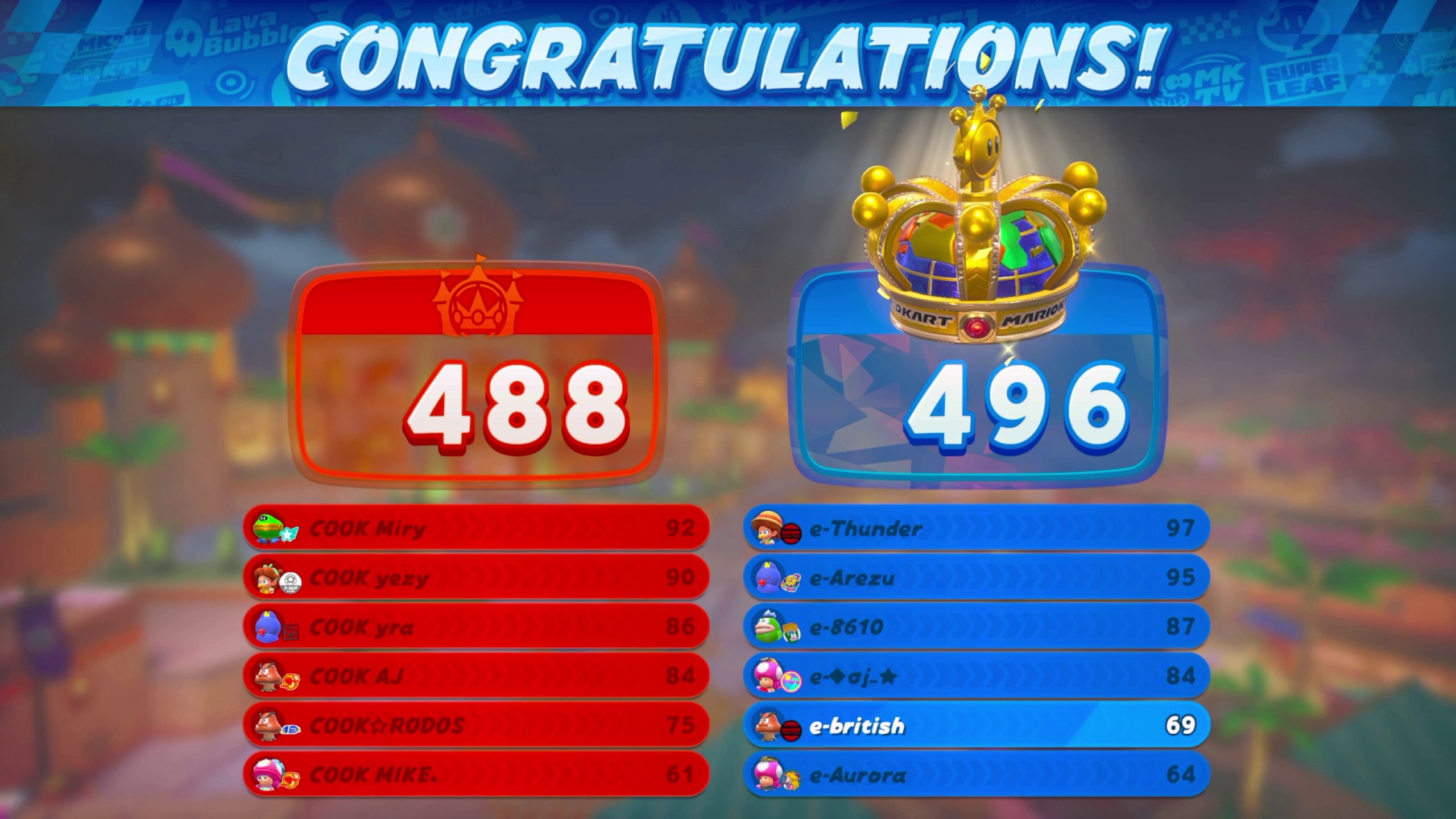
The new Mario Kart World for Switch 2, released eight years after the previous entry, brought several changes that shook up the scene. The most obvious one is the size of the lobbies, now up to 24 players at once. Even so, competitive teams decided to keep the classic 6v6 format, the so called “Wars”. Playing with 12 racers, though, affects how items are distributed differently, which adds a new layer of strategy.
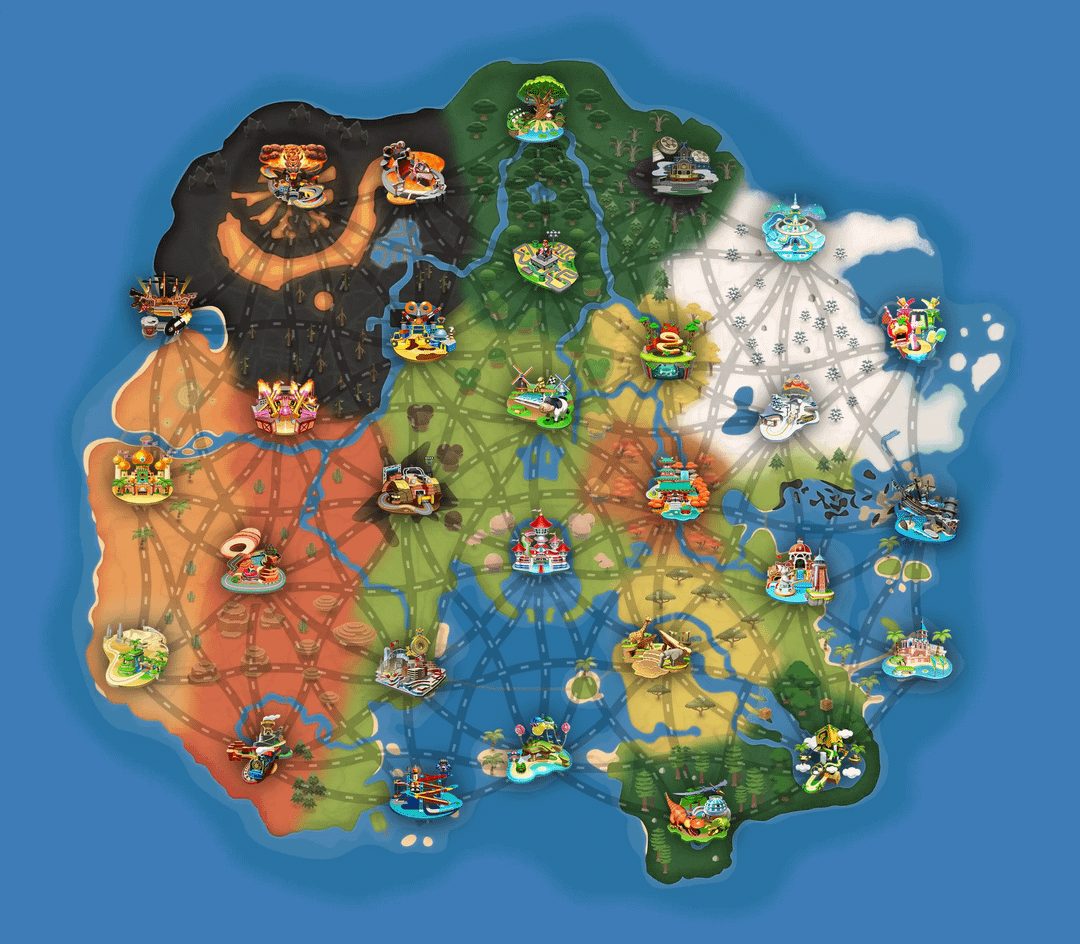
There are also new movement mechanics and game modes. One of the most popular is Knockout, where the slowest players get eliminated after each lap until one stays on top. Recently Nintendo added the possibility to compete in teams in this game mode as well. There’s also the addition of Free Roam mode, an open world that connects all 30 tracks with transitional sections linking one to another. Those sections can also be raced in competitive, but they are not so popular yet.
Another important change for the scene is friendly fire. In past games, players avoided using the built-in team mode because items like shells or bananas could not hit their own teammates. This might sound like it makes no sense, as you don’t want to use them against your own team, but knowing when and how to use items is part of the mechanical and communication skills that differentiate casual players from competitive ones. Now, teams can use the official feature and no longer need external software to track their points.
The game also introduced several new items, but the strategies still have a familiar feel. The players in trailing positions focus on getting the Shock item to disrupt the race at a specific moment, while others try to dodge it with the help of their team communication.
For many players, these updates made racing fresher and more skill based. Some veterans, however, chose to step away from competition. On the bright side, the new game opened the door for many newcomers.
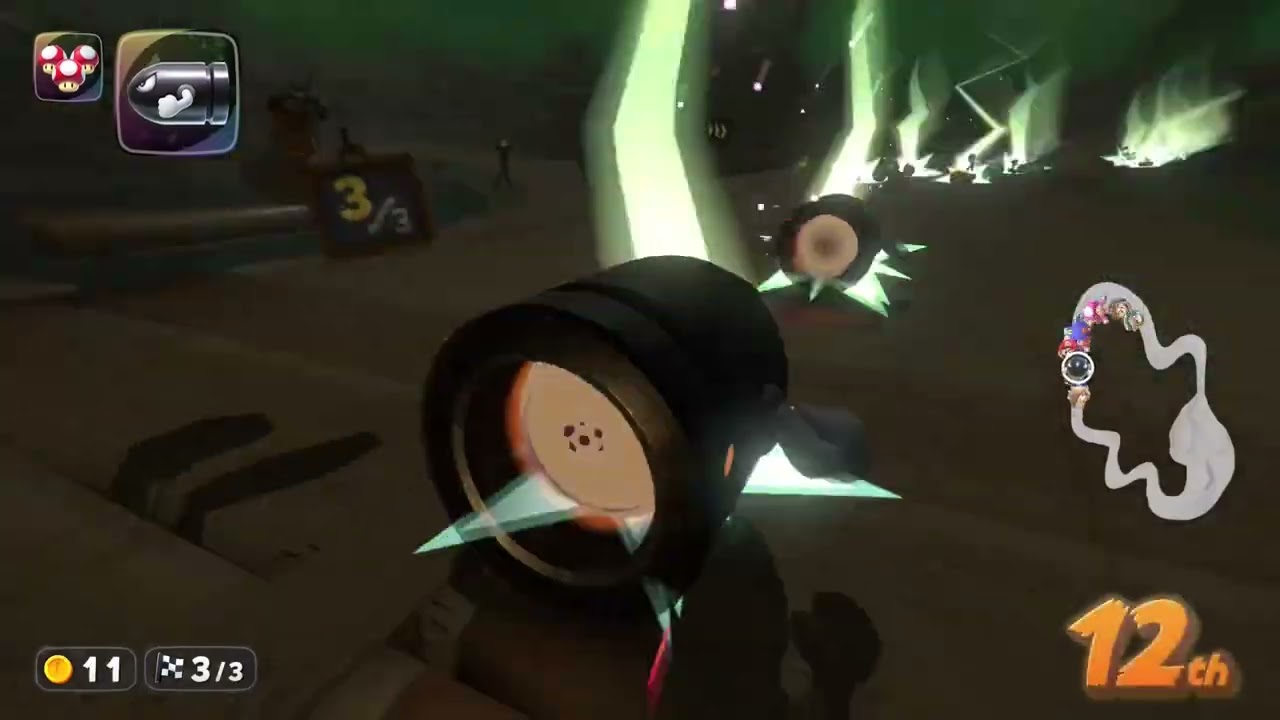
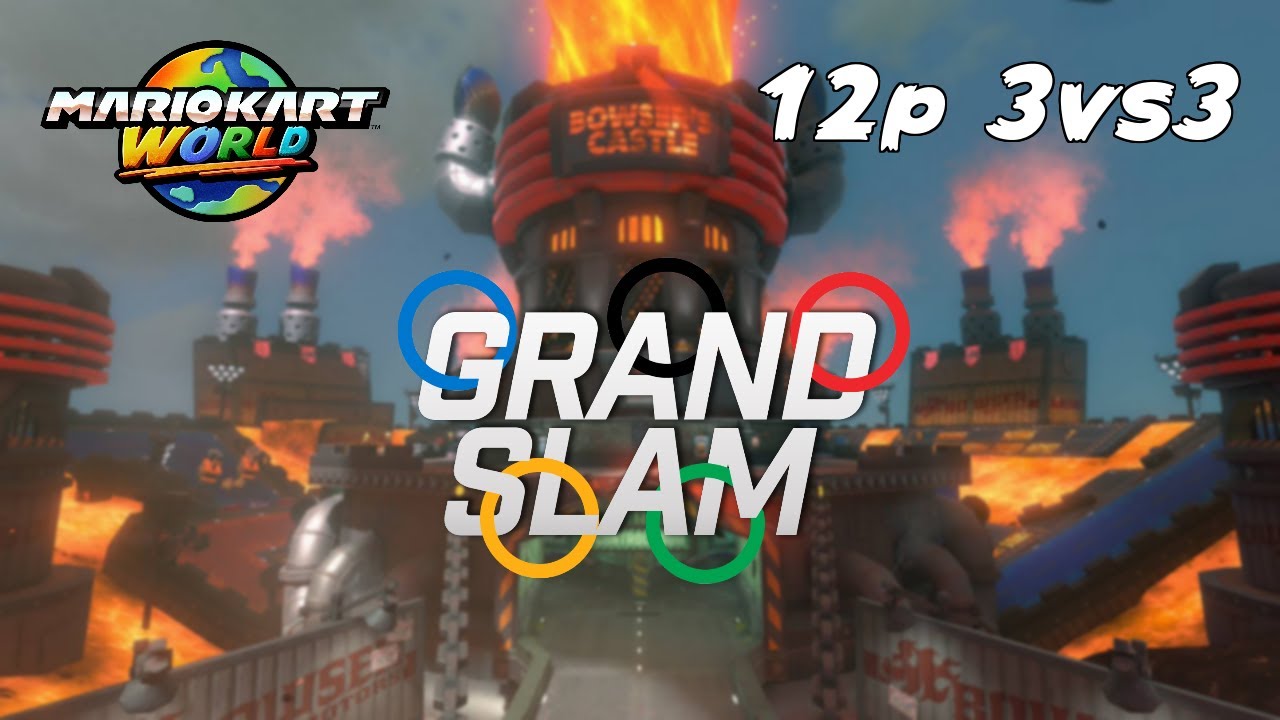
The Atlas League is the most prestigious event right now. Last season ended on December, with team Hanout (“ras” is their nametag) becoming champions of the top division. Registrations are now open for season 2, that got announced recently and is scheduled to start on March 15th. This past weekend, Grand Slam: World Tour, the biggest Mario Kart World tournament up to date had its grand finals. Featuring the best teams in the world competing in all the game modes possible. From individual races in 12 or 24 player lobbies, to 2vs2 in between 12 teams, Knockout 6vs6, classic 6vs6 Wars and even 6vs6vs6vs6 along with many more.
The final playoff stage was held during Saturday and Sunday 21st and 22nd of February. It featured teams like Rozando la Katastrofe (RK), Let Him Cook (Cook), Ronrons (RR) and Jet Joker (JJ. In the end, team Severance (sv¢) won the championship.
The different competitions are sometimes broadcasted in the official Twitch livestream at @MarioKartCentral, but most of the time we can find them streamed by individual players on their own Twitch or YouTube channels.
Ironically, despite all this effort and dedication seen by the players, Nintendo has never officially supported the competitive scene. No sponsorships, no esports program, nothing. The whole structure exists because fans built it themselves. Some players joke that it’s better that way, no economic pressure, no corporate rules, just competing for the love of the game. Still, it would be nice to see Nintendo help the competitive community, not only in Mario Kart, but also in other communities such as Smash Bros or even Pokémon in a bigger way that they do, where esports teams could be more involved.
In a way, that is why we call them competitive players, not professionals. It’s not a circuit where people can make a living like in other esports, at least not yet. At the very least, it is proof of what a community driven purely by passion can achieve, and honestly, super fun to watch.