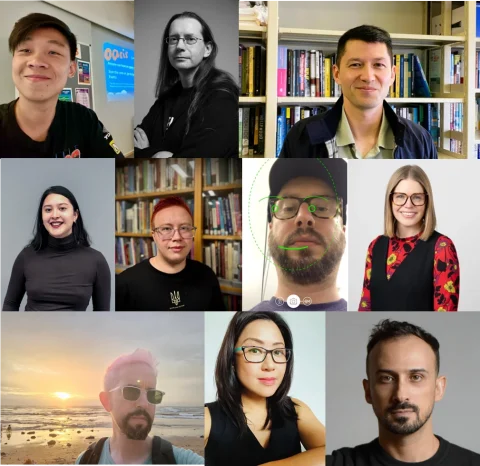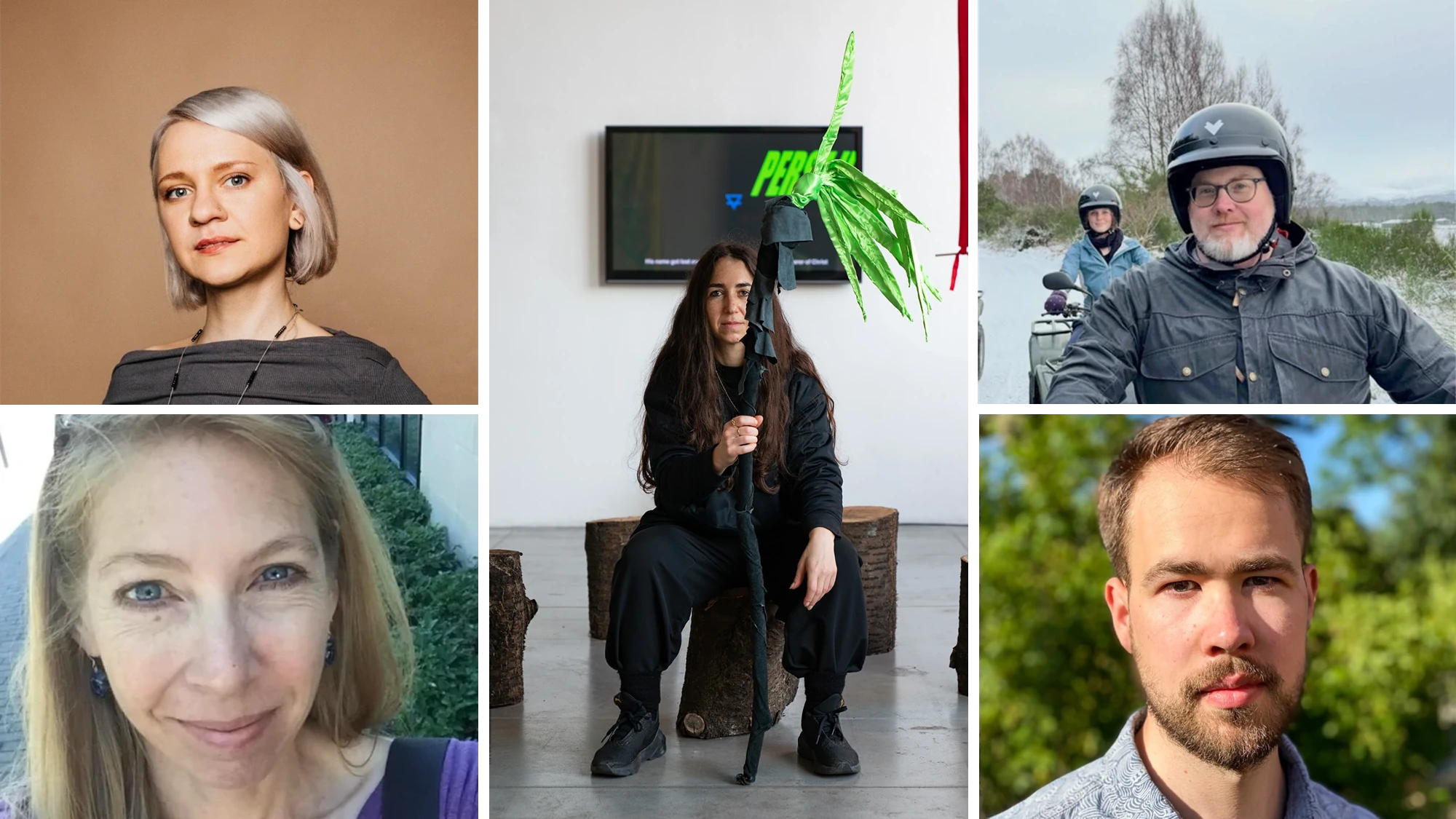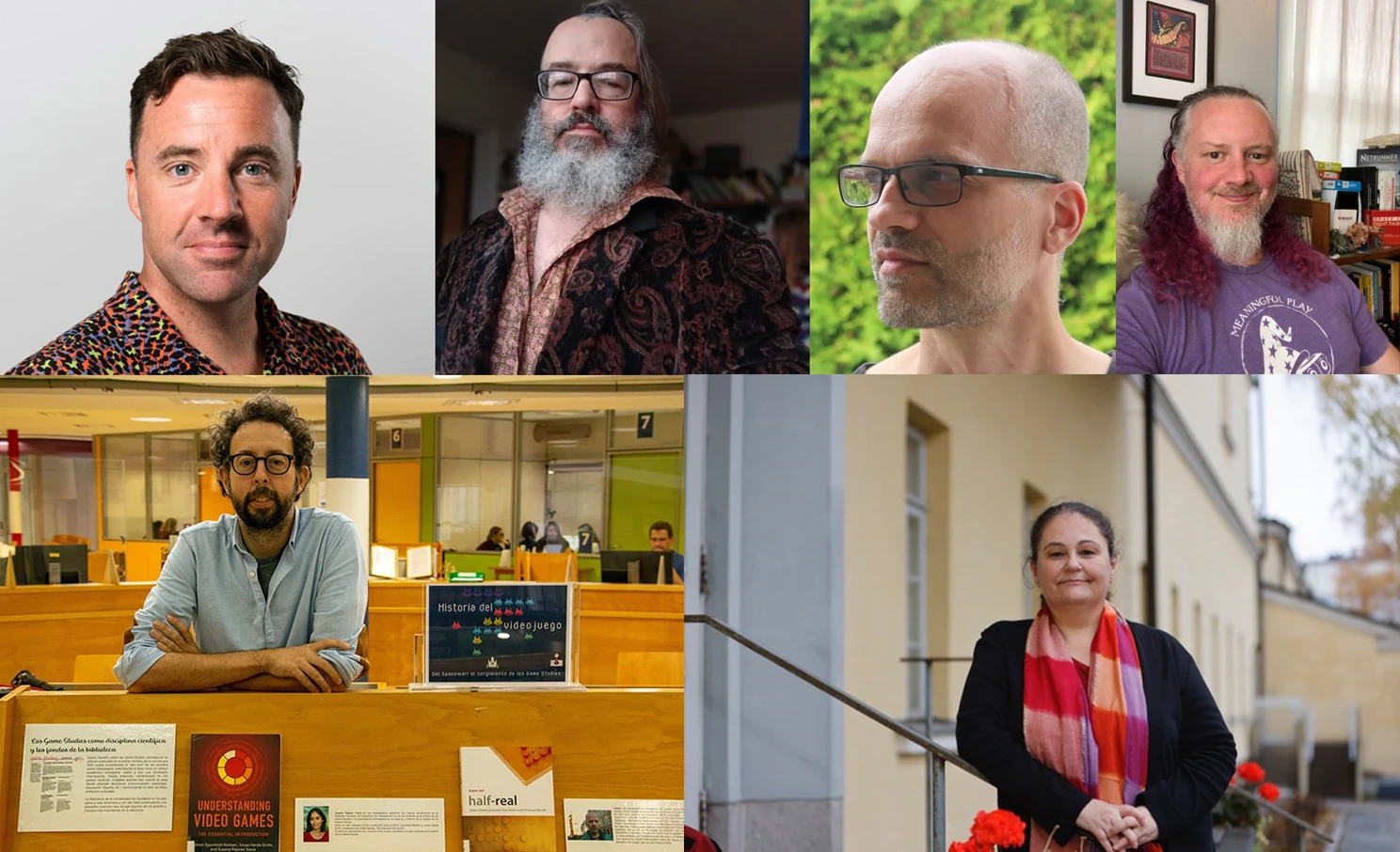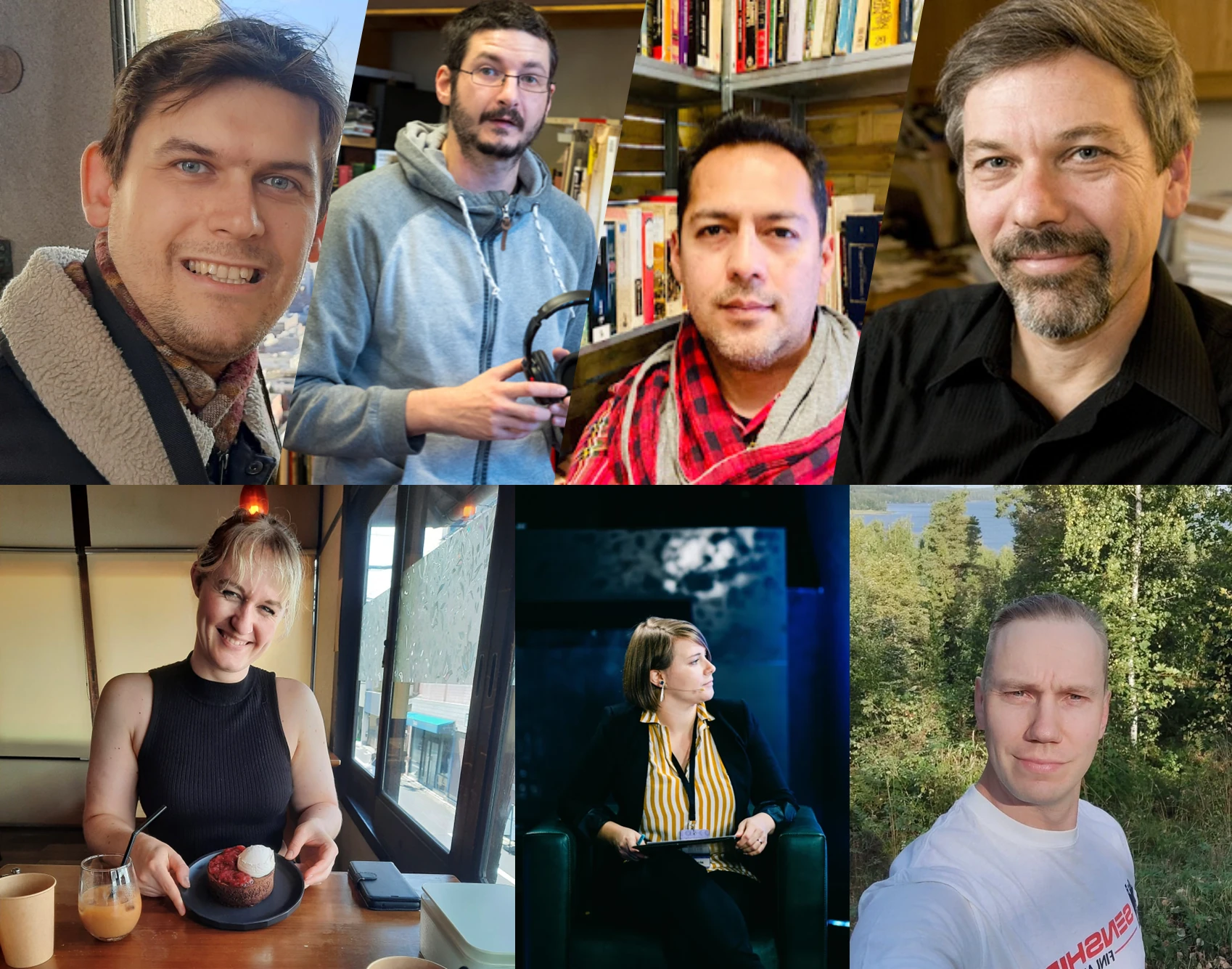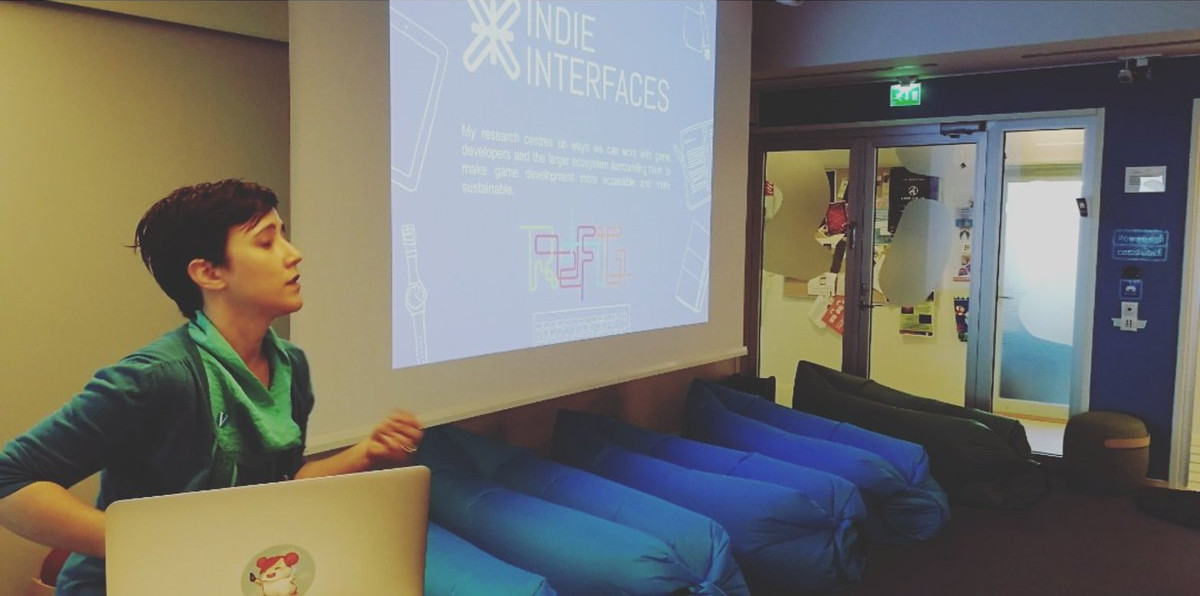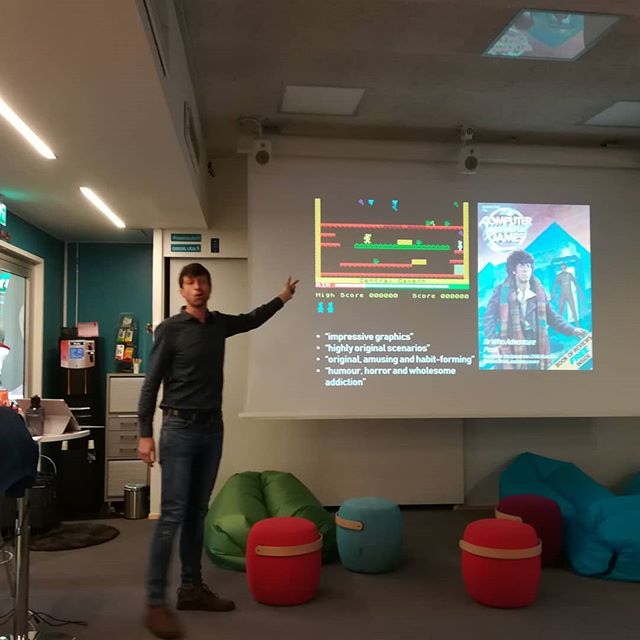

OASIS hosts various talks on academic and non-academic topics. These talks are always free and open to everyone.
We try to live stream as many talks as we can and you can find new live streams on the OASIS YouTube channel, event information on the OASIS
Facebook-page and recordings of most of our previous talks on the Centre of Excellence in Game Culture Studies YouTube channel.
Our current talk series is called OASIS Lunchtime Talks and you can find the schedule and information about the talks below.
In addition to this curated series, the page highlights other types of OASIS Talks, past and yet to come.
OASIS LUNCHTIME TALKS - AUTUMN 2025
OASIS Lunchtime Talks is a series of lectures on current research by fascinating scholars from near and far.
The talks are usually held on Thursdays during lunch hour (12.00 - 13.00 or 12 PM to 1PM).
The lecture series was created by Olli Sotamaa and the current series of OASIS Lunchtime Talks is curated by Heikki Tyni and produced by Mikko Seppänen and Elisa Wiik.
Thursday - September 11th
12.00 - 13.00

Taking the Metso, the Retro, and the Algo(s): On Nostalgia and Video Games
Richy Srirachanikorn
Nostalgia's origins as a Greek word includes the yearning for a return home (nostos) but also the pain (algos) involved. Players, resellers, community members, and companies know what a pain it is to determine why certain games are nostalgic – is it in the console, the content, or the connection to previous games that give it a nostalgic flair? Who determines this? Moreover, the talk explores how retrogames do not only exist in the past; the “pain” involved in figuring out why a game is ‘nostalgic’ generates insights, community, and even hope for the present and future.
Richy Srirachanikorn is a PhD Candidate at Concordia University, Montreal. He studies the generative potentials of nostalgia — cases where people use nostalgia to think about, and create 'lost futures', rather than dwelling on the lost past. Richy also co-founded the NOSTAGAIN Network in 2022, the first student-led research collective studying nostalgia in North America.
Watch the live stream on YouTube: https://www.youtube.com/live/VVvu5IxL770
Wednesday - September 17th
12.00 - 13.00
Remnants of Play
Nick Webber
In this talk Prof. Nick Webber focuses on his ongoing research around ‘remnants of play’, those things left behind or kept when a play experience ends. The talk brings together ideas from Prof. Webber’s writing about play artefacts such as player accounts (2016), characters sheets (2019) and maps (2023), along with fan-historical practices more generally (2019; 2022), to consider what afterlife game experiences have, and how these remnants help to capture them. This thinking is informed by concepts of informal and personal archiving, historiography, and storymaking, framing remnants of play as critical source materials within the history of games and affective artefacts of cultural experience.
Nick Webber is Professor of Game Studies, and Director of the Birmingham Centre for Media and Cultural Research, at Birmingham City University, UK. He is co-convenor of the Historical Games Network and his research focuses on (video)games, cultural history and identity. His recent work explores the historical practices of player and fan communities, the impact of games and virtual worlds on our understanding of the past, and the relationship between national cultural policy and video games.
Watch the live stream on YouTube: https://www.youtube.com/live/gdl-hgmoLXU
Thursday - October 2nd
12.00 - 13.00

Institutions of Play: Mapping Japan’s Indie Game Scene
Bryan Hikari Hartzheim
Japan’s indie game scene is growing, much like many indie game scenes in East Asia today, and is comprised of an emergent series of spaces shaped by a range of cultural institutions and practices. Situated within and between both global discourses of indie games and local discourses of doujin or hobbyist game-making, indie game development in Japan has spurred a number of initiatives within the country across various socio-economic platforms. This talk maps these spaces – from grassroots meetups to industry showcases – in order to discuss the current diversity but also inherent limitations within Japan’s indie game scene.
Bryan Hikari Hartzheim is associate professor of game and new media studies at Waseda University and the co-founder of the Waseda Game Lab. His research focuses on the designs, histories, and production cultures of games and animation, particularly those of Japan. He is the author of Hideo Kojima: Progressive Game Design from Metal Gear to Death Stranding (2023) and co-editor of The Franchise Era: Managing Media in the Digital Economy (2019).
Watch the live stream on YouTube: https://www.youtube.com/live/IuTUH27EmJA
Please note! This talk has been rescheduled from October 9th.
Thursday - October 16th
12.00 - 13.00
Interface Theory and Critical Technical Cultures
Michael Dieter
While media theory and software studies have often conceptualized the interface in broadly aesthetic terms - as medium, relation or effect - less attention has been given to the methodological cultures through which interfaces are widely produced, maintained and contested. This presentation reflects on a decade of research experiments with websites, platforms and apps to outline four orientations for approaching the interface through critique: prefigurative critique (design patterns), critical diagnostics (surfacing operations), oppositional prototyping (plugins, scripts, mods) and generative critique (working with AI). Drawing on Agre’s critical technical practice and Boltanski’s modes of critique, and gesturing to links with game studies, the talk examines how interfaces become knowable and transformable through collective practices of compositional testing, foregrounding the critical potential of distributed reflexivity and anticipatory agency, as interfaces otherwise submerge users in their techno-fluid operativity.
Michael Dieter is an interdisciplinary researcher based at the Centre for Interdisciplinary Methodologies at the University of Warwick (UK) with a primary focus in digital media studies, critical theory and media philosophy. His research investigates socio-technical forms of interface critique, drawing from design methods, software studies and media art. He is also engaged in app studies, particularly in developing digital methods to critically investigate the platform economy of apps, including key issues of media concentration, datafication and governance. Finally, his work branches into tactical media, technological aesthetics and media genealogies concerned with socio-political organization, labour and infrastructural power.
Watch the live stream on YouTube: https://youtube.com/live/Mo8ZUOJoW1Q
Thursday - October 23rd
12.00 - 13.00
Why being a Ukrainian game studies scholar is… complicated?
Mark Maletska
Ukraine has its own history of games, both analog and digital ones, as well as some world-famous titles and studios – one well-known example is the S.T.A.L.K.E.R. series, developed by GSC Game World. However, games are not studied much by Ukrainian researchers – or, at least, it seems so, considering how few Ukrainian game studies scholars are known among international crowds. Part of that is no surprise, considering that newer fields like game studies often show imbalance in terms of scholars’ backgrounds and countries of origin. However, there are also other, more significant reasons that tend to remain invisible to those without a first-hand experience from working in Ukraine.
This talk will give some historical context, share knowledge regarding Ukrainian academia and ways of doing things there, as well as all the complications leading to a very small number of game studies scholars from Ukraine visible at an international level. The talk will also give some insights on how scholars and communities could help deal with origin-based imbalance, misinformation and misunderstandings regarding scholars from less-known countries and support game studies scholars from Ukraine.
Mark Maletska, Doctoral Researcher based at Game Research Lab, Tampere University, started his academic career in Ukraine in 2016, and published his first article on games for Ukrainian research audience in 2018. His current study focuses on queer gender identities and video game mechanics, as well as cultural differences that shape experiences of playing.
Watch the live stream on YouTube: https://www.youtube.com/live/EBRRynAMN94
Wednesday - October 29th
12.00 - 13.00
Learning to E-sport: A Swedish case study of the organization of E-sport education in upper-secondary schools
Azul Romo Flores
The E-sport movement has gained both public and academic attention in part due to its distinctive characteristic of converging media content, sport and media technology. However, there is limited knowledge about the educational potential of E-sports. In this Oasis Talk, Azul Romo Flores presents a short overview of her on-going PhD project titled “Learning to E-sport,” where the aim is to understand the institutionalization of E-sports through its integration in education. The talk will focus on preliminary findings from the first sub-study: a Bourdieusian examination of the positioning of E-sports in the field of Swedish upper-secondary education.
Azul Romo Flores is a PhD candidate in Media and Communication studies at Södertörn University. Her research interest lies in the social dimension of play and what people do with games (primarily through sociological and educational perspectives). She has also worked as a lecturer in Media Technology and Game Design, and as an editor for Press Start Journal.
Watch the live stream on YouTube: https://www.youtube.com/live/YrGtAmlJFzc
Monday - November 10th
12.00 - 13.00
Games growing up (again)? Intersections of Ethics, Law, and Policy in our public and private spaces
Florence Chee
Through the last two decades of concerted effort in studying games, the field has gotten more complicated, mature, and developed. However, the continuing instrumentalization of games as they permeate all aspects of daily life and livelihoods serves to highlight the tension between playing for work and pleasure. In this talk, Prof. Florence Chee will provide an overview to essential debates in games/gaming as they intersect with ethics, law, and policy--along with what it means to research games through academia, industry and government in today's global regulatory landscape.
Florence M. Chee is Associate Professor of Digital Communication in the School of Communication, Affiliate Faculty in the Department of Computer Science, and Director of the Center for Digital Ethics and Policy (CDEP) at Loyola University Chicago. Internationally and nationally sought out as a speaker, writer, and advisor, her sociotechnical interventions inform and influence decisions made in design, development, and policy arenas. This year, she has been named to the Fulbright Specialist Roster for 2025-2028 and has recently focused on the US and Swiss game industries while serving on grant funded work in Switzerland. Florence Chee is founding director of the Social & Interactive Media Lab (SIMLab) based in Chicago, USA.
Watch the live stream on YouTube: https://www.youtube.com/live/BfYV_iNpnLU
Thursday - November 13th
12.00 - 13.00
Rhythm, Orgasm, & Chrononormativity in Orgasm Simulator & NSFWare
Jean Ketterling
In this presentation, prof. Jean Ketterling will analyse two games, Orgasm Simulator (Molleindustria 2003) and NSFWare (Pierrec 2018). Both games are concerned with rhythm, flow, and orgasm and use the rhythmic pleasures of game play—the back-and-forth relational pleasure of the human body and videogame moving in response to one another—to represent sexual and orgasmic rhythms. The talk asserts that despite its satirical intent, Orgasm Simulator reifies the normative biomedical sexual response cycle. Conversely, NSFWare uses dalliance and what Shira Chess calls video games’ “queer narrative middle” to rework hegemonic sexual rhythms that position orgasm as the necessary end point of each sexual encounter. These case studies are part of a broader project exploring the ways that indie video games disrupt normative understandings of what counts as porn and what counts as sex by using aesthetic approaches to representing sex that extend beyond pornographic conventions around explicitness and realism.
Jean Ketterling (she/her) is an Assistant Professor in the Department of Political Studies—Women’s and Gender Studies Program at the University of Saskatchewan in Canada. Her interdisciplinary research focuses on sexual video games: how they represent sex, their ability to make space for experimental sexual play, and how sexual content in video games is promoted, controlled, and regulated by platforms. She is the vice president of the Canadian Game Studies Association (CGSA).
Watch the live stream on YouTube: https://www.youtube.com/live/fQXNBXs4R8A
Thursday - November 20th
12.00 - 13.00
Playing with Asynchronies
Juan F. Belmonte-Ávila
As Elizabeth Freeman (2010) puts it, time binds us, interpellating us towards normative rhythms, personal lifepaths that are legible and lineal, and that make us use our time in ways that are socially seen as productive. Despite this, there are also forms of living and experiencing time out of sync, out of sequence, and, to some degree, unbound from chrononormativity. Trauma makes us live in-between multiple—sometimes broken—temporal lines, trapped between a present we still have to face, a past that haunts us, and a future that may scare us. Similarly, queer identities are often forced to live against, and despite of, restrictive understandings of temporality, while autonomously, and potentially revolutionarily and proudly, expressing time out of normative sync. This talk will invite the audience to think about games that play and deal with time as something out of sync. Three different temporal asynchronies will be discussed—mechanical, narrative, and what this talk will tentatively call extra-ludic—to reflect on the connection between time and queer identities in video games.
Juan F. Belmonte-Ávila is an Associate Professor in English Studies at the University of Murcia, Spain. He has been a Fulbright Scholar at Indiana University (2009-2011), a Fulbright-SAAS Postdoctoral Scholar at the University of Utah (2020), and a visiting scholar at McGill University (2012), the IT University of Copenhagen (2013), the University of Edinburgh (2022-23), and, as of Nov. 2025, The Centre of Excellence in Game Culture Studies. His research focuses on the study of gender and sexuality in video games. Some of his most representative recent publications are “Meaningful Grunts and Radical ‘Blehs’: Polysemic Identities through Nonhuman Noise in Video Games.” (Journal of Sound and Music in Games), “Multiplicity, relationality, and petal avatars: Thatgamecompany’s Flower as an identity model.” (Continuum: Journal of Media and Cultural Studies) or the volume he co-edited, Unbound Queer Time in Literature, Cinema, and Video Games (Routledge).
Watch the live stream on YouTube: https://www.youtube.com/live/2I5M9OePfzg
Thursday - November 27th
12.00 - 13.00
A Framework for Mapping Digital Game Mechanics
Rafael Marques de Albuquerque
This talk presents an ongoing research project focused on developing a comprehensive framework of game mechanics. The goal is to create a structured tool that supports multiple contexts: guiding designers during the game design process, offering educators a clear way to teach and discuss mechanics, and enabling researchers and students to analyse games. Although still in development, the project aims to bridge gaps between theory and practice, providing a flexible, pedagogical, and analytical resource for understanding how games work at a mechanical level.
Rafael Marques de Albuquerque is a novelist and a professor at the University of Vale do Itajaí (Brazil), where he teaches game design and narrative design. He has researched digital games since 2008 and holds a PhD in Education from the University of Nottingham (United Kingdom), as well as Master’s and Bachelor’s degrees in Design from the Federal University of Santa Catarina (Brazil).
Watch the live stream on YouTube: https://www.youtube.com/live/1fkLl6QV7fg
Past OASIS Lunchtime talks
OASIS LUNCHTIME TALKS - SPRING 2025
ON TUTORIALS, STEREOTYPES, AND BODY VISIONS
Corinne Mazzoli (University of Milano-Bicocca)
Contested video game development: An educational comparison between Germany and Sweden
Jonas Ferdinand (Humboldt University of Berlin)
Game as Art: A practical toolkit to identify artistic games
Alina Potemska (Arts University Bournemouth / University of the Arts London)
Analogue Game Jamming as an HE Teaching Tool
Joe Macleod-Iredale (University of Salford / Manchester Metropolitan University)
Stream Evil, the RCG
Mia Consalvo (Concordia University)
OTHER OASIS TALKS - SPRING 2025
Reinventing the Finnish Museum of Games
Niklas Nylund & Asla Heikkari (Finnish Museum of Games)
OASIS LUNCHTIME TALKS - AUTUMN 2024
From Slavery to Wage Slaves in Settler-Colonialist Board Games in Anglo-America
Mikael Jakobsson (MIT Game Lab)
OASIS LUNCHTIME TALKS - SPRING 2024
Video Games, Environmental Awareness and Climate Change
Xenia Zeiler (University of Helsinki)
Indie Porn Games: Contents, Ecosystems, Business Models
Petri Lankoski (Södertörn University, Sweden)
Playing Emotions: How to Bring Indie Games to the Classroom
Jorge Oceja (University of Cantabria, Santander, Spain)
Creativity: in academic research, narrative, and world-building
Ian Sturrock (Teesside University, Middlesbrough, England)
Arcade Britannia: British Arcade History, Comics, and Interactive Experiences
Alan Meades (Canterbury Christ Church University, UK)
THE RULES WE BREAK - Lessons in Play, Thinking, and Design
Eric Zimmerman (NYU Game Center, USA)
Making Games Differently
Casey O'Donnell (Tampere University, Center of Excellence for Game Culture Studies)
OTHER OASIS TALKS - SPRING 2024
The Value of Toys in a Post-Digital World
Katriina Heljakka (University of Turku)
OASIS LUNCHTIME TALKS - AUTUMN 2023
Games and Exhaustion
Rainforest Scully-Blaker (Tampere University, Center of Excellence for Game Culture Studies)
Ephemeral ecologies: player paratexts at the end of the world
Lawrence May (University of Auckland)
The “Critiqueless” Critique of Gamification
Mikko Vesa (Hanken School of Economics / University of Lapland)
Promises, Politics, and Pipelines: Implicit and Explicit Lessons from Games Higher Education
Alison Harvey (Glendon College, York University)
Game Studies without Culture? A Historical Review of Video Game Research in Korea
Tae-Jin Yoon (Yonsei University, Seoul, Korea)
OASIS LUNCHTIME TALKS - SPRING 2023
Ukrainian Game Jam Scene: Creativity in Extreme Conditions
Oleksii Izvalov (Robert Elvorti Economy and Technical Institute)
Replayed: Software Preservation and Game Histories (Book Talk)
Dr. Henry Lowood (Stanford University)
The LVLup! Museum: From experimental initiative to national institution
Camille Laurelli (Educational Center at National Library of Estonia)
(Re)Playing Cultural Memory: The Why and How of Studying Nostalgia in Video Games
Diego A Mejía-Alandia (Tampere University, the Centre of Excellence in Game Culture Studies)
In-game interaction, identities and communities – or what does it mean to play together?
Matilda Ståhl (Åbo Akademi University)
How to study Japanese video games: A reflection on my stay abroad in Japan
Joleen Blom (Tampere University, the Centre of Excellence in Game Culture Studies)
From Research to Development - A Transit King Story
Janne Paavilainen (BON Games)
OASIS LUNCHTIME TALKS - AUTUMN 2022
Care Tactics - Practicing Safe Storage at Gaming Events
Nick Taylor (York University)
International Solidarity Between Game Workers in the Global North and Global South – Reflections on The Challenges Posed by Labor Aristocracy
Emil Lundedal Hammar (Tampere University, the Centre of Excellence in Game Culture Studies)
OASIS LUNCHTIME TALKS - SPRING 2022
The Value of NFTs in Games
Alesha Serada (University of Vaasa)
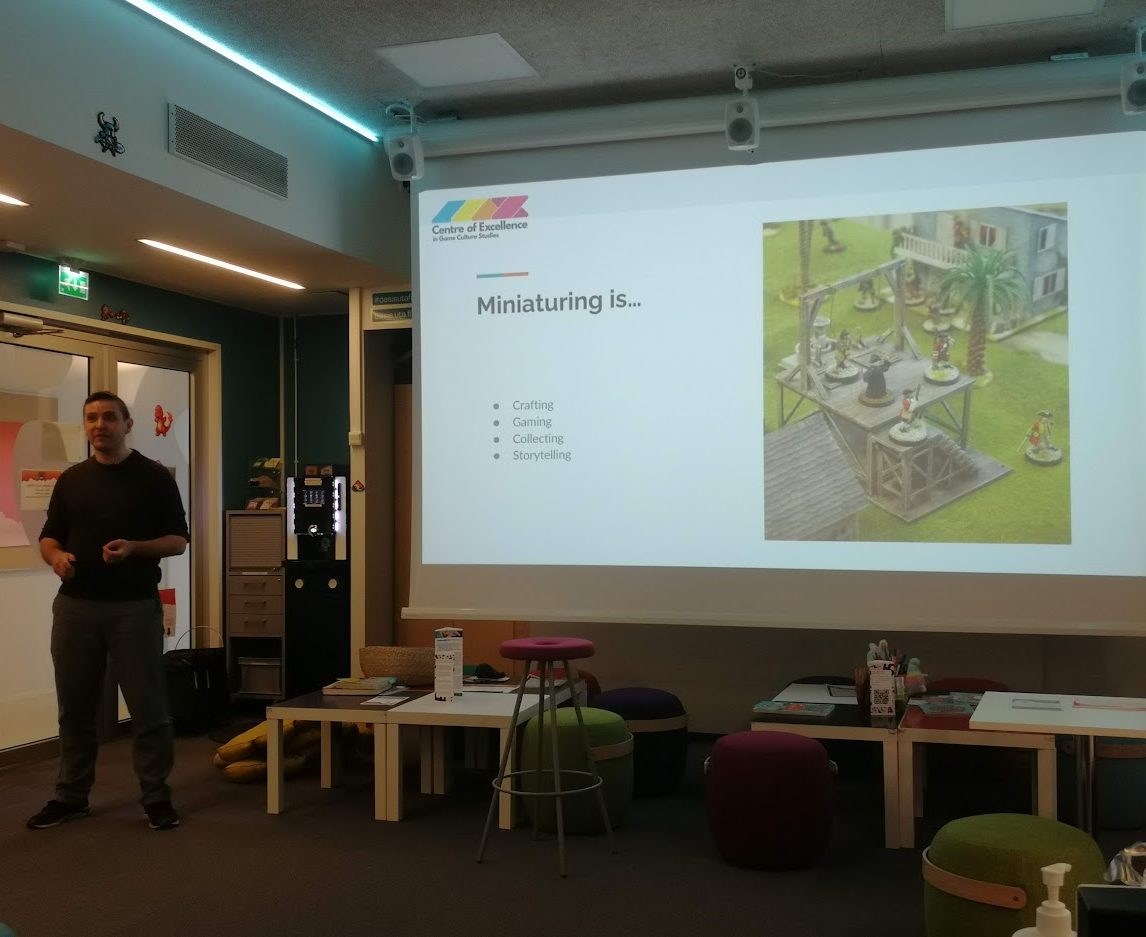
Playing with toy soldiers? A look at miniaturing
Mikko Meriläinen (Tampere University, the Centre of Excellence in Game Culture Studies)
OASIS LUNCHTIME TALKS - SPRING 2020
Handmade Pixels: Indie Video Games and the Quest for Authenticity
Jesper Juul (Royal Danish Academy of Fine Arts, School of Desig)
OASIS LUNCHTIME TALKS - FALL 2019
Ask Why: Creating a Better Player Experience through Environmental Storytelling and Consistency in Escape Room Design
Scott Nicholson (Wilfrid Laurier University)
Age Appropriate Game Design
Darshana Jayemanne (Abertay University)
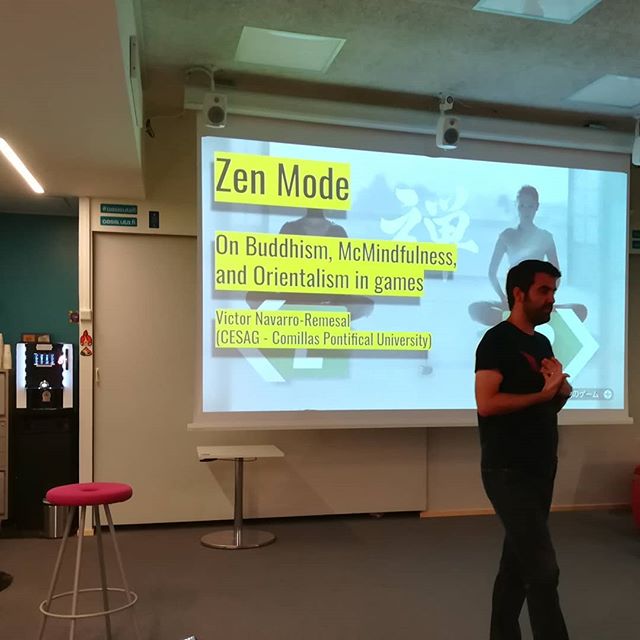
Zen Mode: on Buddhism, McMindfulness, and orientalism in games
Victor Navarro-Remesal (Comillas Pontifical University)
Fun Things are Fun: Exploring the Games & Life of Karl Rohnke
Pete Vigeant (ESC Games)
Thoughts on Existential, Transformative Game Design
Dr. Doris Rusch (Uppsala University)
Assemblage agency and the games that play us
Maria Ruotsalainen (University of Jyväskylä)
Ethics in theory, justice in practice: Insights into practical challenges between game research contexts
Dr. Florence Chee (Loyola University Chicago)
Digital Dreamers? Researching the Lives of Videogame Workers
Anna Ozimek (Tallinn University)
Finnish and Polish educational board games in the mid-19th century
Maria Garda (PhD) (University of Turku)
OASIS LUNCHTIME TALKS - SPRING 2019
The Gamer Logic of “Selfies are Avatars”: Toxic Masculinity and James Franco’s Strategic Vulnerability
Tom Apperley
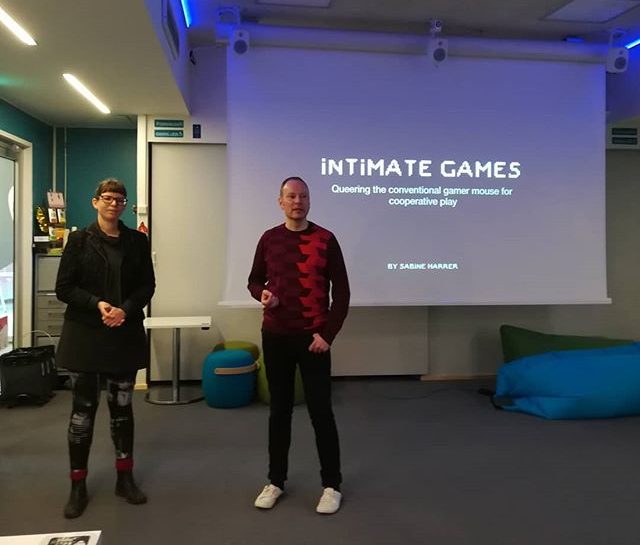
Intimate Games: Queering the Conventional Mouse Controller for Cooperative Play
Sabine Harrer
Resisting Patches & Updates: Struggles against Protocological Power in Video Games
Jan Švelch
Understanding the Australian Videogame Field through Formal, Informal, and Embedded Gamemakers
Brendan Keogh (Queensland University of Technology, Brisbane)
Sense of Place in Videogames: Case Red Dead Redemption
Jussi Holopainen (Games Computing, University of Lincoln)
Regulatory change and cultural peculiarity - horse people and the new gambling monopoly in Finland
Pauliina Raento
OTHER OASIS TALKS - 2018
MSP Challenge 2050: first results of fourth-generation simulation gaming for maritime spatial planning
Harald Warmelink (NHTV Breda University of Applied Sciences, Netherlands)
On the Possibility of a Paratelic Initiation of Organizational Wrongdoing
Mikko Vesa (Hanken School of Economics, Helsinki)
Toxic Meritocracy of Video Games: Why Gaming Culture Is the Worst
Christopher Paul (Seattle University)
Salvation, or Snake Oil, Big Data Practices in the Game Industry
Jennifer R. Whitson (University of Waterloo)
Amateur adaptations of “professional” games: Manic Miner and Flappy in 1980s Czechoslovakia
Jaroslav Švelch (University of Bergen / Charles University Prague)