
CMOS and Beyond group at the Faculty of Information Technology and Communication Sciences of Tampere University focuses on research of Advanced Semiconductor Devices and Systems for next generation of Computing like Neuromorphic and Quantum Computing.
Advanced semiconductor devices are the backbone of modern society. In CMOS-and-Beyond group, we accelerate innovation for devices and systems that are energy efficient, versatile and integrable with advanced node CMOS devices and benchmark their performance for unconventional computing like Neuromorphic and Quantum Computing.
Read more on the research group webpage
Research focus and goals
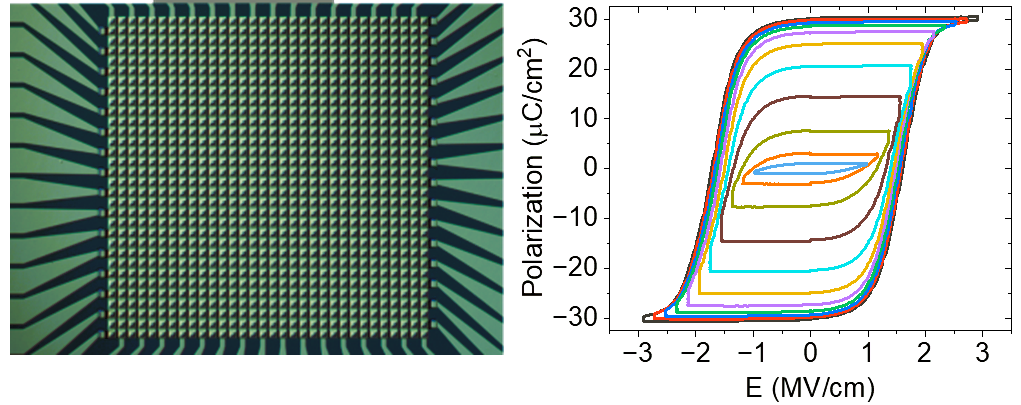
Our main goal is to strengthen semiconductor device innovation for unconventional computing. This involves research on advanced non-volatile memories using ferroelectric devices, logic components using oxide and 2D semiconductors and optoelectronic components for photonic neuromorphic computing. One of our key focus is understanding defect dynamics in high-k oxides, semiconductors and their interfaces to improve their performance reliability and lifetime.
Impact
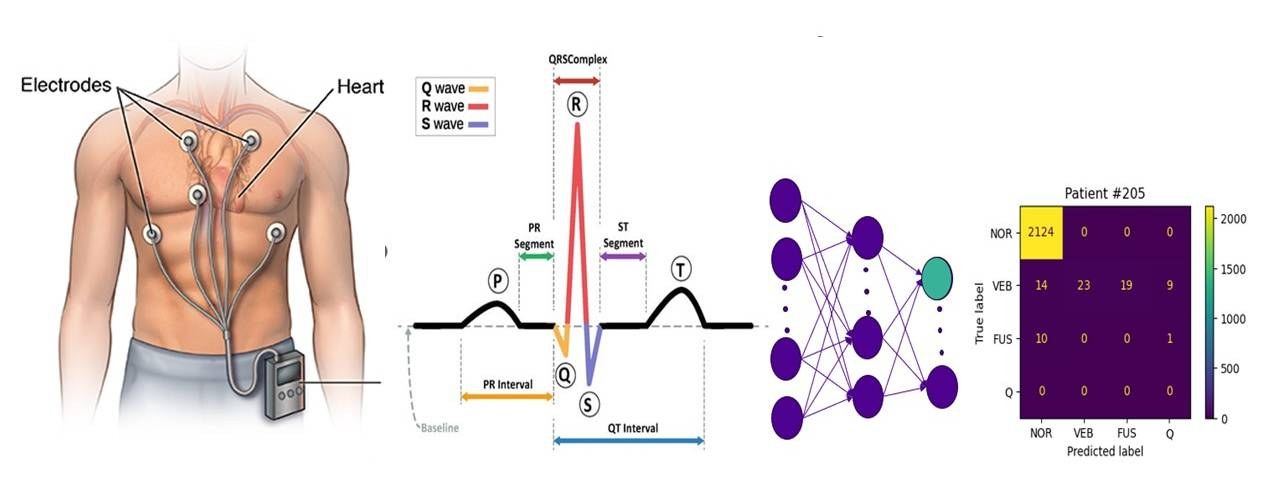
Aim of our research is to advance unconventional computing hardware technology by combining
knowledge of device physics, nanotechnology, experimental materials science and simulations. We use AI-based electronic materials development to develop hardware in a more resource efficient way. This approach has the potential to drive the development of more efficient, scalable, and adaptable devices, with applications in memory storage, neuromorphic computing, cryogenic memory for quantum computation, high performance computing, space technologies and energy-efficient logic circuits, ultimately paving the way for broader adoption in the semiconductor industry.
One significant impact of this technology is highly energy efficient smart edge devices, capable of real-time decision that can find applications in healthcare, autonomous systems, space, robotics and many other fields.