New hydrogel platform simplifies the creation of living tissue models

Researchers at Tampere University have developed a versatile hydrogel platform that makes it easier to create customised biomaterials for tissue engineering, disease modelling, drug discovery and regenerative medicine. Their plug-and-play crosslinking technology enables the design of a wide range of hydrogels in which biological molecules, such as proteins, peptides and nucleic acids, can be incorporated under gentle, cell-friendly conditions.
Hydrogels are water-rich materials that are widely used to mimic the extracellular matrix, the natural environment that surrounds cells within the body. However, existing methods often require multiple chemical modification steps, specialised reagents or conditions that can limit biological functionality and make customisation difficult.
To address this challenge, the researchers developed a platform based on gallic acid, a naturally occurring antioxidant found in plants, fruits and tea leaves. When gallic acid-modified biopolymers are exposed to blue light in the presence of riboflavin (vitamin B2), they rapidly form hydrogels and simultaneously bind a wide variety of proteins, DNA and RNA without requiring these molecules to be chemically modified beforehand.
“Many current hydrogel systems rely on specialised chemistries, often involving toxic chemicals, multiple preparation steps or synthetic additives that can affect cells,” says lead author and doctoral researcher Austin Donnelly Evans from Tampere University. “We wanted to develop a platform that is simple, flexible and as cell-friendly as possible, while enabling biomolecules to be incorporated in their active state.”
A key advantage of the system is its ability to preserve the functionality of incorporated biomolecules. The researchers demonstrated that the Wnt3A signalling protein, embedded within the hydrogel, remained biologically active and continued to influence cell behaviour after gel formation. The hydrogels also supported high cell viability and enabled cell growth in three-dimensional environments that more closely resemble living tissues.
Towards LEGO-like assembly of human tissues
The platform is also highly adaptable. The researchers were able to tailor the physical properties of the hydrogel and select which biological components to incorporate, making it possible to create tissue-specific environments for a range of applications.
“Gallic acid allows us to create robust hydrogels while preserving the functionality of both the underlying biomaterial and the incorporated biological molecules,” says Evans. “The resulting materials also behave more like natural tissues, which are dynamic, partially self-healing, viscoelastic and flexible.”
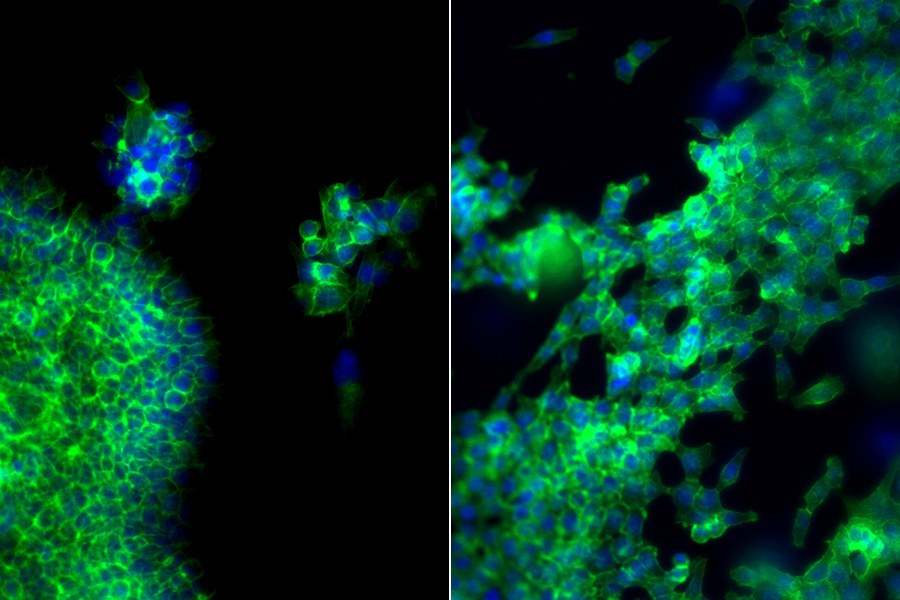
Unlike many light-activated hydrogel technologies, the new platform relies on riboflavin, a naturally occurring vitamin already present in biological systems. The researchers also found that, in some cases, hydrogel formation can be achieved using standard cell culture media alone, without the need for a separate photoinitiator.
“This means researchers can create sophisticated biomaterials with fewer components and simpler chemistry, while preserving the integrity and bioactivity of sensitive biopolymers,” says Professor Oommen P. Oommen, who led the study.
The researchers believe the technology could accelerate the development of advanced three-dimensional cell culture systems, personalised tissue models, biofabrication technologies, drug testing platforms and future hydrogel-based therapies. Because the approach functions as a modular molecular “glue”, it provides a practical means of combining diverse biological components into tailor-made materials for both research and biomedical applications.
“Our vision is to make the design of custom biomaterials as straightforward as possible. We are moving towards assembling human tissues in a Petri dish in much the same way as LEGO building blocks,” says Evans.
“By lowering technical barriers and increasing flexibility, this platform could help researchers build more realistic models of human tissues and diseases and pave the way for next-generation biomaterial-based therapies,” says Professor Vesa Hytönen from Tampere University.
The research article titled “Modular Plug-and-Play Crosslinking Platform for Precision-Engineered Hydrogels” was published in Cell Reports Physical Science on 25 July 2026. The article is available online
Further information
Austin Donnelly Evans
Tampere University
austindonnelly.evans [at] tuni.fi (austindonnelly[dot]evans[at]tuni[dot]fi)
Professor Vesa Hytönen
Tampere University
vesa.hytonen [at] tuni.fi (vesa[dot]hytonen[at]tuni[dot]fi)
Professor Oommen P. Oommen
Cardiff University
oommen.o [at] cardiff.ac.uk (oommeno[at]cardiff[dot]ac[dot]uk)


