The indie revolution began in 2008 after the global financial collapse. This rise in indie game scene was really promising and resulted in the publishing of lots of great games. Almost two decades later, the indie scene has changed significantly. An article titled Indie Dreams: Video Games, Creative Economy, and the Hyperindustrial Epoch published in 2018 in Games and Culture journal tackled the issues indie developers face. Most of the problems in that article still exist to this day.
The Rise
After the 2007 – 2008 global financial collapse, video game industry saw a rise in indie developers. Developers who try to create games alone or with small teams. This trend resulted in publication of many great and creative games like Braid, Fez, and Super Meat Boy.
The release of these games and many other similar titles created an opportunity for games to transform and mature into a culturally rich medium like movies and literature.
Because of the nature of how indie games work, developers can create games with new and unique ideas that are completely different from traditional video games created by big companies. In addition to this, indie developers now could tackle subjects and topics aligned with their personal beliefs.
Beliefs that we used to see in movies and literature but not as much in video games. Also, a lot of these beliefs and views are not suitable for AAA games made by multimillion-dollar companies. The final goal of indie developers was to contribute to a future where games can serve as forms of digital culture and a creative force which have the ability to drive a social change.
The Fall
Things looked promising in the early 2010s but sadly due to four problems, indie developers became victims of consumerism and it changed everything. The first problem was hyperindustrial colonization. Players solely existed for commercial exploitation and every big and small developer tried to get as much money as possible from the players. This created products that are really hard to call games because their main focus was to extract as much money as possible from the user. The second problem was the platform monopoly. There were not enough diverse platforms for developers to self-publish their titles and as a result they had to rely on the help and approval of big platforms such as Steam, Xbox, and PlayStation. Although for a brief time, some of these platforms like Steam with Greenlight program tried to help developers publish their titles, they were short-lived and eventually they became platforms prioritizing money making.
The next big problem for indie developers was the rise of Freemium model. This problem followed the hyperindustrial colonization in which every product was designed in a way to make more money from players. Freemium approach, which in a nutshell involves releasing the games for free but creating mechanisms that lure players into spending as much money as they can in the game using in-app purchases, changed the core concept of what a game should be, from a product with fun, engaging and challenging mechanics to a cash grabbing machine whose main focus is to get as much money as it can from the player.
The last problem was what is referred to as “Indiepocalypse” in the article. With the advancement of technology, the access to software for creating games became very easy and there were numerous guides on the internet on how to make games. This resulted in a massive oversupply of titles which made it really difficult for high-quality projects to gain recognition and popularity. As a result, the developers of these high-quality games became discouraged because they could not support themselves and they preferred to have a stable job in established companies instead of following their dreams and creating more indie games.
The Fight
But all hope is not lost. Indie developers fought back using various strategies. Strategies which can help them to overcome these challenges created by phenomena such as “indiepocalypse” and “hyperindustrial colonization”.
Several hubs such as Bristol Games Hub or Dutch Game Garden were created for indie developers to share their resources and help each other overcome the problems. Developers use these hubs to provide mutual support to each other and resist the isolation of the neoliberal marketplace.
The next strategy is becoming a Mindie. In this model, developers take jobs from mainstream companies (either contract work or licensed titles) to afford themselves the chance to financially survive while spending their remaining time working on their own projects.
The article finishes with a hopeful tone. Although the indie scene has changed drastically from early 2010s, indie developers should continue having the dream. They must fight back and try to reinvent the digital culture. They have to create products that help players to become collaborators instead of mere consumers. Only with this approach there will be a chance for games to become a culturally rich medium.
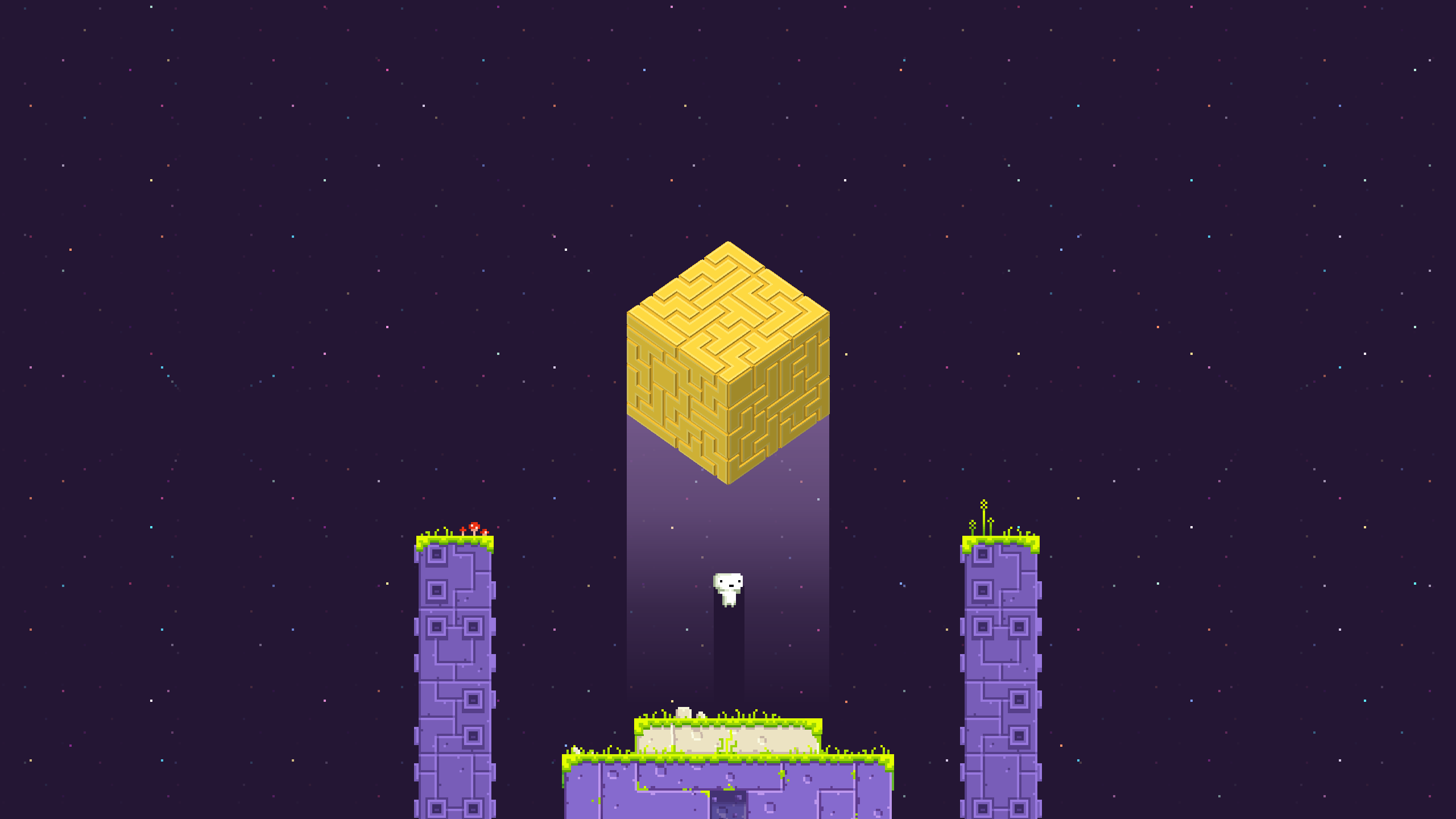
*The featured image of this article is for the game FEZ. It is taken from the game’s presskit.
Reference:
Flanagan, P. (2018). Video games, creative economy, and the hyperindustrial epoch. Games and Culture, 13(7), 671–689. https://doi.org/10.1177/1555412018756708