In Aalto University’s “Get Funded! – How to Start Your Game Start-Up” annual event, industry professionals and representatives from investment companies gather to discuss the various routes one can take to fund their game, whether they are acting as a solo indie developer or as part of a larger game studio. This year, I also got the chance to join the event on the 4th of November, which took place at Aalto University’s A Grid. Entry did not require a fee, merely a notice, which is no doubt helpful for upcoming developers. A total of four organizations were showcased at the event: Business Finland, Media Desk, the European Institute of Innovation and Technology (EIT), and IGDA Finland. Additionally, Business Espoo’s Senior Business Advisor, Matias Holmqvist, talked about how one would go about starting a business, and a panel discussion was organized where representatives from Quicksave Interactive, Sisu Ventures, and Silver Legend talked about raising private money for entrepreneurialism.
Starting the event off is Business Finland’s representative, Kari Korhonen. Sitting on the cold, hard stairs I ended up on due to my tardiness (and never moved on from due to my embarrassment), I got to hear about the company. Backed by the government, it is a major funding company with investments of about 200 million in the past 20 years into the game industry. According to Korhonen, the purpose of investments is to promote growth and encourage start-ups and entrepreneurialism. Therefore, the budding game industry and the small indie studios are great targets for investment. It was also mentioned how Business Finland will be placing a greater emphasis on “ambitious projects, competitive advantage and scalability of innovations”. This likely means that there will be increasingly stricter criteria for getting accepted for a loan, and this trend continues with the other investors as well.
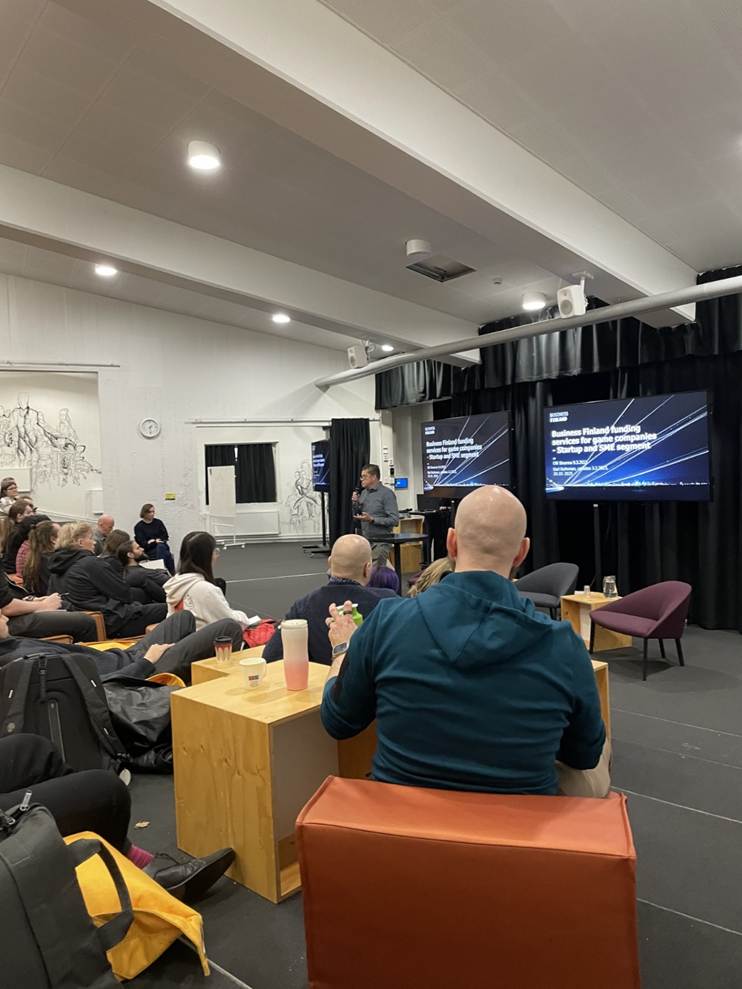
We got to hear from Media Desk’s Liisa Sauri enthusiastically discuss Creative Europe MEDIA. It is a funding program for video games and immersive content development. The fund, backed by the European Union, has a total budget of 10 million, and it offers opportunities for professionals and organizations alike. Additionally, Media Desk swears that the game industry will be emphasized even more in the future in the program. Unfortunately, the application process could take up to a year to go through, so you must have a solid standing even before applying.
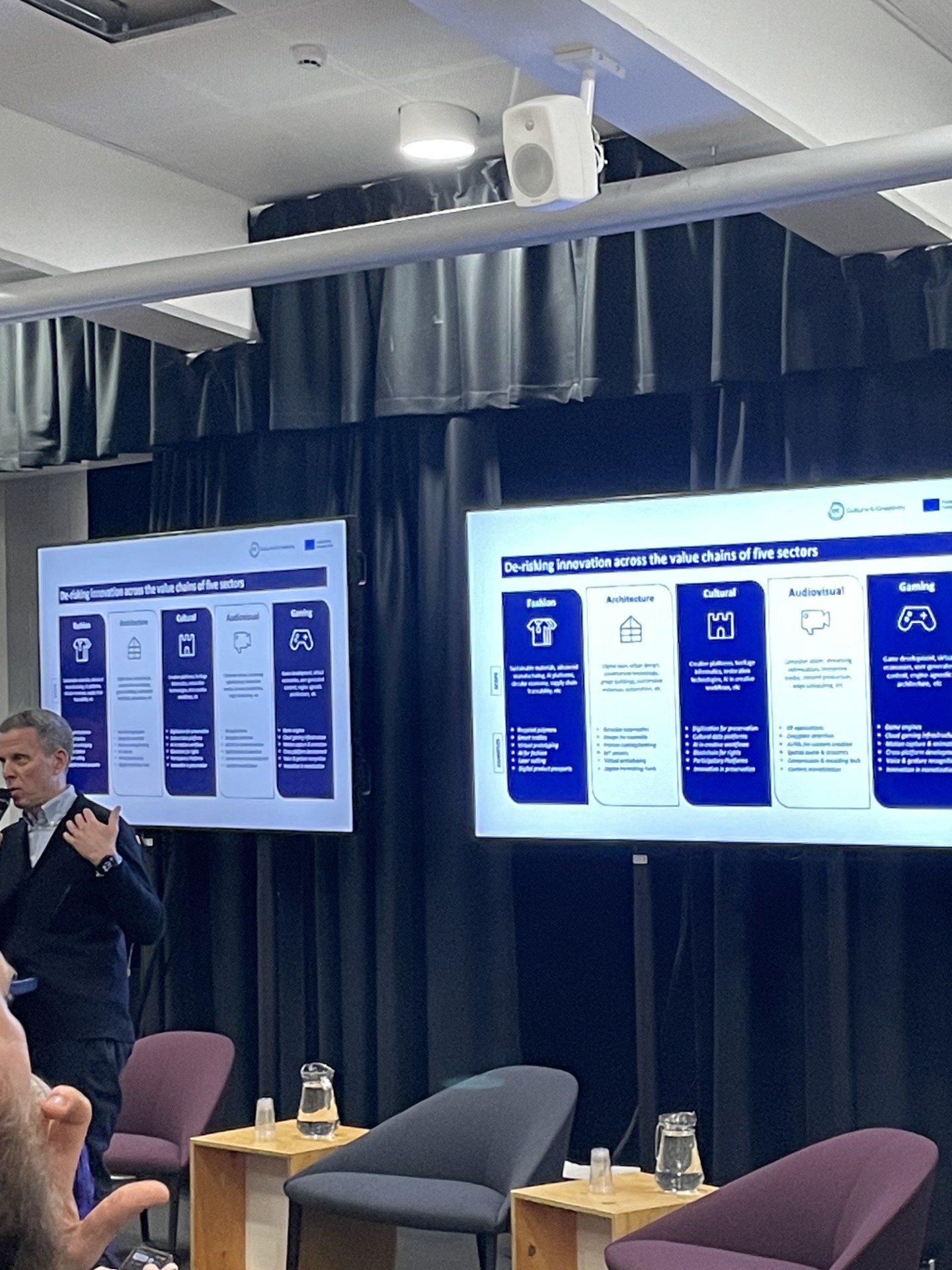
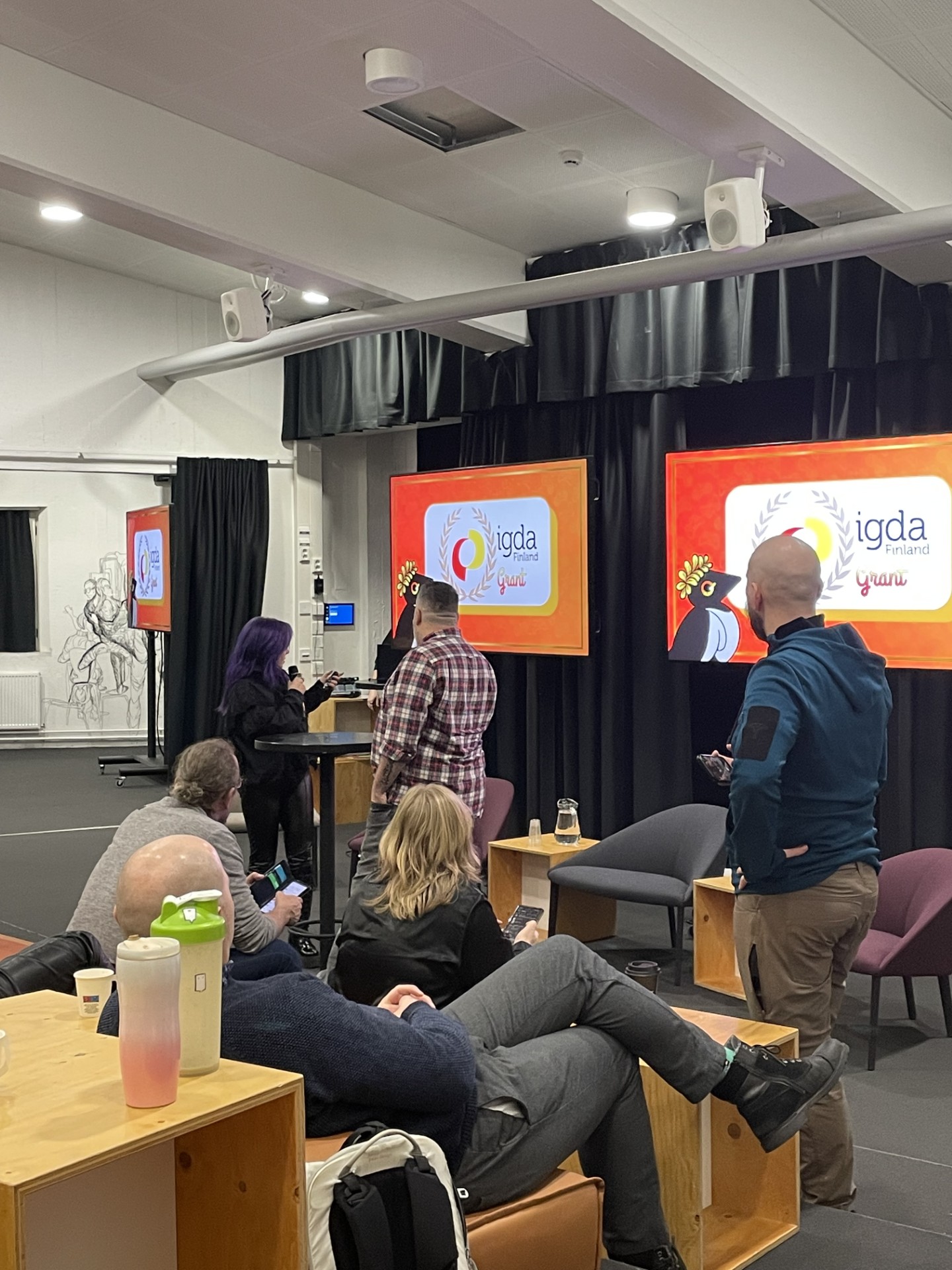
Up to bat next is EIT’s Sami Jääskeläinen, Senior Ecosystem & Business. Co-funded by the EU, EIT Culture & Innovation is a partnership that offers “education, societal transformation, business creation, and innovation.” Then, represented by Sean Samborski, Begüm Dogan, and JJ Häll, is IGDA Finland, introducing the annual IGDA Finland Grant. The grant offers mentors and financial help up to 10,000 euros for Finnish indie developers. IGDA Finland hopes to provide everyone a fair start because they believe in a “diverse, inclusive and thriving future”. As is the case with all the funds and loans mentioned in this article, one needs, amongst other things, a reasonable business plan and marketing potential.
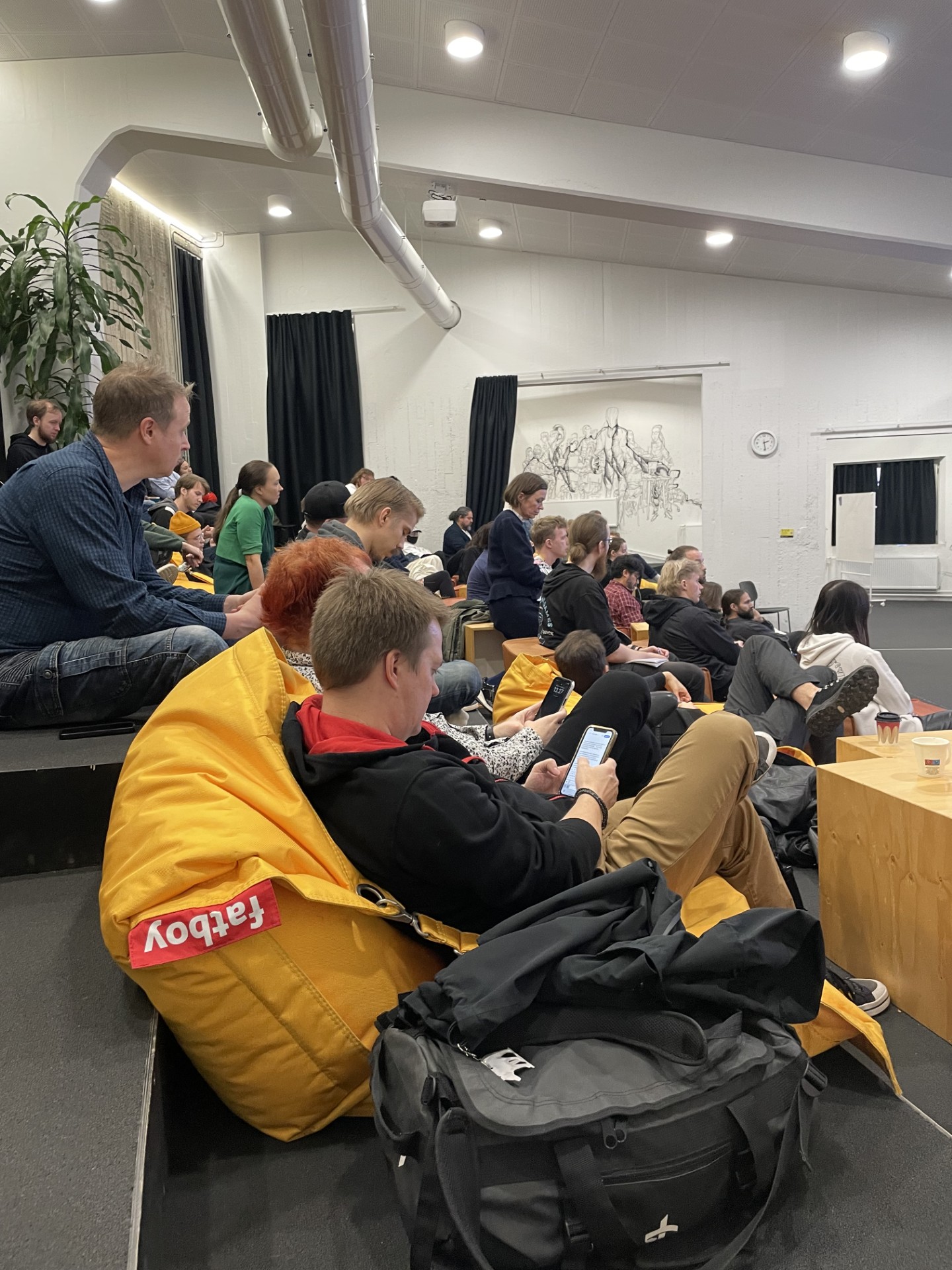
I got the chance to conduct a short interview with a few of these attendees. Juhana, Ville, and Mauri from a game studio called “Stolen Heater” (check them out!) were more than happy to answer a couple of my questions. First, I was curious about their thoughts on financial aid like this from a small indie studio’s perspective. They told me that out of the presented grants and loans, only the IGDA’s felt plausible. For the EU grants, you would have to have an in-depth financial plan and a strict timetable for development. You would also have to have somewhat of an established position, not to mention the long application time and bureaucratic nature that slows the process. They have a point. While IGDA’s fund might be smaller in amount and scale than the ones backed by the EU and government, it also means that there are better chances of getting funded, even without prestige. Also, the lengthy process for getting accepted into an EU program could prove to be financially unbearable for a small studio with employees. For example, the developers told me how they cope with development costs by doing consulting on the side.
Game development is akin to digging for gold: you either strike rich or you are left with nothing. It is risky business, and even if you get accepted for a grant, it may not be enough to make it in such a competitive environment. And, inevitably, these grants and loans will affect the game that is being developed, and perhaps even the team behind it. The developers will have to meet quotas and strip away content that might not be suitable for the investors, and ultimately, be at the whim of the ones who are responsible for funding. For example, it wouldn’t surprise me if IGDA Finland’s grant came with additional requirements for the game. It is a constant balancing between budgets and dreams. Regardless, as was said during one of the presentations, it is better to apply for funds than to give up what you want to do. You do know what you signed up for, after all.
Simple overview of the aid:
- Business Finland:
- a sizeable loan aimed at start-ups, with the downside of increasingly strict criteria for getting accepted
- Media Desk:
- Creative Europe MEDIA is a fund with a budget of 10 million euros aimed at the creative industries. Unfortunately, the application process can take up to a year.
- The European Institute of Innovation and Technology (EIT):
- Culture & Innovation -partnership. Designed for connecting start-ups to professionals around the globe. If strictly in need of monetary aid, perhaps look elsewhere.
- IGDA Finland:
- the annual grant has laxer requirements for a developer or a team to be accepted, but the grant’s amount is appropriately smaller as well.
Pictures
Pictures in the article by the author.
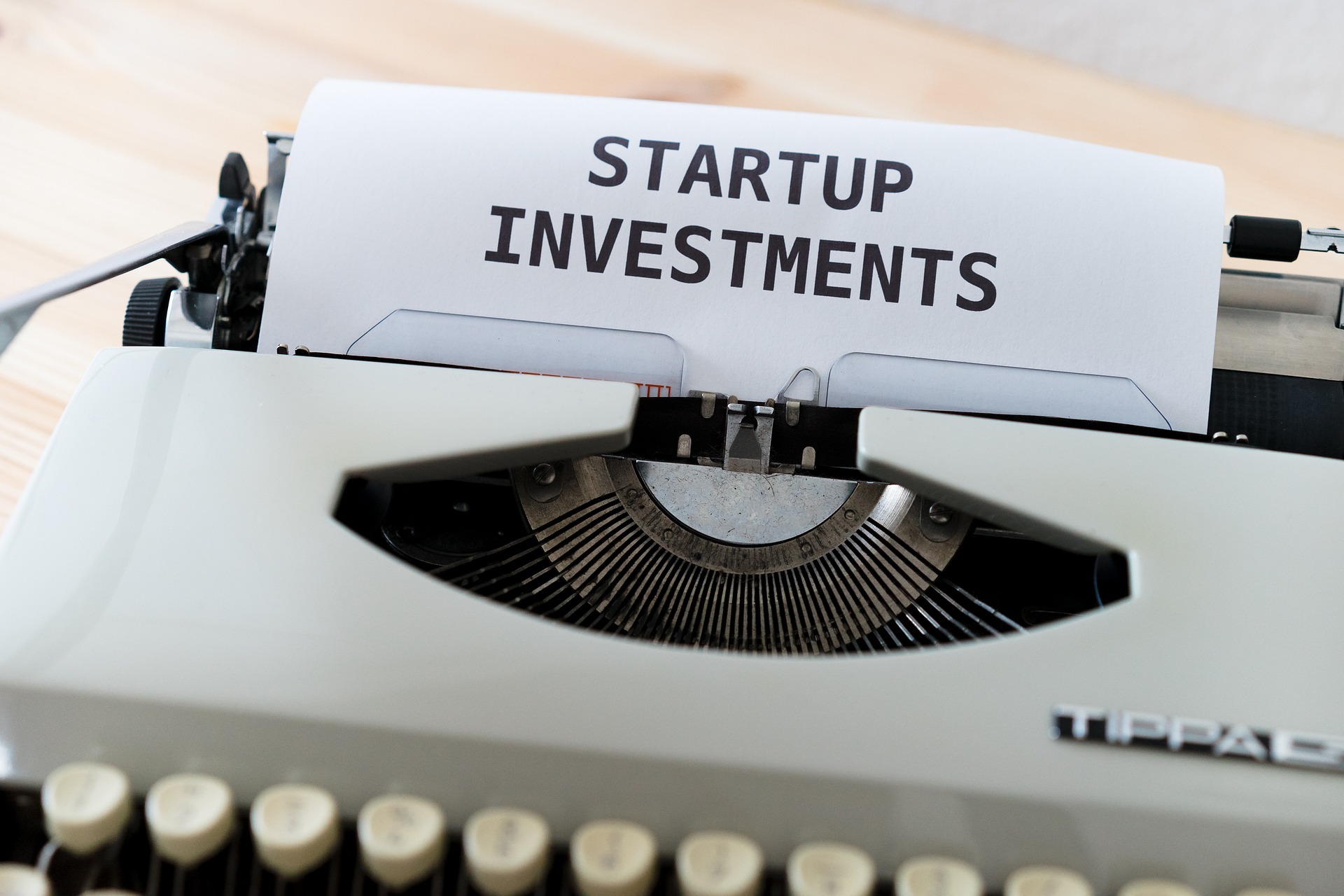
Featured image taken by viarami. Pixabay, 2020. https://pixabay.com/photos/mockup-typewriter-word-startup-5281985/