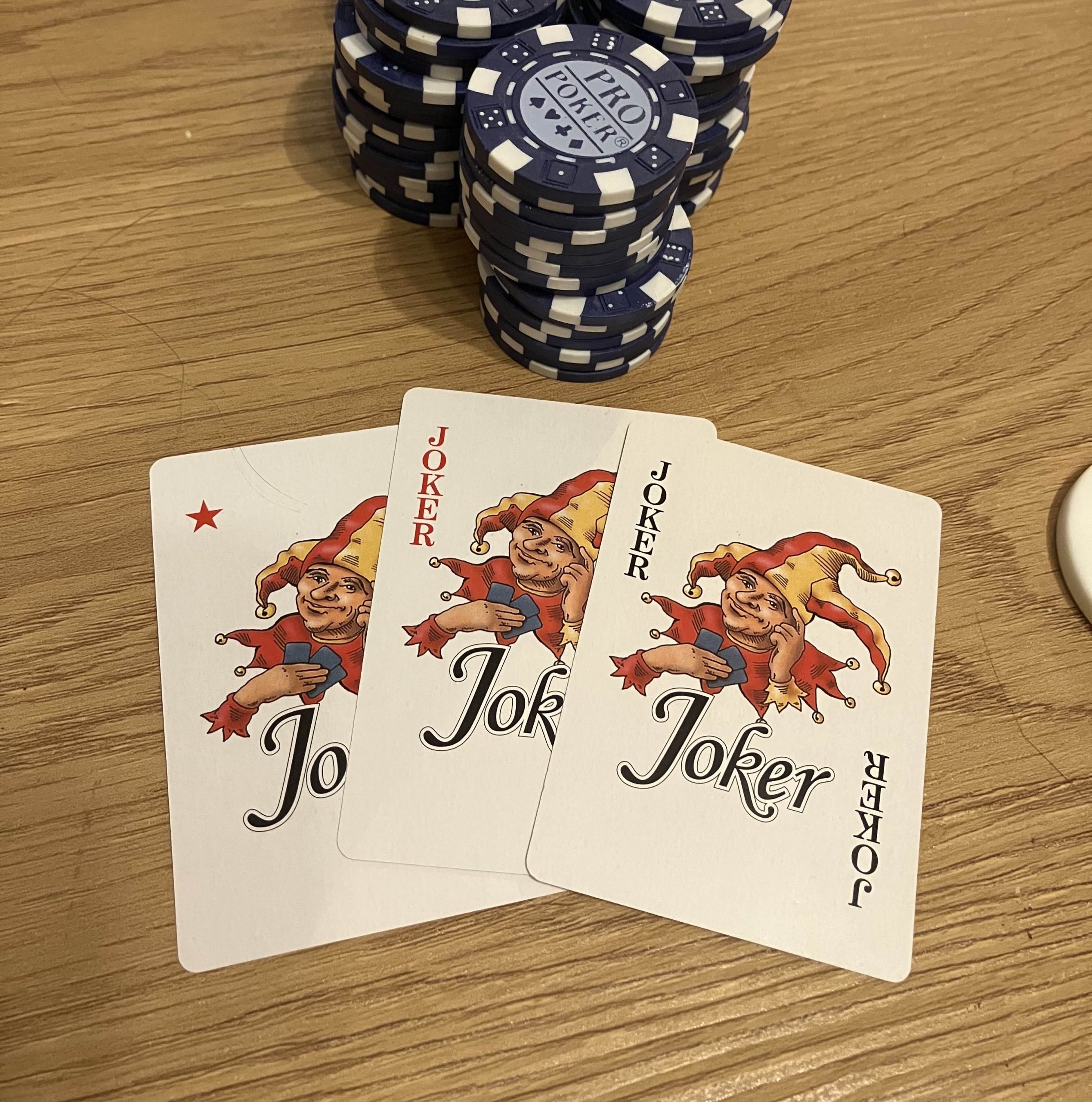
Balatro, last year’s top indie breakout hit, is ostensibly about poker. Its Steam page proclaims it “the poker roguelike,” and the aesthetics certainly scream “poker!” —enough that Pegi initially classified it as an 18+ gambling game before conceding that what goes down in casinos is a far cry from the ridiculous, rule-bending deckbuilding of Balatro. Sure, the game requires playing poker hands and scoring chips. But are Balatro and poker similar enough that I, a Balatro nerd and poker noob, could also get something out of the more simple, classic game?
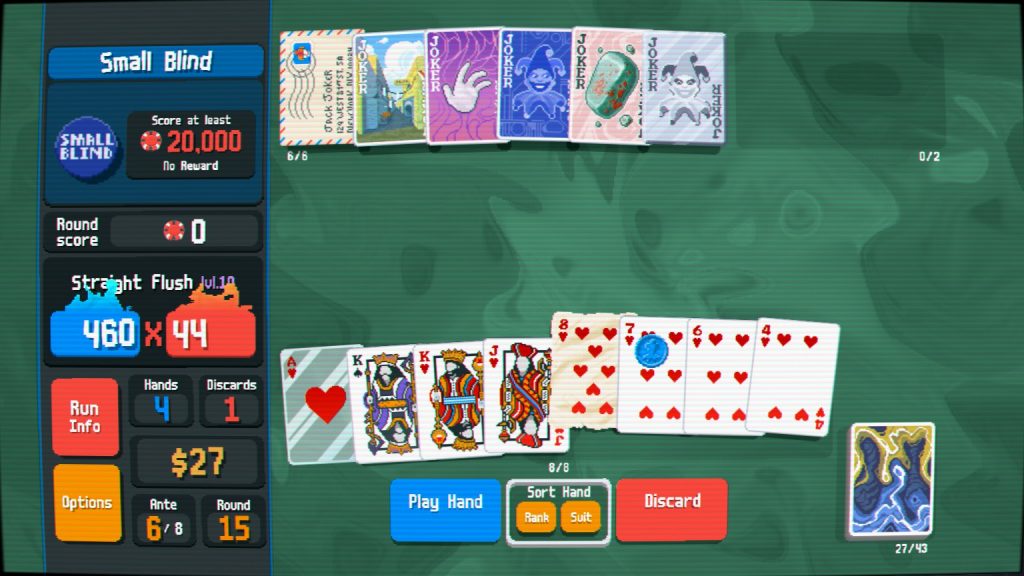
I started playing Balatro early last year, and already I’ve racked up about a hundred hours on Steam (to say nothing of my mobile save, nor how much time I spend watching streamers play Balatro…), so I would call myself somewhat familiar with it. Poker, meanwhile, I’ve barely touched beyond a few poorly-remembered instances at family gatherings. Would any of my expertise transfer from one game to the other? And could there be differences that would trip me up?
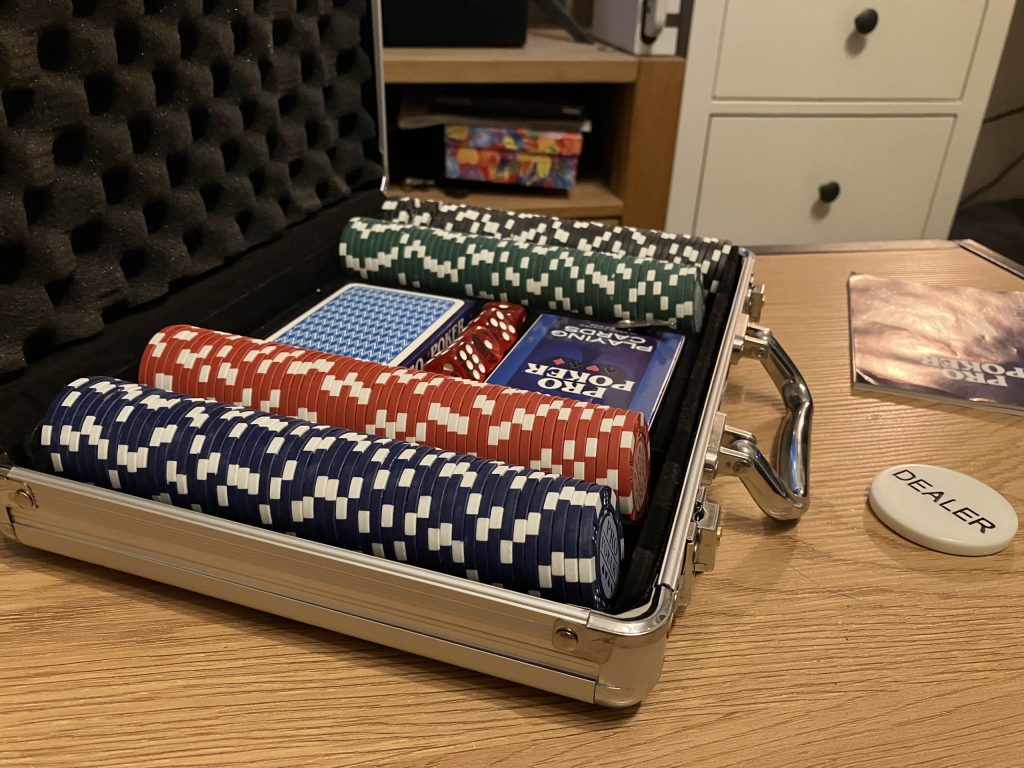
My friend had a whole poker set with decks and chips and a rulebook and everything, and we decided to play a couple rounds of Texas hold ‘em with that. (This variant is what I’ll be referring to when I say “poker.”) I had a bit of a guy who has only seen Boss Baby moment remembering with delight that Balatro’s varying chip colors and deck colors are based on details from the real objects. Rudely, real poker does not offer a “high contrast” option that changes the suit colors, so at one point I got too excited seeing a bunch of red cards on the table. As an expert Balatro player, I knew the perfect play would be to put everything on the flush that would surely be coming at any minute. Right…?
So, someone on YouTube did the math and found out that in Balatro, flushes are the hand that gives you the best score for its ease of drawing. This is accounting for the default eight cards in a hand, plus a handful of discards to dig for your best cards. Texas hold ‘em poker does not have this mechanic! You will at most see seven cards out of the whole deck, and in this case, the math is not on your side. During the games I played with my friends, the highest hand that anyone was able to win with was a two pair. If you are coming from Balatro, then, you must therefore lower your expectations: get all thoughts of swooping in with a straight flush out of your mind. And definitely don’t bet like that’s a possibility.
Betting, of course, completely changes the game. The social dynamic here can get quite strategic. Turns out, in poker, you can lie?! For example, one of my friends bluffed and bet extra confidently in order to get the rest of us to fold. You can also peer pressure your friends into betting high (which I was not very good at, as Balatro does not prepare one for such gutsy plays). I doubt I felt the element of risk as much as I might have, given that none of us strongly coveted the Marianne chocolates we were betting with, but moreover it’s a mechanic that keeps you committed. If you restart a run of Balatro, what you’re losing is time (occasionally hours, if your setup is good enough), but in a shorter game like poker you still always have something physical to lose if you fold.
Regardless, the possibility of potentially drawing a great hand was exhilarating, and I certainly wanted to keep playing even though I wasn’t exactly winning. This simple randomness is what keeps both poker and Balatro so addictive. It also highlights how much poker really is a gambling game, while Balatro is more essentially strategic. In Texas hold ‘em, the strategy hinges on the social aspects; there’s nothing you can do to control the probabilities. Balatro, meanwhile, you can manipulate into letting you score well—and with those elusive high hands—every single time. (So, suck it, Pegi.)
To anyone who’s familiar with poker, a lot of these observations might seem rote, but I want to address the readers who might only engage with card games through the medium of digital deckbuilders: you might be missing out on some fun new types of gameplay! Getting into games like Balatro has made me much more interested in what more you can do with a standard 52-card deck. The holidays may be over, but the need for traditional card games never ends. One day, you might even be able to connect with those relatives who don’t get what “I finally beat Ghost Deck Gold Stake with a Bloodstone/Idol flush five build” means, but will understand “me and my friends have been getting into poker lately.”
Basic Information:
Balatro
Publisher: Playstack
Developer: LocalThunk
Platforms: Windows, Mac, iOS, Android, Switch, Xbox, PS4/5
Release Date: February 20 2024
Genres: Roguelike deckbuilder
PEGI: 12
Texas Hold ‘Em Poker
Publisher: N/A
Developers: Unknown 19th Century Americans
Platforms: 52-card French deck
Release Date: ~1829
Genres: Comparing game, community card poker
PEGI: 12 (for gambling imagery)
Pictures: Screenshots taken by the author from Balatro, photos by author.