
You’ve played something like this before. You’re about 30 hours into the main story of your AAA checklist experience, and you discover the real villain of the game: a shadowy organisation that’s been pulling everyone’s strings the whole time. Whether it’s the reveal that the CIA was backing the bad guys in Battlefield 6, the uncovering of illuminati dealings in the Deus Ex franchise, or even the mess of not-the-final-boss shell organisations within the shlocky Street Fighter plotlines, it’s a well worn cliche to have your game’s plot hinge on at least one conspiracy. But why? Lars de Wildt has a theory: they’re the same thing!

The Deus Ex franchise is a classic example of the “what if every conspiracy ever was true” genre.
In “Hidden Monsters: Conspiracy Aesthetics in Video Games” (2025), de Wildt puts forward the argument that there’s an “elective affinity” between the process of uncovering a conspiracy theory and learning a game itself. When you play a game for the first time, you have to learn a system of “opaque rules” in order to make sense of it. You don’t immediately know that red barrels explode when you shoot them, but you’ll learn this pretty quickly when you accidentally blow yourself up. In order to succeed, you’ll have to “explore and understand the way a virtual world ‘actually’ works” behind the presentation. Sound familiar?
If you’ve been introduced to the idea of lizard people running the government through info wars dot com, you’ll be following a very similar procedure. There’s the world that is being presented to you, one with ostensibly real politicians that make policy decisions and make speeches and broadly participate in a representative democracy. And then there’s the additional information that you’ve been given – they’re all conspiring together (and are lizards) – that lets you hunt for clues beneath this surface. Maybe some of these politicians meet in strange locations! Maybe there are pictures of them looking like they really want to eat a passing fly. There’s an underlying system of mechanics governing the world you see, and – like with discovering that red barrels blow up – you have the tools to learn them.
De Wildt positions games as a unique medium in this: only games are “capable of representing systems in a way that evades objectification”. A movie wanting to depict capitalism will do it through characters or through symbolism; a game can try its hardest to simulate capitalism, simulate market flows and profit margins and everything that causes you to make a dime while your boss makes a dollar. The process of uncovering the rules behind a system is one innately tied to games: is it any wonder that so many of them have this as an explicit part of their plots?
De Wildt uses the Ubisoft game “The Division” as an example of this simulation, in a way reminiscent of the now-ancient discussions on ludonarrative dissonance/harmony (or: how well do the actions the players perform support what the game is telling them?). The Division’s plot centres on a virus released by various shadowy cabals (with new information creating a new enemy whenever they want). But the game itself contains multiple factions that can be allied with temporarily, and encourages players to betray each other: creating a world in which it is hard to trust anyone. Thus, the “conspiracy aesthetics” remain.
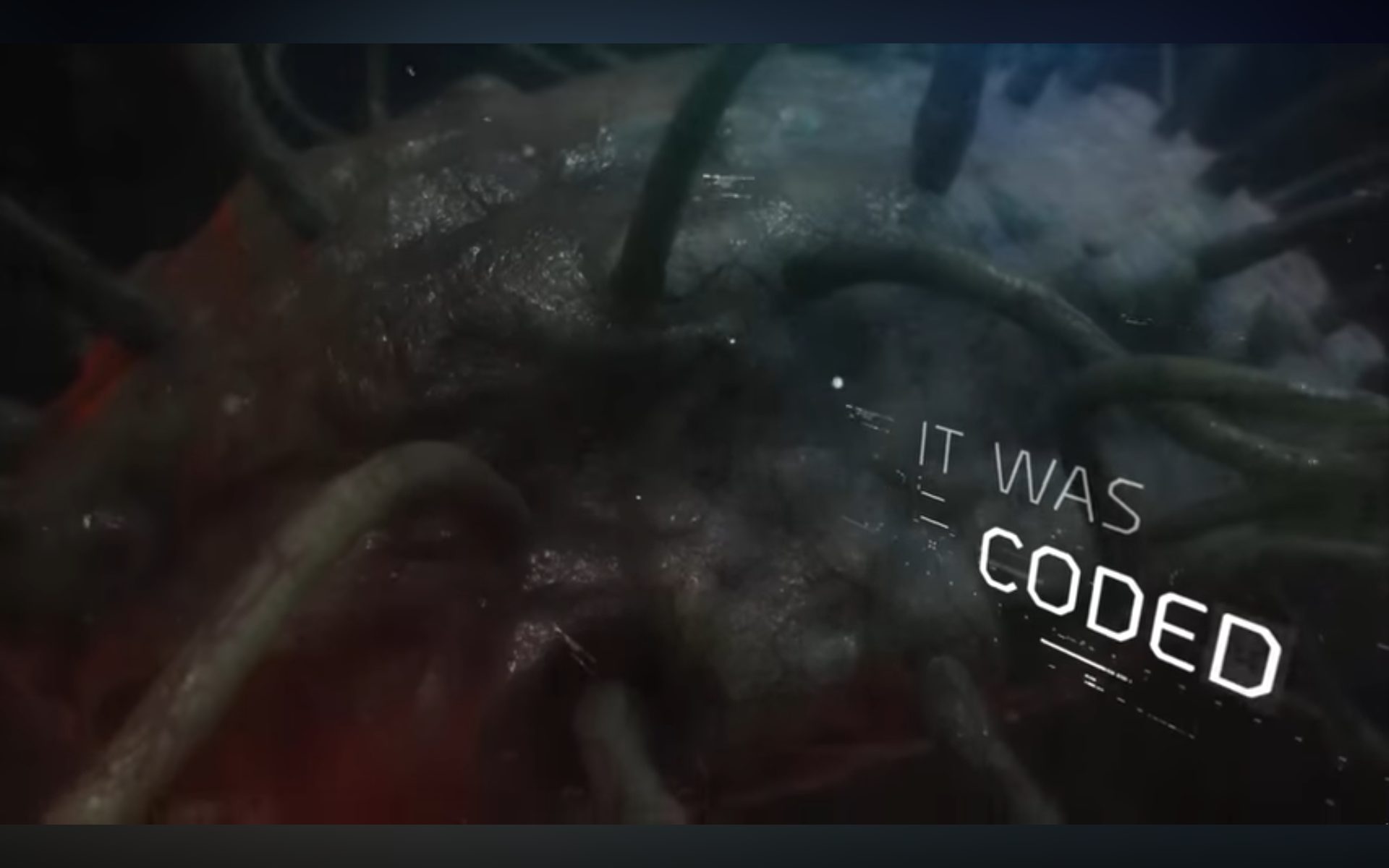
Here in The Division (2016), it’s revealed that the virus was “coded” this entire time!
A big part of de Wildt’s argument hinges on treating conspiracies as monsters in their own right, contrasting a monster that is “objectified” or “indexicalised” (has a stat block, is embodied in a way that the player can shoot them) vs one that is “slippery” or “refuses direct representation”. Conspiracies fall into the latter: unless the game actively gives you a thing to shoot marked “illuminati”, you’re left unable to act upon them. Provocatively, he proposes that “the only monstrosity left un-objectified by video games…is the hidden monster of conspiracy aesthetics”. Vampires and werewolves and mothmen have all been simulated, but conspiracies by their nature have to be out of reach. This feels a tiny bit overstated.
As does the article’s main point! The ties between “uncovering an opaque system” and “uncovering a conspiracy” are compelling, but I couldn’t help but wonder how unique games actually are in having an opaque system to uncover. Books can have dense, hard to read prose. A film that is all symbolism requires some degree of decoding to interpret. And indeed, what of games that don’t require the player to uncover an opaque system? Something like Proteus simply does not bother to reward the player for any mastery over its systems, for example. This doesn’t ruin the points, but it does make them mainly applicable for a certain type of game (I’ve been focusing exclusively on AAA games for this reason).
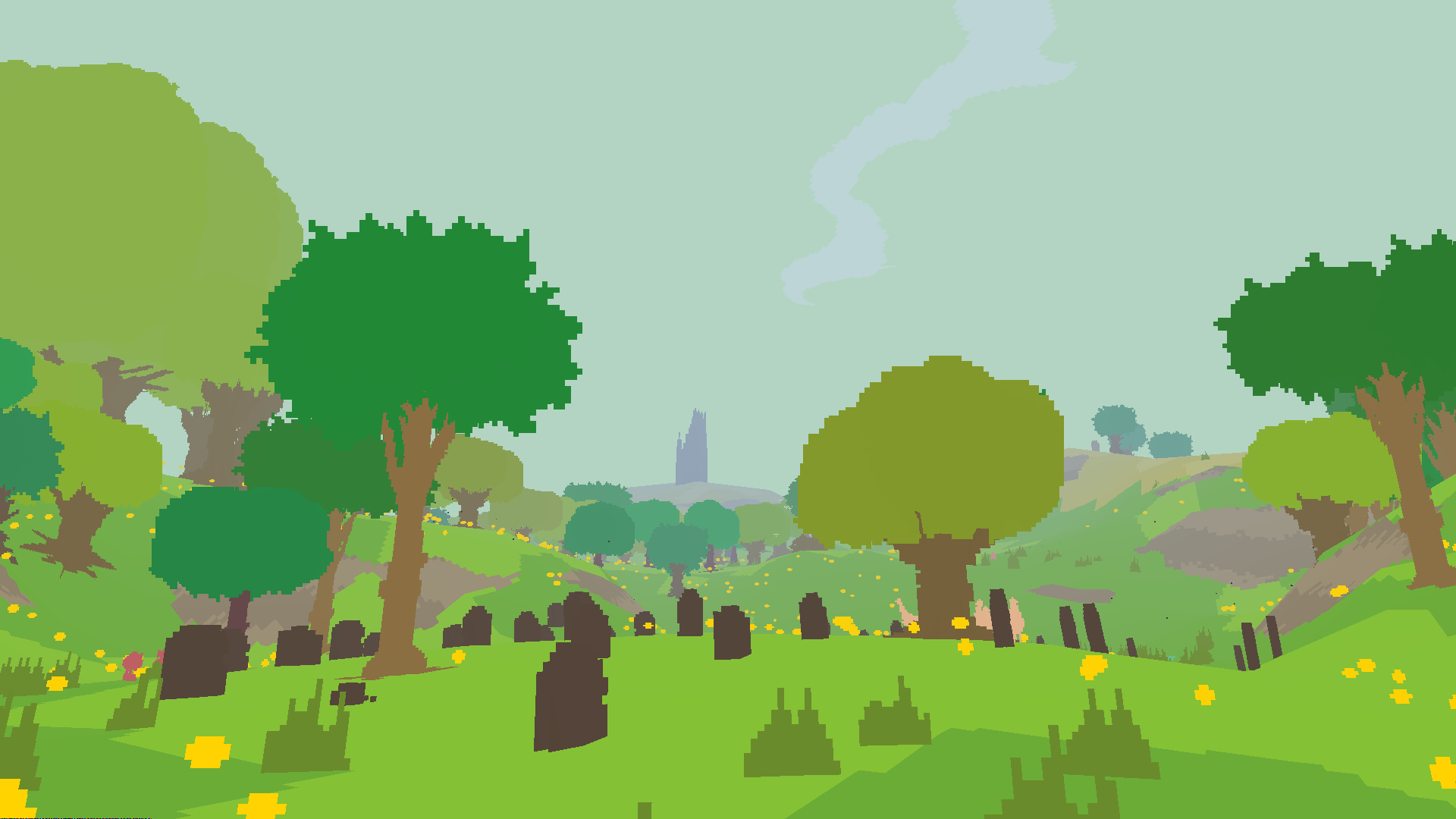
Proteus (2013) is a peaceful game that doesn’t have any win conditions! It’s hard to see where the learning or the conspiracy is, here.
But even if this “effective affinity” isn’t as universal as argued, it is undeniable that it is there. The sheer number of conspiracy-aligned gaming communities (the recent reddit hallucination of a half-life 3 release date being one recent example) or indeed gaming-aligned conspiracy communities (such as the “apes”, gamestop stock holders with the belief in a wide ranging fake stock conspiracy) is hard to avoid. One can see the same decoding strategies abound: in the mildly-tongue-in-cheek numerology theories in the half life community; in the apes’ growing “lore” of heroes and villains. De Wildt ends his argument with a call for more simulations: more games which don’t end with the complicated problem being caused by a simple shadowy group. It’s hard not to agree: this belief is very much causing the world we live in.
Main image edited by me, using a mario render by Reddit user ShineSpriteGamer. Conspiracy background source unknown.
Deus Ex screenshot taken from Steam user Kai
The Division screenshot taken from a video by LtBuzzLiteBeer
Proteus screenshot taken from Wikipedia
Paper Highlighted: Hidden Monsters: Conspiracy Aesthetics in Video Games
Year: 2025
Author: Lars de Wildt
Link: https://doi.org/10.1515/9789048556632-009