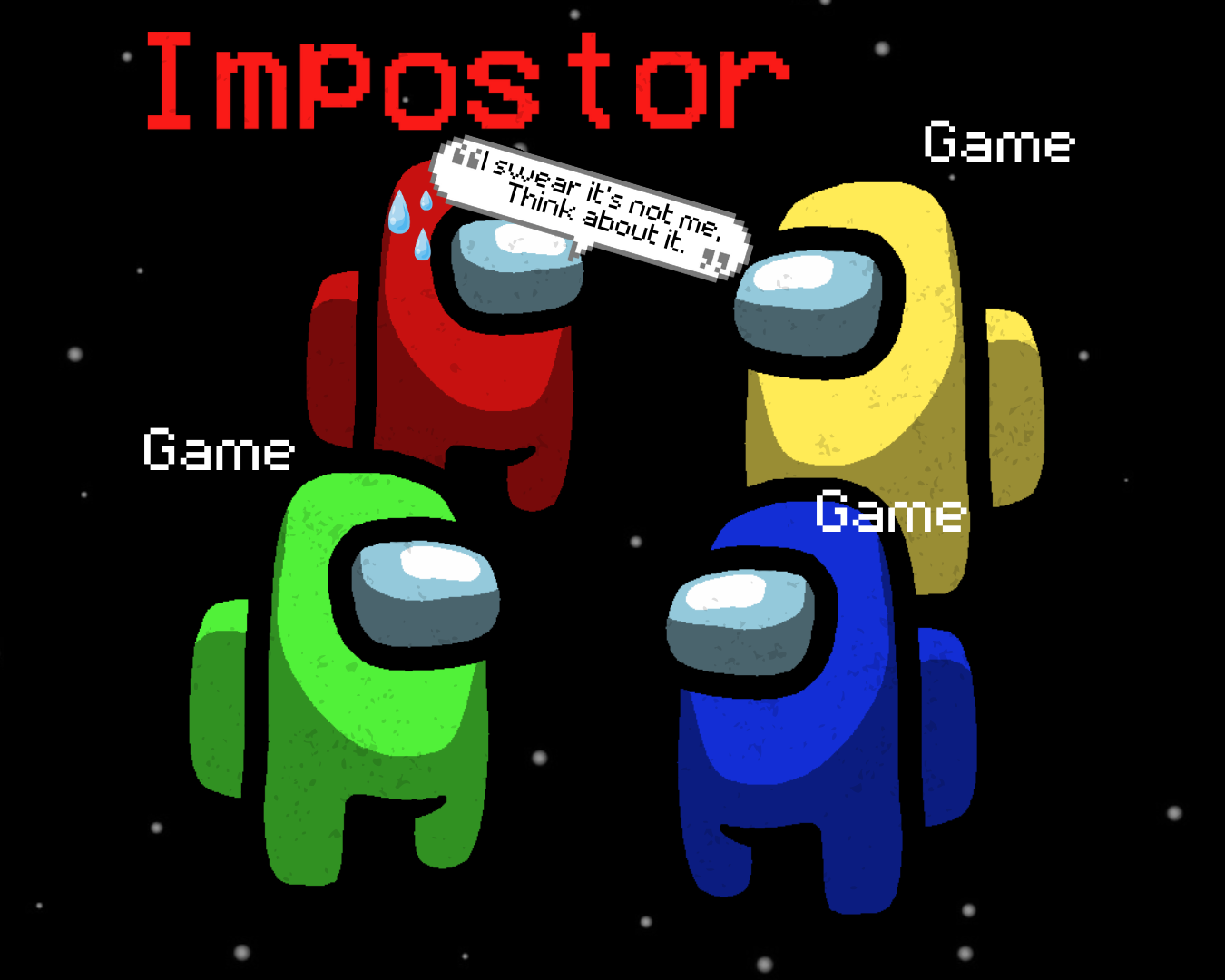
Over the past month, an old school simple party game has spread under a whole family of names: impostor, imposter game, word impostor, impostor who?, secret word impostor, or even the generic “the secret word game”. Despite the spelling variations and branding tweaks, they all orbit the same core idea: a minimalistic social deduction game built around a hidden word and one player who does not know it.
In these games, a group shares (or is given) a secret word, for example “volcano”, while one unlucky participant is the “impostor” who receives either a blank prompt or a misleading word. Everyone takes turns saying a clue about the supposed word, trying to prove that they are “word knowers” while also avoiding being too obvious. The impostor’s only hope is to deduce the word from the other players clues fast enough to blend in. After each round of clues, players can either vote to eliminate someone they suspect as impostor or continue with another round of clues to gather more information.
One player might confidently say “Pompeii,” another “island,” and a third drop a more exotic clue like “Wii Sports Resort,” which only lands for those who remember its in‑game volcano. An impostor, scrambling to fit in, might offer “Malta” after hearing those clues, while someone else plays it safe with a generic “hot.” Suddenly the table is split: is “Malta” clueless overreach, or is “hot” suspiciously vague?
Although there are a couple of house variants, most word impostor games share the same nature, it is more the difficult to win as an impostor than otherwise. Typically, the impostor wins if they survive long enough or correctly guess the exact secret word during a round. The others win if they simply identify and eliminate the impostor, but not before suspicion settles, debate breaks out, and accusations fly.”
What transformed this small, language-based party game into a trend is how well it fits the rhythms of short-form video culture. The game’s emotions are compact: confusion, accusation, denial, laughter and maybe a climatic “I knew it!” moment. Perfect for a thirty to sixty second clip. Over roughly the last month, this format has emerged as a social media trend, mainly across TikTok and Instagram Reels. The game’s simplicity is its growth engine, newcomers need only a few seconds to understand what is happening, which lowers the barrier to participation and encourages everyone to imitate it.
Video by @smosh on instagram
Historically, this is the kind of game that belongs in dorm rooms, long train rides and family meals. At its core, “word impostor” is an extremely low-tech design. A common classic version relies on a physical bowl full of folded papers, each with a word or an unlucky empty space. There is something ritualistic about this setup as well, with the brief moment where each player unfolds their paper and tries to keep their face neutral.
With the recent popularity, a lot of mobile apps have been released with the goal to become this artificial “game master” that randomly selects words from curated lists and privately assigns the impostor role and secret words. Digital tools have not replaced this entirely but have dramatically broadened how and where this game is played. A game that started as a bowl of papers passed around a living room is now engineered, consciously or not, to feed algorithmic loops. Yet its power still depends on the oldest ingredients of play: trust, deceit, and the joy of choosing just the right word when everyone is listening too closely.
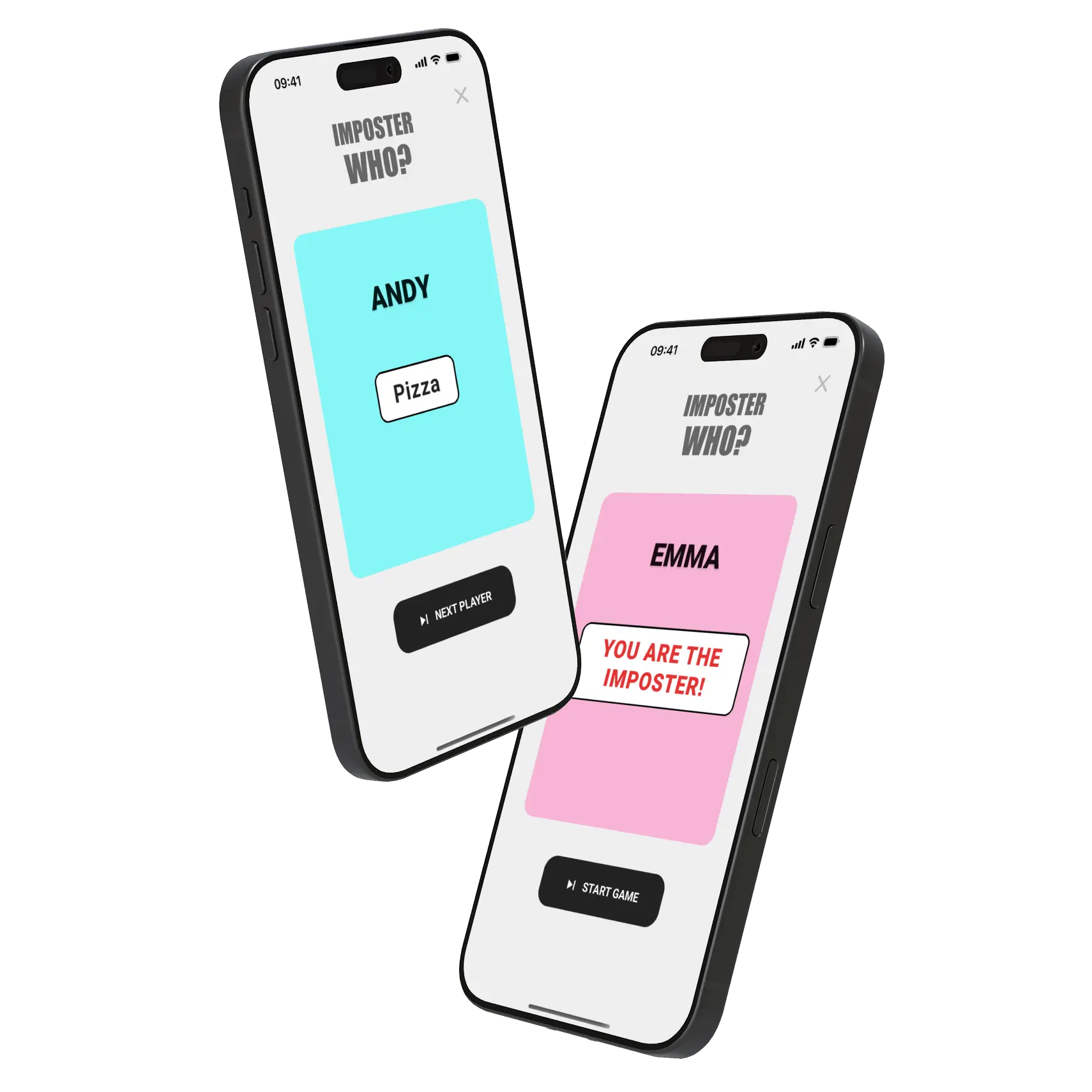
For those of you who made it to the end of the article, let me share some personal tips to make your “word impostor” games more interesting, different, or maybe push them to the next level:
- When deciding the words manually, choose some that have a special meaning to that group of friends, an inside joke can fill the entire room with laughter.
- In large groups, play with several impostors and let them know who they are in private so they can play as a team.
- Play rounds in which everyone is an impostor, or the contrary, there are no impostors. (do not reveal it until the last round is over)
- And my favourite, give hint words to the impostors but don’t let them know they are impostors, see how everyone acts when they are convinced they are innocent.