
The Maple Refugee incident
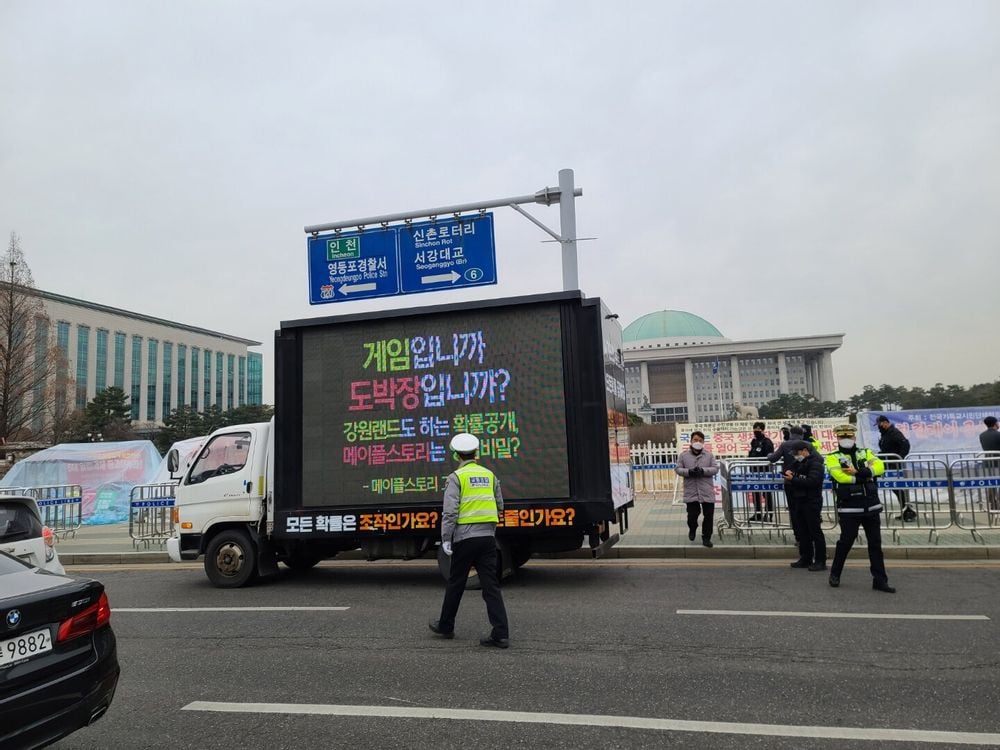
An estimate of 400,000 Korean online player’s revolt after changes are made to the item system of the game Maple Story, where the probability to upgrade items via this system were altered, disproving several years-old theories established by players. These changes lead players to engage in social activism, both online and in-person, players started to abandon their decade-old accounts, selling their rare items and characters, organising conferences and gatherings with other players, alongside organising protests and displays across South Korea. The incident involving the game Maple Story and players was titled The Maple refugee incident, which directly led to a new law that dictates that loot box and randomness systems probability must be disclosed from March 2024. Previously, systems using randomness such as the item system in Maple story or loot boxes relied on the self-regulation from game developers, often leading to developers omitting the number for their randomised systems such as loot boxes.
The Maple refugee incident showcased the importance of player activism, where players united and mobilised within days, pressuring the game studio to disclose the probability of their core monetisation mechanic. This case also highlighted the importance of transparent communication between game studios and players, especially when discussing probability chances for systems that rely on randomness.
Background and events leading to the incident
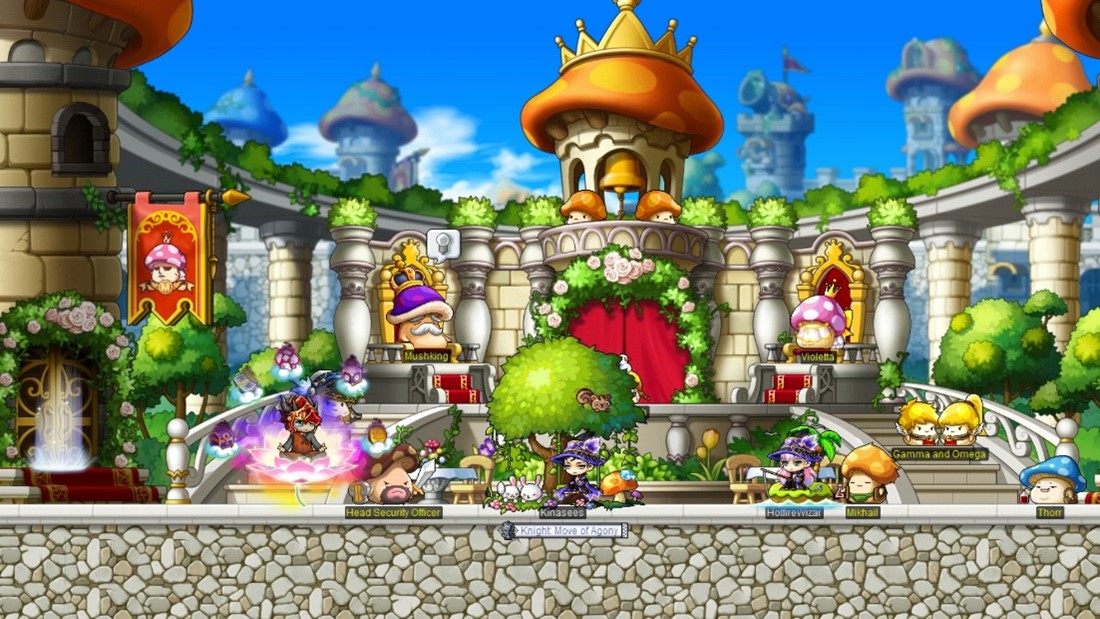
Maple Story (MS/Maple) is a South Korean Free-to-Play (F2P) massive-multiplayer online role-playing game (MMORPG), developed by Nexon and released in 2003. In Maple Story, players can upgrade their equipment by adding randomised stats to an item by spending in-game resources. This system has a degree of variance and randomness, making it not guaranteed that a player will be able to upgrade their item, leading to failing to upgrade, downgrading or even destroying the item. This process costs players real currency and can get very expensive, potentially costing players thousands of dollars to upgrade their items.
The odds of this system were not disclosed, and players had to theorise the odds of succeeding or failing to upgrade an item in Maple Story. In February 2021, a new patch was released for the game, making changes to its equipment system, effectively changing the odds required to upgrade items. The developers of Maple stated that this patch was intended to fix the in-game system, implying that it was buggy and faulty in the past. This led to players to revolt, as they could have been investing time and money into a bugged system for several years, in addition to changing previously established theories on what the odds were to upgrade items.

Learnings from the research by Park and colleagues
Park et. al. (2023) highlighted the importance of players bounding together through player activism, which in turn was responsible for new legislation getting introduced. This act of rebellion against Maple Story and the game-as-a-service business model were essential to illustrate the current issues with global game companies’ practices says Park et. al. (2023). The researchers highlight a series of key takeaways people should take in consideration when researching or learning about this incident.
First, practices like self-regulation of policies are not always effective as companies may take the opportunity to skirt the line as means to make profit. In the case of Maple Story, having several types of monetization mechanics that would fall under certain regulations, but others wouldn’t. Second, the researchers also highlight the importance of consumer protection laws around randomised reward systems like loot boxes, as failing to disclose probabilities of random rewards tools can result in fines, which was the case for Nexon, the developer and publisher of Maple story. Third, player activism, community feedback and the involvement of high-profile players and content creators was key for the success of the Maple Refugee incident. High-profile players stopping to play Maple Story as form of protest and streamers acting as conduits to gather members of different communities helped set in motion the movement.

Fourth, one of the main reasons for the Maple Refugee happening was the uncertainty and feeling of betrayal on the minds of players with the new patch that led to the incident, had the probabilities being properly disclosed properly, this incident could have been potentially avoided.Lastly, the authors highlight the risks for having complex monetization models part of free-to-play games. Games like Maple Story have several interconnected systems parts of their monetization model to maximize profit and functionally of the game. One small change within the game can cause ripple effects to every system part of the game, increasing the risk for long lasting consequences if a small mistake happens. This means developers must account for every possible consequence when deploying a new patch as it can affect player’s investment in the game.
Park et. al. (2023) concluded that the form players united to protest changes done to Maple story and the amount of player activism organized by those participating of the Maple Refugee incident in a matter of days was truly impressive. This incident led to a new law that mandates that loot box probabiliyty is disclosed in South Korea since 22nd of March 2024, which demonstrates the power of players and the importance in advocating for changes.
. Additionally, the authors highlight the importance of transparent communication between game companies and players, as a better handling of the situation could have mitigate or even avoided the incident.
You can find the complete research article here:
