Recent years have been a golden era for beat ’em up and fighting game enthusiasts. Modern classics like Streets of Rage 4, TMNT: Shredder’s Revenge, and Sifu have revitalized the genre, while 2025 releases like Absolum and upcoming titles like Marvel Cosmic Invasion continue to push the genre forward. Meanwhile, the roguelike genre has also experienced a renaissance, with Hades becoming one of the most acclaimed games, winning Game of the Year at multiple award ceremonies and its sequel Hades II releasing to critical acclaim in 2025. These successes have inspired developers worldwide to explore innovative combinations of combat mechanics and roguelike structure. Now, an Iranian studio has decided to enter this vibrant market with a unique twist: incorporating traditional Persian wrestling as the core combat mechanic, a fighting style rarely seen in games, especially not in this form and depth.
Black Cube Games is an independent game studio headquartered in Amsterdam, Netherlands, with a team of ten developers all of Persian background. Originally based in Iran, where they worked together for over a decade, the studio relocated to the Netherlands in 2020 due to international sanctions and now operates remotely with members across Europe and beyond.
The studio made its mark with The Tale of Bistun (2022), an action-adventure game deeply rooted in Persian mythology. Based on the 12th-century epic poem “Khosrow and Shirin” by Nizami, the game follows stone-carver Farhad through Mount Bistun. Published by the Polish company IMGN.PRO and released on PC and Xbox platforms, Bistun achieved critical acclaim and positive reviews for its authentic cultural representation and respectful treatment of Persian mythology. Since 2023, the studio has operated as part of the Remote-Control Productions family, which provides business and marketing support.
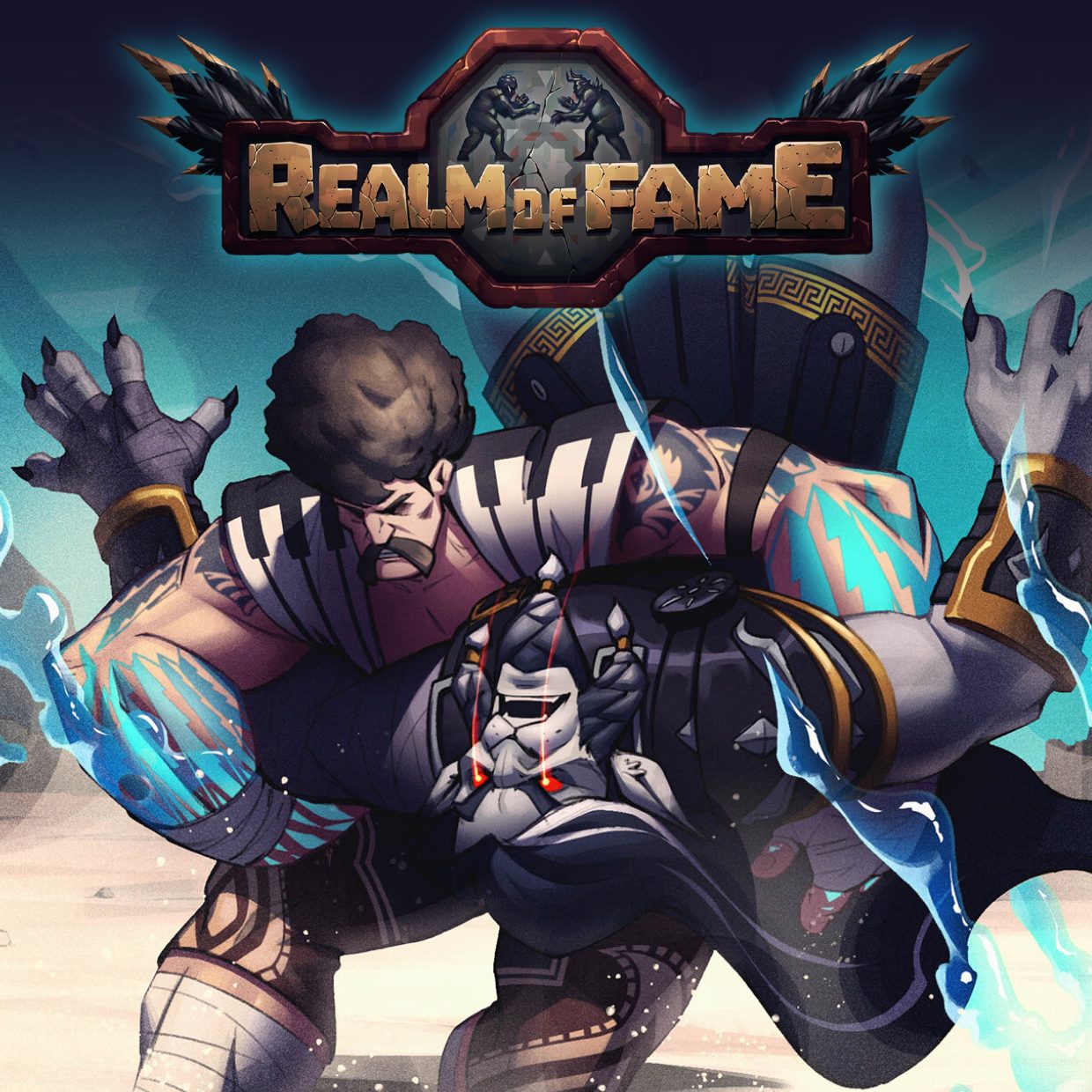
In this interview, Amin Shahidi, Team Lead, Animator & Game Designer at Black Cube Games, discusses their new game, an action roguelike centered on traditional Persian wrestling, called Realm of Fate, that is inspired by Attar Neyshaburi’s “Conference of the Birds.” The interview covers their development challenges, the move from Iran to the Netherlands due to sanctions, their partnership with Remote Control Productions, and their experiences at Gamescom 2025.

Q: Your first successful game “The Tale of Bistun” was heavily inspired by Iranian mythology. In this new game, which mythology did you pursue? Also, do you consult with anyone about implementing mythological ideas, or do you conduct the relevant research yourself?
Yes, in the new game, we also drew from the cultural and historical foundation of Iran. The core of our utilization came from the gameplay. That is, the game’s hero is a wrestler, and this allowed us to use a part of our culture in the gameplay. Wrestling has been part of Iranian history since ancient times. Wrestling is referenced in Rostam’s battles in the Shahnameh, and even in contemporary times, wrestling has been the country’s premier sport, and Iran has always been and remains at the forefront in all international competitions.
Content-wise, this time we turned to Attar Neyshaburi and used a free interpretation of this poet’s “The Conference of the Birds” (Mantiq al-Tayr).
Regarding the second question, we conduct research for projects ourselves. From searching through verses to field research, such as visiting ancient sites and museums…
Q: How did you decide to incorporate “wrestling” into the game? What challenges did implementing and executing this idea present?
As I explained in the previous question, after the Bistun experience, we concluded that merely using Iranian stories in games is not considered special in the international market and only functions as a new story. In this regard, we tried to use Iranian content in the gameplay. And if we want to produce an action game, we should draw from Iranian traditions in combat. Of course, since ancient times, wrestling has been and remains one of the hallmarks of Iranians.
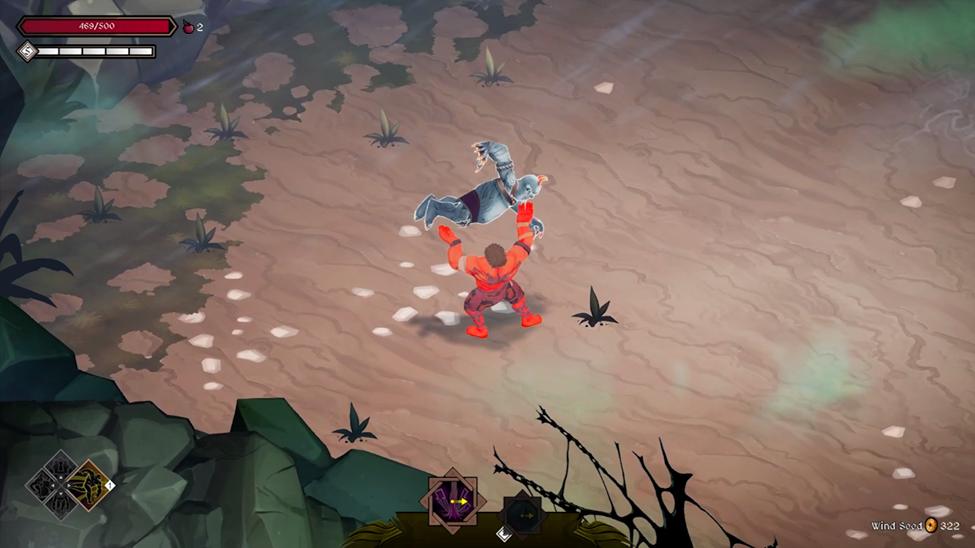
The main challenge is the close engagement of two characters in close proximity due to grappling. In many games, there is something similar to wrestling implemented in the form of finishers. But we wanted it to be not just a finisher, but the core of combat. So we dealt with coordinating animations of the main character and enemies, differences in character heights, and methods of teaching techniques to players. Additionally, in this game, due to the isometric camera, we couldn’t easily use ground wrestling techniques because, in practice, the movement wasn’t clearly visible. And we realized we needed to utilize techniques that use more upper-body movements.
Q: What is the biggest challenge (technically, design-wise, or implementation-wise) that you encountered during game development?
The biggest challenge was and is wrestling itself. How to give depth to wrestling but not make it like games such as UFC, and to make it both easy to execute and attractive for players. On the other hand, the action roguelike style has very good speed. But the very nature of wrestling takes speed away from combat. And so rhythm in combat with the wrestling core became our other challenge.
Q: Did the experience of making the previous game help you here? What positive or negative conclusions did you reach? What things did you decide not to repeat in this project and vice versa?
Yes, definitely. First and foremost was the game style. In the action-adventure style we produced in the previous game, the production cost relative to the gameplay it added was high. For example, for one scene in the game, 5 people might work for two weeks: a level designer, a narrative designer, an environment designer, a lighting artist, and an effects designer. And then the player’s experience was at best 10 seconds passing through that environment, and that scene would never be used again in the game. But in a roguelike game, every room you design can be used for hours with each death and return of the player, and from the same production time for one scene, more gameplay can be developed.
On the other hand, the cost of producing 3D environments was high for us. Given the path we designed for ourselves, we proceeded with the environment in 2D with the same camera. And the environmental production process became both faster and gave us more flexibility to make changes. And most importantly, as I mentioned in previous questions, after Bistun, we realized that no one wants to hear Iranian stories. We actually understood this through sales. The distinguishing feature of Bistun’s story was a historical tale from Iranian literature. And this experience led to producing a game where gameplay is the game’s anchor point.

Q: Are the studio and team members in Iran, or has the studio moved outside Iran? (If yes), What positive or negative impact has this change had on the game development process?
Due to international sanctions, we could no longer maintain the company in Iran, and currently, we have no Iranian legal entity. We established the company in the Netherlands in 2020. Currently, we work together remotely. People from countries like Turkey, Germany, the Netherlands, England, etc., collaborate online. And it is definitely much harder work. The only positive point is escaping the blade of sanctions on Iranians, and it has no other positive impact.
Q: It seems you’re collaborating with a company called Remote Control Productions for this game. What form does this collaboration take? Has this collaboration been satisfactory, or do you prefer when you were independent?
One of the positive events after releasing the Bistun game was getting to know this German and international company. Although Bistun didn’t bring us financial gains, due to the scores it received on Metacritic as our first game, as well as the exhibitions it attended and the awards it received, new doors opened for us. After a long period of negotiations, we reached an agreement with this company, and they are currently our company’s partner, helping and guiding us in business, marketing, and production.
Regarding this same game, I can say that this company has taken this game to exhibitions all over the world and has greatly empowered us to develop and introduce our game.

Q: Your team consists of 10 people. How do you divide tasks in this relatively small team? Can you complete work on time with this number of members and meet your deadlines?
Yes, it can be said that the production team for this game is 10 people. But today, directly and indirectly, we are close to 23 people working on various projects, but under one name, called BCG. But logically, in indie game production, all individuals, in addition to their specialty, are forced to do other work as well. Like me, whose specialty is 3D animation, but I also do project management and even financial management.
Regarding time management, I can mention that our team has done, is doing, and will do multiple projects as services for international companies to gain experience and income. The profit from those projects becomes the production cost for our own games. And what we learned in the commissioned projects we did is the commitment to deadlines. And certainly, this point is one of the biggest experiences transferred from commissioned projects to our own projects.
Q: As team leader, what do you think is the biggest challenge you face in making an international game? What features do you think a game should have to be accepted internationally?
I think it’s the combination of market knowledge and team conditions. I still don’t consider myself a good leader, and every day I strive to transform myself into this important role. But it can be said that the best thing a good leader should do for a creative team is to use good knowledge of the team to guide a good path with good knowledge of the market. A very vast market, but your team can certainly be good in one part of that market and create a place for itself. This good place in the market should have results along with financial development and people’s happiness from the daily routine they spend with their efforts in the team. If this happens, people will feel progress alongside their work.

Q: You also participated in Gamescom 2025. What feedback did you receive?
First and foremost is the expansion of the East Asian and Chinese market in the international gaming market. It can be said that with this entry, part of the terrible recession in the gaming industry can be improved. We attended this exhibition with two games. One is this ROF game, and the other is a small game in a relaxing and puzzle style, to test another part of the market with it. Overall, we had very good meetings with Western and Eastern publishers, and both our games attracted good attention. We are currently continuing negotiations for both games to find a good partner to complete these two and release them onto the market.
Q: Have you considered a specific timeframe for releasing the game? What platforms do you plan to release the game on?
Given the good experience that Bistun gave us with releasing the game on all consoles, we will make every effort to release our new products on all consoles as well.
Regarding publication time, you can only give a date when you intend to self-publish. But given that we are looking for a publisher for these games, logically, the publishers provide the publication time based on their market knowledge. But certainly, ROF game production will continue for another year. So it can be said that the game most likely will not be released by the end of 2026.
Q: Have you decided on your next game? Do you want to keep the same mythological theme, or will you try a different experience?
Each experience we have has a significant impact on decision-making for the next game. In this regard, we are currently working on two games. The amount of feedback these two games give us will determine a major part of our future path. The market has clearly undergone and is undergoing many changes, and we are also monitoring the market.
The second small game I talked about in the questions above is neither mythological nor Iranian. We certainly have other mythological ideas as well. But we must see which ones, given production costs and revenues, will ensure our studio’s survival in this turbulent market.
Just let me note at the end that our entire studio’s first passion is producing games with the name of this culture and land, and whenever we find the opportunity, we will not abandon this passion.
Realm of Fame is currently in active production and most likely will not be released by the end of 2026. The studio plans to release the game across multiple platforms, including all major consoles, following the multi-platform approach that worked well for The Tale of Bistun. The game already has a Steam page where interested players, especially those who are fans of wrestling, action roguelikes, or games with cultural depth, can wishlist it and follow development updates.
Images courtesy of Black Cube Games press kit