EHEÄ-hankkeen päätavoitteena on tuottaa Satakuntaan uutta teknologia-, kulttuuri- ja sosiaali- ja terveysalaa yhdistelevää TKI-toimintaa, liiketoimintaa ja hyvinvointia.
Hanke vastaa yhteiskunnallisesti erittäin merkittävään haasteeseen. Sote-alaa haastavat kasvavat asiakasmäärät ja niukat ammattilaisresurssit, mikä pakottaa palveluntarjoajia keskittymään välttämättömiin lakisääteisiin hoidollisiin toimiin. Strategiat ohjaavat soten painopisteen siirtämistä ennaltaehkäiseviin ja hyvinvointia tukeviin palveluihin ja peräänkuuluttavat sektorirajat ylittävää yhteistyötä näiden kehittämisessä. Hoitoalalle tavoitellaan panostusta muilta toimialoilta. Asiakkaat hyötyisivät tutkitusti kulttuuri- ja teknologiasisällöistä ennaltaehkäisevissä, matalan kynnyksen palveluissa, jolloin tuen saaminen on mahdollista kotiin ja arkiympäristöihin.
Ihmisen toimintakyvyn heiketessä, ensimmäisiä pois jääviä asioita ovat mielekkäät merkitykselliset aktiviteetit, kuten kulttuuripalvelut. Edellisillä on tutkitusti suuri merkitys mielen hyvinvointiin sekä osallisuuden ja elämisen mielekkyyden kokemukseen. Kaikki kulttuuripalvelut eivät ole saavutettavia toimintakykyrajoitteisille, mutta kehittynyt teknologia mahdollistaa paikkariippumattomien palveluiden ja moniaistillisten kokemusten tuotannon. Hyviä esimerkkejä on löydettävissä toimintakyvyn eri osa-alueisiin liittyen. Fyysisen toimintakyvyn tukemista edistetään kehittämällä mm. moniaistillisia, liikkumaan aktivoivia ympäristöjä (fyysiset ja digitaaliset ympäristöt, kuten VR) ja pelejä. Psyykkisen toimintakyvyn tueksi kehitetään rentoutumista tukevia laitteita, tiloja tai palveluita, lisätään aistiesteettömyyttä teknisin ja tilansuunnittelullisin keinoin sekä luodaan mittaristoa kuormittumisen arviointiin. Kognitiivista toimintakykyä tuetaan mm. oppimis- ja muistipelien ja sisältöjen avulla. Sosiaalista toimintakykyä puolestaan edistetään kehittämällä yhteisöllisyyttä lisääviä (etä)palveluita, kuten kotiin vietäviä matkailu- ja taidepalveluita.
Tampere University is responsible for developing the setup for recording physiological data related to cultural and recreational activities. The following activities have been carried out:
Measurement series
Controlled study for emotion recognition analyses. 30 participants (15 Finnish, 15 International) were watching 9 video clips, conveying emotions such as amusement, excitement, happiness, anger, disgust, fear, sadness, surprise, clamness. EEG (14-channel, EMOTIV Epoch), GSR, ECG and PPG data were recorded. (Publications 1, 3, 4 and 5)
Recordings at Rakastajat-teatteri's Isin Tyttö play. EEG (2-4 channels, MUSE Athena), GSR and ECG data were recorded together with video at live theatre performances. Data were recorded altogether from 17 subjects (2 subjects / show). NB! The report on the collected data with preliminary analysis can be found:
Physiological responses during multisensory stimulation. (EEG (2-4 channels, MUSE Athena), GSR and ECG) Data were acquired from 20 participants while they were interacting with horses in Virtual Reality with/without multisensory stimuli
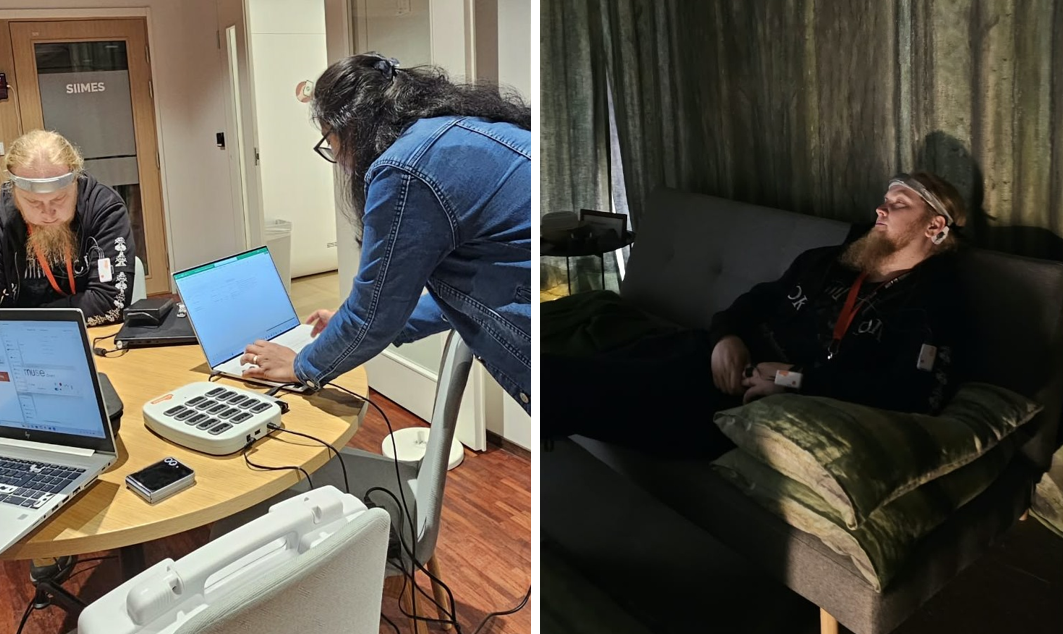
Effect of the AistiSiimes relaxation environment on physiological responses (EEG (2-4 channels, MUSE Athena), GSR and ECG). Recordings have started in September. The aim is to collect data from 20 participants with the following protocol: 2 min relaxed, eyes closed - 2 min relaxed, eyes open - 15 min intensive working (coding / reading / writing) - 10 min relaxation in AistiSiimes
Pilot studies
GSR and ECG measurements at Sataedu's Halloween party
Recordings at Reposaari summer theatre
Hyperscanning recording at a game design event in Säkylä. 8-channel EEG (OpenBCI cap), GSR and ECG were recorded simultaneously from two test subjects while designing a game
Nutrition study. A go-nogo paradigm was used to study the inhibition response to images depicting high calorie / low calorie food. Data were acquired from 6 test subjects. (Publication 2)
Horse therapy recordings. EHEÄ team was consulting TAU SOC research group in the recording and analysis of GSR and ECG data during horse therapy. The data were recorded from both, the therapist and the client from various locations in Finland
Live performances
Brain wave orchestra at Science Fair of UCPori in September, 2025.
Publications
A. Site, T. Lipping. Physiological Responses to Recreational Experiences: Assessing Emotional States and Well-Being. In CSS Tutkimusfoorumi, 2026 (Centria, SAMK, SEAMK CSS -tutkimusfoorumi 2026)
E. Järvensivu, C. Restasuri, S. Kunvik, E. Nevala, T. Lipping, K. Inkinen. EEG-menetelmän testaus aivojen estokontrollin tutkimisessa. In CSS Tutkimusfoorumi, 2026 (Centria, SAMK, SEAMK CSS -tutkimusfoorumi 2026)
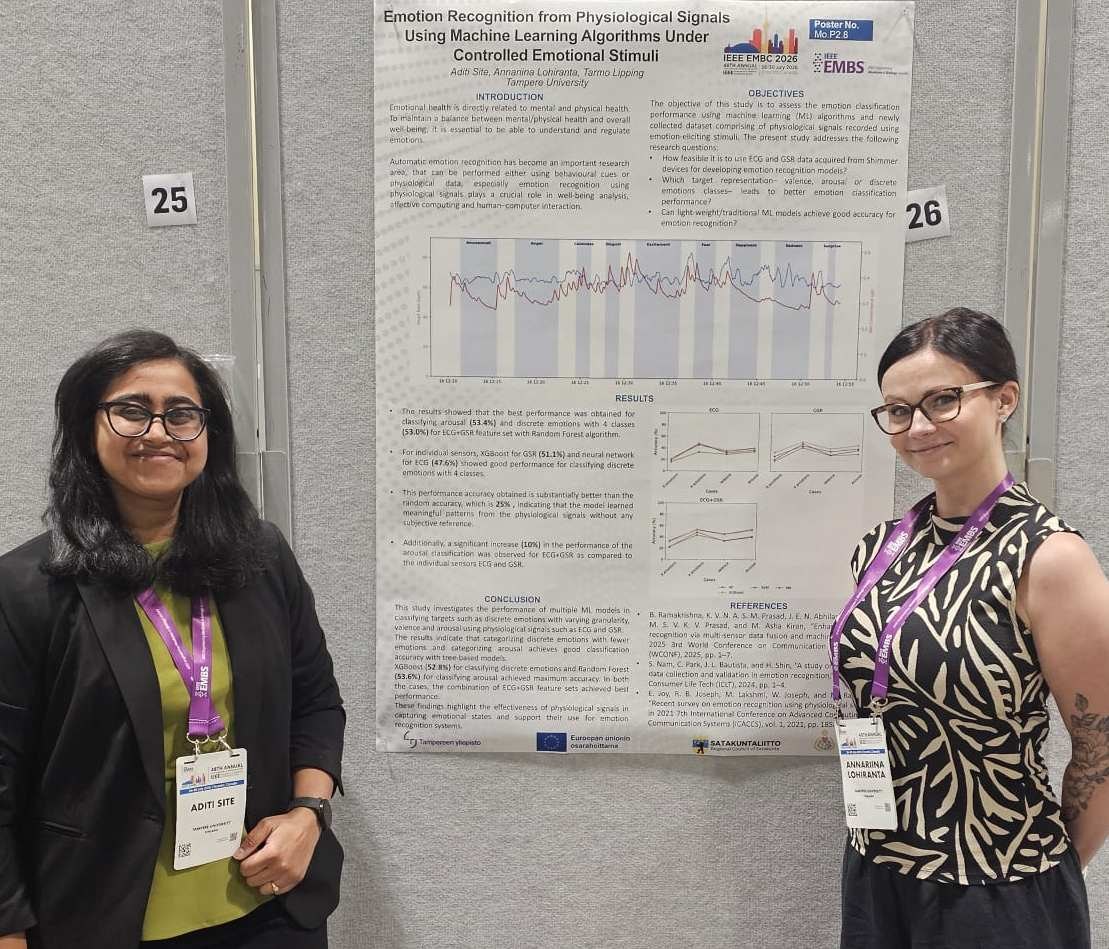
A. Site, A. Lohiranta, T. Lipping. Emotion Recognition from Physiological Signals Using Machine Learning Algorithms Under Controlled Emotional Stimuli. Accepted to and presented at EMBC2026
R. Yasir, A. Site, A. Lohiranta and T. Lipping. Electroencephalogram-Based Emotion Recognition Using a Transformer Model with CNN Feature Extraction. 2026 IEEE International Workshop on Metrology for Industry 4.0 & IoT (MetroInd4.0 & IoT), Rome, Italy, 2026, pp. 288-293, doi: 10.1109/MetroInd4.0IoT69397.2026.11653113.
A. Site, A. Lohiranta, T. Lipping. Understanding emotional and behavioural responses through physiological signal analysis recorded during theatrical performance. Presented at iWOAR2026
September 26th, 2026
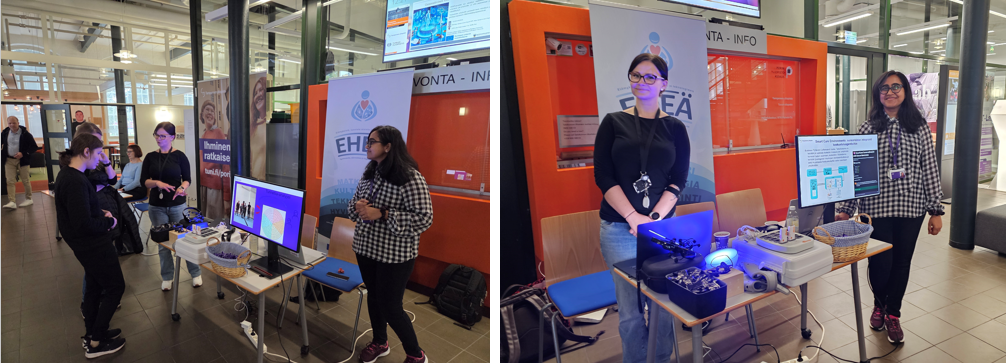
Aditi and Annariina presented EHEÄ and SmartCare projects at the Science Fair of the University Consortium of Pori. Assessment of physiological responses in the context of cultural activities gained a lot of interest. The audience could test visualization of their Heart Rate and play an EEG-controlled hit-the-square game
September 17th, 2026
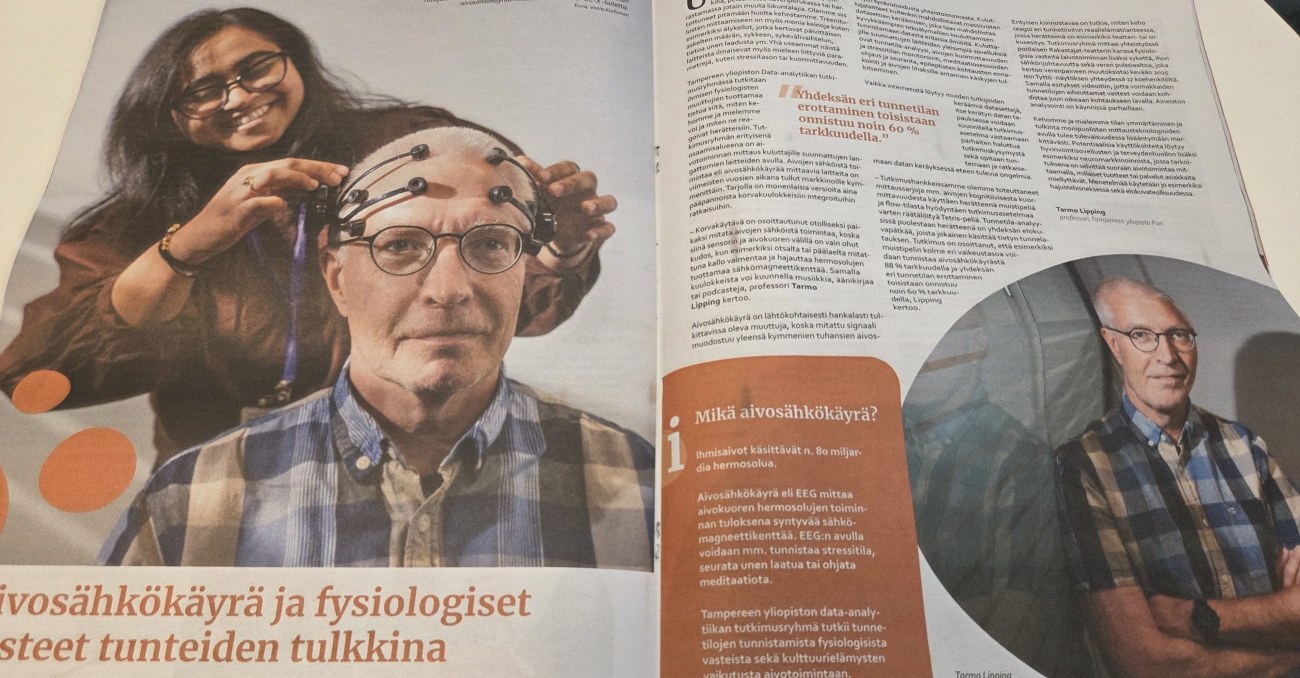
In the UCPori extension of the local newspaper Satakunnan Kansa we wrote about emotion recognition using physiological responses. In the picture at the left, Aditi is putting on the EMOTIV Epoc X 14-channel EEG device.
September 17th, 2026
Would you like to have a moment like this in a Siimes environment after an intensive workday? By recording physiological responses such as EEG, Skin conductance, Heart Rate and Pulse Wave Transit Time we study the effect of the Siimes environment on occupational well-being.
July 2026
Aditi and Annariina presenting our paper on Emotion Recognition from Physiological Signals Using Machine Learning at EMBC2026 conference in Toronto
...
May 9, 2025
We recorded physiological responses at a rehearsal of Sini Tuomisalo's new production about A Man Who Loved Rocks (https://www.satakunnankansa.fi/menokone/events/158761). ECG, GSR, PPG and EEG (MUSE-S) were recorded during 45 min performance together with video. It was a splendid experience; the performance was very interesting and compelling and the data collection worked well. We are excited to see what we can extract from the data once we have managed to analyze the signals!
April 16
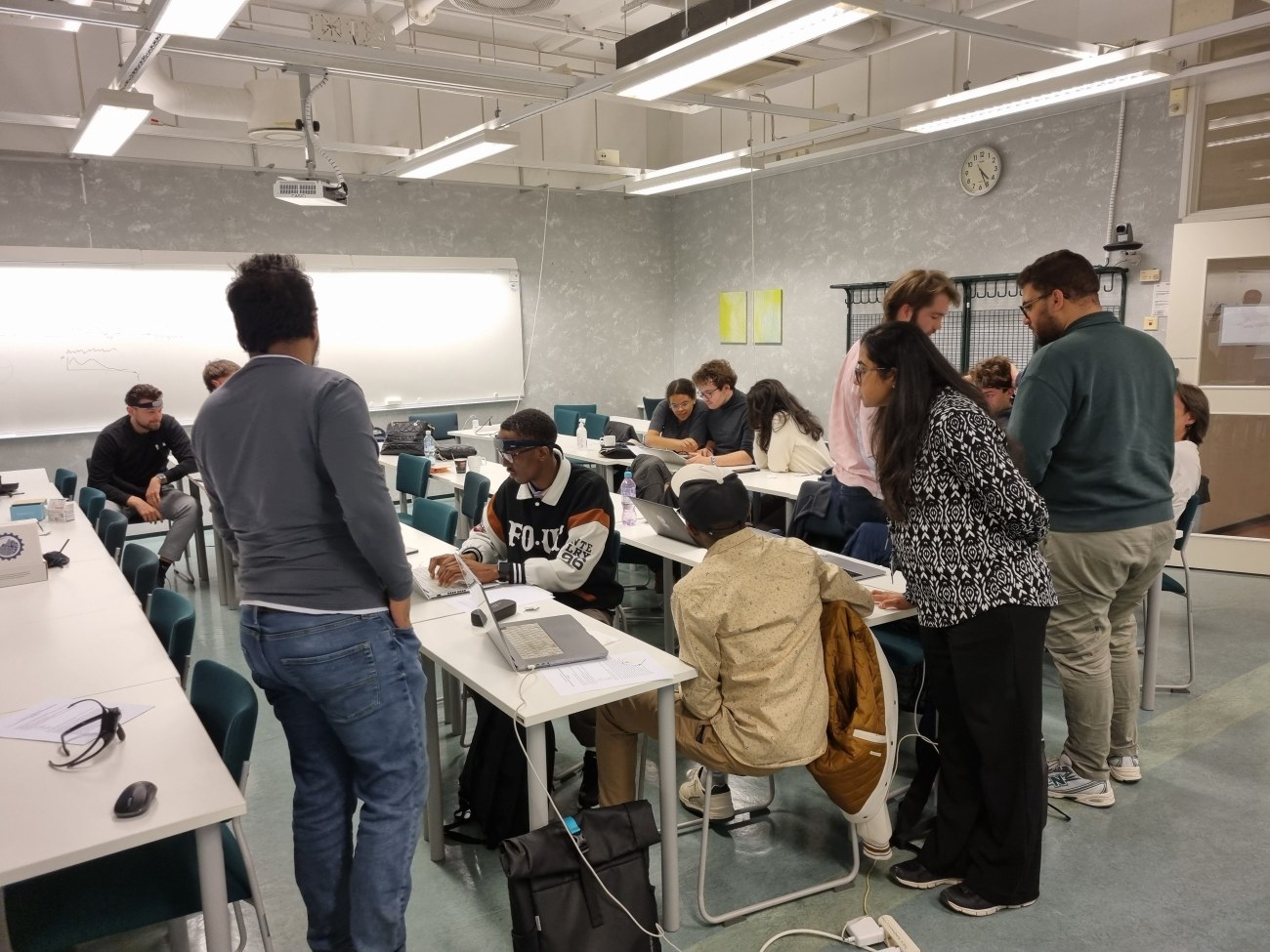
We arranged a workshop on recording EEG in real-life situations to 17 students from our partner university EFREI in Paris. The workshop was part of the students' Learning Expedition in UCPori. First, a general introduction to the origin and measurement of EEG was given after which the students had the opportunity to test and finetune a simple brain-controlled game.
April 3
The device that has been most useful for us in recording and monitoring EEG in real-life applications is the MUSE headband. It is very easy to put on and there are open source and third party tools to acquire and stream the raw data. Now a new version of this device is available - MUSE Athena. The following video presents some of the exciting new features of this device: https://www.youtube.com/watch?v=UyCwii9b3so . Also, while the previous version had problems with Bluetooth stability and timing accuracy, the new version uses BLE 5.3 that is expected to be more reliable. We are waiting eagerly to get our first pieces of this device and start testing the new features!
March 25
Today we had a meeting with our collaborators Dr. Mitchell Head and his group in Waikato University, New Zealand. We talked about collaboration in EEG analysis for the detection of various brain states in real-life settings. Dr. Head's group is developing brain stimulation devices using ultrasound. They are also interested in EEG analysis for the assessment of mental performance in various sports activities. We are using similar recording setups such as EMOTIV Epoc and Shimmer Sensing. We also shared our experiences on using OpenBCI data acquisition solutions.
March 24
Last week we purchased and tested OpenBCI 8-channel Cyton board with gelfree electrode cap. The test recording is illustrated below. At the beginning the subject is resting, eyes closed; at the end there is an eye blink. By visual assessment the signal quality looks good. Also, movement artifacts were not very severe.
February 7
Jukka Wallasvaara from EMOTIV was visiting us in SAMK. He gave a lecture to SAMK students on EMOTIV's EEG devices.



 Aditi Site
 Annariina Lohiranta
 Tarmo Lipping